Hollywood Myths vs Real-World Sex: What Actually Works

Picture the classic movie sex scene: two people lock eyes across a crowded room, clothes practically remove themselves, and both partners experience simultaneous, earth-shattering pleasure without a single word exchanged. It looks effortless, inevitable, and absolutely nothing like what most couples actually experience. The gap between Hollywood fantasy and real-world intimacy has created unrealistic expectations that fuel performance anxiety, relationship strain, and unnecessary shame—the truth is that fulfilling sex requires communication, patience, and often a complete reframing of what “great” really means.
Research reveals that exposure to idealized sexual content significantly impacts expectations and behaviors. Pornography can shape sexual expectations and body-image comparisons for some people, though the direction and size of effects vary by individual and study design. Meanwhile, couples consistently report various challenges impacting their sex lives—yet most suffer in isolation, comparing themselves to fictional standards. The good news? Once you separate movie magic from bedroom reality, you can focus on what actually builds satisfying intimacy.
Key Takeaways
- Hollywood and pornography create unrealistic expectations that contribute to performance anxiety and relationship dissatisfaction
- Two distinct types of sexual desire exist—and neither is "broken" or abnormal
- Communication skills matter more than technique for sexual satisfaction
- Nearly half of all men experience erectile difficulties, yet only 25% seek treatment due to stigma
- Shifting focus from performance to pleasure and connection transforms intimate experiences

The Myth of Effortless, Spontaneous Sex
Movies suggest that great sex happens spontaneously—a smoldering glance leads to perfect synchronization without discussion, preparation, or adjustment. This portrayal sets couples up for disappointment when real intimacy requires actual effort.
Why Real Intimacy Takes Work
Sexual satisfaction research consistently shows that emotional connection, trust, and clear communication drive fulfillment far more than perfect timing or technique. Good sex often requires planning, effort, and explicit discussion of desires and boundaries—none of which Hollywood bothers to show.
What movies skip over:
- Conversations about preferences, boundaries, and what feels good
- The natural need to pause, adjust, or redirect during intimacy
- Different arousal timelines between partners
- The role of anticipation and intentional connection-building
When experiences don't match the Hollywood ideal, many couples feel inadequate rather than recognizing that real intimacy simply works differently.
The Two Types of Desire
Here's something that would transform countless relationships if more people understood it: a research identifies two distinct types of sexual desire.
Initiating desire (spontaneous): Feel aroused first, then seek sexual connection. This is the "Hollywood type"—that smoldering look across the room.
Receptive desire (responsive): Choose to engage in intimacy first, then arousal builds afterward. These individuals need flirting, connection, and anticipation to begin thinking about sex.
The problem? Movies only portray initiating desire. Partners with receptive desire often feel "broken" or "low libido" when they're simply wired differently. Understanding this removes enormous pressure and helps couples honor what each person actually needs.
Performance Pressure: Separating Masculinity from the Bedroom
Few myths cause more damage than the belief that sexual performance defines a man's worth. This creates unnecessary pressure that ironically worsens the very problems it fears.
The Masculinity Trap
Media consistently portrays "real men" as always ready, lasting indefinitely, and performing flawlessly. The reality? Research shows men typically reach orgasm 5-10 minutes after penetrative sex begins—and that's completely normal.
Performance anxiety creates a vicious cycle:
- Worrying about performance distracts from pleasurable sensations
- Distraction interferes with natural arousal responses
- Difficulties reinforce the original anxiety
- Many men withdraw from intimacy entirely
Research shows that performance anxiety is a leading psychological cause of erectile difficulties. When men equate masculinity with bedroom performance, any challenge feels like a fundamental threat to identity—when it's actually just a common, treatable health concern.
Shifting From Performance to Pleasure
The most satisfying intimate experiences happen when both partners focus on shared pleasure rather than individual performance metrics. This means:
- Prioritizing connection over duration
- Valuing the entire experience, not just specific outcomes
- Recognizing that great intimacy looks different every time
- Understanding that physical variations are normal and expected
The Myth of the Perfect Orgasm: Realistic Expectations
Hollywood presents simultaneous, effortless orgasms as the standard—but research tells a very different story.
What the Data Actually Shows
Studies published in the Journal of Sex & Marital Therapy show that only about 18% of women achieve orgasm through penetrative sex alone. Meanwhile, research on pornography consumption reveals significant disparities in how male versus female pleasure is portrayed—completely skewing expectations about female pleasure.
Evidence-based approaches include:
- Recognizing that clitoral stimulation significantly increases chances of orgasm
- Understanding that orgasmic experiences vary based on stress, health, and circumstances
- Accepting that not reaching orgasm doesn't mean the encounter was unsuccessful
- Focusing on overall pleasure and connection rather than specific goals
When couples release the pressure of achieving "perfect" orgasms, they often find that pleasure and satisfaction actually increase.
The Frequency Myth
Movies suggest most couples want identical amounts of sex—and lots of it. Reality? Research indicates that most couples experience desire discrepancies, with partners wanting different amounts of sexual connection. Even more surprising: in many relationships, the woman is the higher-desire partner—directly contradicting common stereotypes.
Communication: The Real Aphrodisiac
If there's one skill that transforms sexual satisfaction more than any technique, it's communication. Yet this is precisely what most people find hardest.
Why We Struggle to Talk About Sex
Many people feel awkward or anxious about starting conversations about sex, even though sexual communication is consistently linked with better relationship and sexual outcomes. Common barriers include:
- Fear of hurting a partner's feelings (54%)
- Not knowing when or how to bring up topics (49%)
- Low self-esteem or lack of confidence (48%)
- Worry about partner reactions (47%)
Yet the same research shows people recognize the benefits: 50% say open communication creates feelings of safety and trust, and 37% report it improves their sex life.
Practical Communication Approaches
Starting the conversation:
- Choose relaxed, non-sexual moments for important discussions
- Use "I" statements: "I feel more connected when..." rather than "You never..."
- Ask open-ended questions about preferences and desires
- Express appreciation for what works before discussing adjustments
During intimacy:
- Simple check-ins: "Does this feel good?" or "What would you like?"
- Non-verbal cues combined with verbal confirmation
- Comfort with pausing to redirect or adjust
- Expressing pleasure actively
Couples who communicate about sex report higher satisfaction regardless of frequency or specific activities.
Creating Intimacy: Environment and Connection
Physical environment significantly influences intimate experiences. Small changes can shift the mood from routine to reconnection.
Simple Bedroom Adjustments
Lighting matters: Soft, warm lighting creates comfort and reduces self-consciousness. Candles or dimmed lamps work better than harsh overhead lights or complete darkness.
Reduce distractions: Phones in another room, television off, work materials out of sight. Creating a dedicated space for connection signals intentionality.
Comfort essentials: Quality bedding, appropriate temperature, and a clutter-free environment contribute to relaxation and presence.
Building Anticipation Throughout the Day
Great intimacy often starts hours before physical contact. Building anticipation through texts, touch, and intentional connection creates context for meaningful encounters—particularly important for partners with receptive desire types.

The Truth About Erectile Dysfunction: More Common Than You Think
Erectile difficulties affect nearly 50% of men at some point, with historical projections estimated that 322 million men worldwide would experience ED by 2025. Yet only 1 in 4 seek treatment, primarily due to stigma and shame.
Understanding the Mind-Body Connection
ED involves both physical and psychological factors, often interacting:
Psychological contributors:
- Performance anxiety and in-the-moment worry
- Stress, depression, and relationship concerns
- Shifts in attention from pleasure to self-monitoring
- Negative self-attributions ("My body is broken")
Physical factors:
- Cardiovascular health and blood flow
- Medication side effects
- Lifestyle factors including sleep and exercise
- Underlying health conditions
Research published in Archives of Sexual Behavior indicates that combination treatment—medication plus addressing psychological factors—proves more effective than either approach alone.
Why Telemedicine Changes Everything
Traditional barriers to treatment—embarrassment discussing with doctors, pharmacy pickups, appointment scheduling—kept countless men from addressing a treatable concern. Telemedicine platforms saw 1,688% traffic increases between 2017-2019 as men discovered private, convenient alternatives.
The ability to discuss sensitive health issues from home, receive professional evaluation, and have medications delivered discreetly has normalized seeking help for sexual health.
Taking the Next Step Toward Sexual Confidence
When performance concerns occupy mental bandwidth, there's little room left for genuine connection. Addressing physical factors frees you to focus on what actually matters: being present with your partner.
BlueChew provides prescription medications containing the active ingredients sildenafil, vardenafil, and tadalafil. Sildenafil, vardenafil, and tadalafil are the active ingredients in Viagra, Levitra, and Cialis, respectively. Our convenient formulations offer discreet options that fit real-world needs.
When physical confidence is handled, you can focus on your partner's experience rather than monitoring yourself, stay present in the moment instead of worrying about outcomes, build the vulnerability that deepens connection, and explore intimacy without timing pressure.
BlueChew's complete lineup includes:
- SIL: 30 mg or 45 mg sildenafil, from $2.95/tablet, works in 15 minutes, lasting up to 6 hours
- TAD: 6 mg or 9 mg tadalafil, from $3.58/tablet, effective within 15 minutes, lasting up to 36 hours
- VAR: 8 mg vardenafil, from $4.34/tablet, takes effect in 15 minutes, lasting up to 6 hours
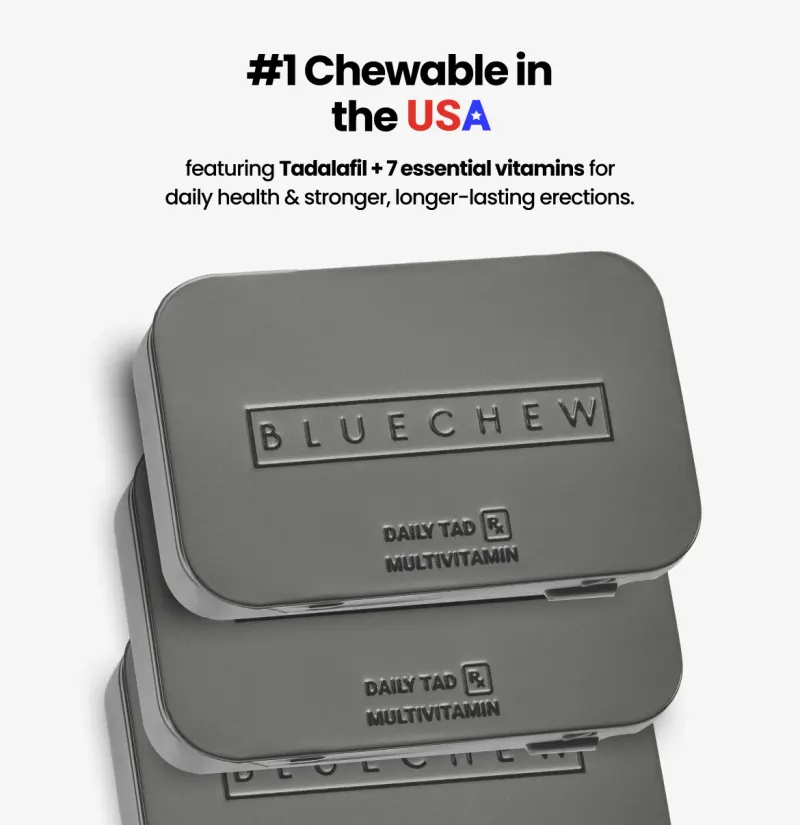
- DailyTAD: 9 mg tadalafil plus 7 essential vitamins, $2.23/tablet, lasting up to 36 hours
- MAX: 45 mg sildenafil + 18 mg tadalafil combo, $5.63/tablet, lasting up to 36 hours
- VMAX: 14 mg vardenafil + 18 mg tadalafil combo, $5.63/tablet, lasting up to 36 hours
- GOLD: sildenafil, tadalafil, oxytocin, and apomorphine sublingual tablet, from $7.30/tablet, lasting up to 36 hours
Whether you choose SIL for planned occasions or TAD for extended spontaneity, the goal remains consistent: removing barriers so you can be fully present with your partner.

Frequently Asked Questions
How common is erectile dysfunction?
ED affects nearly 50% of men at some point in their lives, with prevalence increasing with cardiovascular health factors. Despite being extremely common, only about 25% of affected men seek treatment—primarily due to stigma. The important thing to understand is that ED is a medical condition, not a reflection of masculinity or worth.
What are the main causes of erectile dysfunction?
ED typically involves both physical and psychological factors working together. Physical contributors include cardiovascular health, medication side effects, and lifestyle factors. Psychological causes include performance anxiety, stress, depression, and relationship concerns. Most cases benefit from addressing both dimensions.
How can I talk to my partner about sex and intimacy?
Start conversations in relaxed, non-sexual moments. Use "I" statements to express preferences without criticism. Ask open-ended questions about desires and boundaries. Focus on what works before discussing adjustments. Remember that 50% of people report that open communication creates greater feelings of safety and trust in relationships.
What are some non-medical ways to improve my sex life?
Focus on communication skills, understanding different desire types, and creating environments conducive to intimacy. Building anticipation throughout the day, reducing performance pressure, and expanding definitions of intimacy beyond penetrative sex all contribute to satisfaction. Many couples find that addressing these factors transforms their experiences.
How does BlueChew work?
BlueChew provides prescription medications through a telemedicine platform. After completing an online medical intake, licensed providers review your information and prescribe appropriate treatment if medically suitable. Medications ship in discreet packaging directly to your door—no in-person appointments or pharmacy visits required.
This article is provided for informational purposes only and does not constitute medical advice. The information presented is not a substitute for professional medical advice, diagnosis, or treatment. Always consult your healthcare provider to discuss the risks, benefits, and appropriateness of any treatment.
BlueChew offers access to healthcare providers who may prescribe compounded medications for the treatment of erectile dysfunction.
The featured products include compounded medications that have not been approved by the FDA. Compounded medications may be prescribed under federal law but are not the same as, nor are they generic versions of, any FDA-approved medication. The FDA does not review compounded medications for safety, effectiveness, or manufacturing quality of compounded products. A prescription will only be written if deemed appropriate after the digital consultation by the licensed medical provider. Individual results may vary.
BlueChew is not a compounding pharmacy but a telemedicine service that links patients to licensed medical providers.
Other Helpful Articles