How to Ask for What You Want During Sex (Playful Scripts)

You know what you want in bed, but when the moment arrives, the words just... don't come out. Your partner asks "What do you like?" and suddenly your brain freezes. You're not alone—communication during sex trips up even the most confident people. The good news is that sexual communication gets easier with practice, and having a few playful scripts in your back pocket can transform both your confidence and your intimate experiences.
Research shows that couples who communicate openly about sex report dramatically higher satisfaction levels. The gap between wanting something and asking for it isn't just about shyness—it's about not having the right words, fearing rejection, or worrying about hurting your partner's feelings.
The truth is, asking for what you want doesn't have to feel like a therapy session or a performance review. With the right approach, sexual communication becomes part of the fun—building anticipation, deepening connection, and yes, making the actual experience better for everyone involved. Whether you're looking to spice things up, address performance concerns with support like BlueChew's chewable and sublingual tablets, or simply feel more confident expressing your desires, this guide gives you practical scripts and strategies you can use tonight.
Key Takeaways
- Start with simple in-the-moment feedback like "that feels amazing" before tackling bigger conversations—small steps build confidence
- Use the "tell and describe" approach: share what you want to try before intimacy, then describe what you like during the action
- Nonverbal communication—eye contact, guiding hands, breathing changes—often speaks louder than words and feels more natural
- Positive reinforcement ("more of that, please") creates better outcomes than criticism, making your partner excited to please you
- Physical confidence directly impacts communication comfort—addressing performance concerns removes barriers to vulnerability
Building a Foundation for Open Sex Talk
Great sexual communication doesn't start in the bedroom—it begins with how you talk to each other everywhere else. If you struggle to be vulnerable during daily conversations, asking for what you want during intimate moments becomes exponentially harder.
Creating a Safe Space for Vulnerability
The foundation of comfortable sex talk is emotional safety. Your partner needs to know that sharing desires, trying new things, or admitting something isn't working won't lead to judgment or rejection.
Build this foundation by:
- Complimenting your partner regularly outside the bedroom—keep them in your thoughts
- Normalizing sex-related topics in everyday conversation (movies, articles, observations)
- Responding warmly when your partner shares something vulnerable, even outside sexual contexts
- Making it clear that you value honesty over performance
Sexual communication happens at two distinct levels: conversations about sex outside of intimate moments, and what you say and do during sex itself. Most people find it easier to give feedback during sex than to have conversations about it outside intimate moments, so if you're building this skill, start with in-the-moment communication.
Begin small. If talking about sex feels daunting, start by sharing what you appreciate about your current intimate life rather than jumping straight into requests for change.

Decoding Desires: Mastering Nonverbal Cues
Sometimes the most powerful communication happens without words. Your body tells stories your voice might struggle to articulate, and learning to read and use these signals can transform your intimate experiences.
Speak Without Words: Understanding Silent Signals
Nonverbal communication during sex includes body language, breathing patterns, physical responses, sounds, and energy shifts. These cues often provide more honest feedback than words because they're harder to fake or filter.
Key nonverbal signals to notice:
- Changes in breathing (faster, deeper, or holding breath)
- Muscle tension or relaxation in different areas
- The way your partner moves toward or away from touch
- Sounds—not just moans, but gasps, sighs, or silence
- Eye contact patterns (seeking it, avoiding it, closing eyes)
- Hand placement and grip strength
The most reliable indicator isn't any single signal—it's changes from baseline. If your partner's breathing quickens or their hands grip tighter during a particular touch, you've struck gold.
Your Body's Whisper: How to Show What You Want
You can guide your partner without saying a word. Place their hand where you want to be touched. Move your body to adjust pressure or angle. Make appreciative sounds when something feels good. Pull them closer or slow things down with gentle pressure.
These physical cues feel less vulnerable than verbal requests for many people, making them perfect confidence-builders. Once you're comfortable guiding hands or showing preference through movement, adding words becomes natural.

Playful Pointers: Gentle Ways to Initiate
Initiation sets the tone for everything that follows. When you approach intimacy with playfulness rather than pressure, communication flows more easily throughout the entire experience.
From Subtle Hints to Sexy Suggestions
Many couples struggle with how sex gets initiated in their relationship. The problem is that most approaches feel either too aggressive or too passive, creating tension instead of anticipation.
Playful initiation techniques:
- The Extended Invitation: Start building energy hours before ("I've been thinking about you all day" via text)
- The Subtle Touch: Lingering hand on the small of their back, playing with their hair, a longer-than-usual hug
- The Compliment Cascade: "You look incredible" → meaningful eye contact → moving closer
- The Playful Tease: Light, flirty comments that signal interest without demanding an immediate response
The key is treating initiation as a process, not a single moment. When you have the physical confidence that comes with options like BlueChew's TAD chewable tablets—which work for 24-36 hours—you can build anticipation throughout the day without timing pressure.
Think of initiation as opening a door and inviting your partner through, not pushing them inside. "I'd love to spend some quality time with you tonight" works better than "Wanna do it?"
Crafting Your 'Yes, Please!': Direct Verbal Scripts
Now for the practical part—actual words you can say during intimate moments. These scripts progress from beginner-friendly to more advanced, so start where you're comfortable.
Sample Phrases: What to Say and How to Say It
A fundamental principle of effective sexual communication: tell your partner what you want to try before intimacy begins, then describe what you specifically like about it during the action.
Beginner-Level Scripts (Great Starting Points):
- "That feels amazing"
- "Right there—don't stop"
- "I love when you touch me like that"
- "Can you do that again?"
- "More of that, please"
Intermediate Scripts (Building Confidence):
- "I've been thinking about [specific activity] with you"
- "Would you try [specific request]?"
- "I want to explore [area/technique] together"
- "The way you [specific action] drives me wild"
- "I'd love to feel your [hands/mouth] on my [body part]"
Making Requests Sound Like Invitations:
Frame your desires as collaborative exploration, not demands. "I'd love to try..." sounds completely different from "You should..." Even though you're asking for the same thing, the invitation approach makes your partner feel excited to participate rather than like they're being corrected.

The Art of Specificity: Getting Exactly What You Crave
Vague requests like "touch me" leave your partner guessing. Specific guidance like "Use lighter pressure with your fingertips right here" removes ambiguity and increases the likelihood you'll get exactly what you want.
Being specific also shows you've thought about what you enjoy, which many partners find incredibly attractive. It demonstrates self-awareness and gives them a roadmap to your pleasure.
The Power of Positive Reinforcement
What you appreciate tends to increase. When your partner does something you love and you let them know with enthusiasm, they'll want to do it again.
When Things Go Right: Positive Feedback
Couples who communicate openly about sexual desires report higher satisfaction for both partners. Positive reinforcement during sex is remarkably effective at creating these satisfying experiences.
Effective positive reinforcement:
- Immediate verbal acknowledgment: "Yes, exactly like that" when something feels good
- Enthusiastic sounds: Natural moans and gasps (don't fake these, but don't suppress real ones)
- Physical responses: Moving closer, increased responsiveness, touching them back
- After-the-fact appreciation: "I loved when you [specific action]—that was incredible"
The "compliment sandwich" works beautifully for introducing new requests: "You're so good at [thing they do well]. I'd also love to try [new request]. You always make me feel amazing."
Cementing Good Habits Through Appreciation
Post-intimacy communication matters just as much as during-the-act feedback. Taking a moment to share what you particularly enjoyed helps your partner remember what worked and builds their confidence too.
Simple statements like "That thing you did with your [hands/mouth] was perfect" or "I loved how you [specific action]" create positive associations that make future communication even easier.

Navigating 'No' with Grace
Not every desire will align perfectly with your partner's comfort zone, and that's completely normal in healthy relationships. How you handle these moments determines whether communication strengthens or weakens your connection.
When Desires Don't Align: Understanding and Compromise
Hearing "no" or "not right now" isn't rejection of you—it's your partner setting a boundary, which is actually a sign of healthy communication. Research on desire discrepancy shows that partnered strategies (communication, alternative activities, compromise) lead to significantly higher satisfaction than avoidance.
Responses that maintain connection:
- "That's totally okay—I appreciate you telling me"
- "No pressure at all. What would you enjoy instead?"
- "Is it a 'not now' or a 'not for me'? Either is fine, just helps me understand"
- "I love that we can be honest with each other"
The goal isn't to convince or pressure—it's to gather information and maintain emotional safety. When your partner knows their boundaries will be respected, they become more willing to explore and communicate openly.
Ensuring Consent is Always Enthusiastic
Enthusiastic consent isn't just ethical—it's hotter. You want a partner who's genuinely excited, not someone going along reluctantly. Check-ins can be sexy: "Do you like that?" or "Should I keep going?" with the right tone becomes part of the experience rather than interrupting it.
Remember that consent is ongoing. Just because someone said yes initially doesn't mean they can't change their mind, and creating space for that builds deeper trust.
Outside the Bedroom: Keeping the Conversation Flowing
Sexual communication isn't just what happens during intimate moments—it's the ongoing dialogue about your intimate life together.
From Pillow Talk to Planning
Regular check-ins about your sexual relationship prevent small issues from becoming big problems. Creating rituals for talking about sex—just like you might have regular date nights—normalizes these conversations.
Effective check-in approaches:
- Monthly "How are we doing?" conversations (rate satisfaction 1-10 and discuss)
- Sharing fantasies or curiosities in low-pressure moments (during a walk, in the car)
- Discussing what's working well before addressing what isn't
- Exploring sexual wellness together—even browsing options like BlueChew's online telemedicine platform together normalizes these conversations
These conversations don't need to be serious sit-downs. Sometimes the best sex talks happen while cooking dinner or during road trips—moments when you're connected but not making intense eye contact.

Making Sexual Communication a Lifestyle
The more you normalize talking about sex, the easier it becomes. Share interesting articles, mention what you learned from a podcast, or bring up a scene from a movie. Each casual conversation reduces the overall tension around the topic.
This ongoing dialogue also helps you understand how desires and needs evolve over time. What worked six months ago might not work now, and regular communication helps you adapt together rather than growing apart.
When You Need a Confidence Boost
Physical confidence and communication comfort are deeply connected. When you're worried about performance, vulnerability becomes exponentially harder.
How Physical Confidence Enables Better Communication
Performance anxiety creates a vicious cycle: you're worried about erectile function, so you avoid initiating or communicating, which increases anxiety and makes the problem worse. Having a supportive partner and addressing physical concerns directly breaks this cycle.
This is where BlueChew's compounded medications can make a significant difference. BlueChew provides prescription medications containing the active ingredients sildenafil, vardenafil, and tadalafil. Sildenafil, vardenafil, and tadalafil are the active ingredients in Viagra, Levitra, and Cialis, respectively. When you know you have reliable support for erectile function, the mental bandwidth previously consumed by worry becomes available for presence, connection, and communication.
Our Products:
- SIL: 30 mg or 45 mg sildenafil, from $2.94/chew, works in 30 minutes, lasting up to 6 hours
- TAD: 6 mg or 9 mg tadalafil, from $3.57/chew, effective within 30 minutes, lasting up to 36 hours
- VAR: 8 mg vardenafil, from $4.33/chew, takes effect in 30 minutes, lasting up to 6 hours
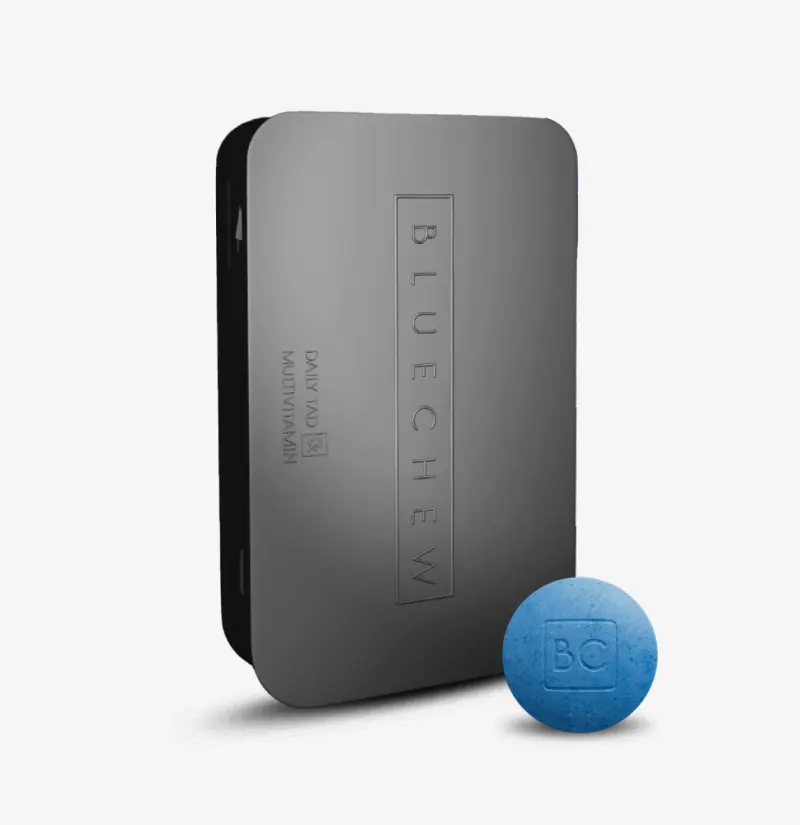
- DailyTAD: 9 mg tadalafil plus 7 essential vitamins, $2.22/chew, lasting up to 36 hours
- MAX: 45 mg sildenafil + 18 mg tadalafil combo, $5.63/tablet, lasting up to 36 hours
- VMAX: 14 mg vardenafil + 18 mg tadalafil combo, $5.63/tablet, lasting up to 36 hours
- GOLD: sildenafil, tadalafil, oxytocin, and apomorphine sublingual tablet, from $6.94/tablet, lasting up to 36 hours
- ENERGY: 30 mg sildenafil + 60 mg caffeine, $4.50/ea, lasting up to 6 hours
The connection between physical confidence and emotional vulnerability is real. When performance concerns are managed, asking for what you want becomes about pleasure and exploration rather than anxiety management.
Addressing Performance Concerns Proactively
Instead of avoiding conversations about sexual health, approach them as part of taking care of your intimate life together. Many men dealing with erectile concerns find that discussing it with their partner significantly increases treatment effectiveness.
Starting the conversation might sound like: "I want our intimate life to be the best it can be, so I'm exploring some options for erectile support. I'd love your thoughts." This frames it as something you're actively addressing rather than a problem you're hiding.
Remember that greater than 70% of ED patients remain undiagnosed because men are reluctant to discuss it. Taking action puts you ahead of the curve in prioritizing both your health and your relationship.

Frequently Asked Questions
How can I tell if my partner is enjoying what we're doing without them saying anything?
Watch for changes from their baseline—breathing that quickens or deepens, increased muscle tension in a good way (gripping, arching), moving toward your touch rather than away, and responsive sounds. The most reliable sign is when multiple signals align. That said, verbal confirmation is always welcome: "Does this feel good?" can be asked in a way that adds to the moment rather than interrupting it. Remember that everyone expresses pleasure differently, so what matters most is learning your specific partner's patterns.
What's a good way to introduce a new idea without making my partner feel pressured?
Frame it as curiosity, not a demand. Try: "I read about [activity] and thought it sounded interesting—what do you think?" or "I've been curious about trying [thing]. No pressure at all, but would you be open to exploring it together?" Timing matters too—bring it up outside the bedroom during a relaxed moment, not in the heat of passion. Give them time to think about it rather than expecting an immediate decision. And always emphasize that their comfort matters more than any specific activity.
How do I ask for something specific during sex if I feel shy?
Start with the easiest forms of communication and build up. If verbal feels too vulnerable, try nonverbal first—guide their hand, move your body, make appreciative sounds. Once you're comfortable with that, add simple words: "Yes," "Right there," "That feels good." Build to slightly more specific requests: "Can you go slower?" Progress at your own pace. Most people find it easier to give feedback during sex than to have conversations about sex outside intimate moments, so starting with in-the-moment communication can build your confidence.
What should I do if my partner says no to a request?
Respond with genuine acceptance: "That's completely okay—thanks for being honest with me." Then either ask if there's something else they'd enjoy instead, or simply continue with what you were doing. Never pressure, pout, or make them feel guilty. Their willingness to be honest with you is more valuable than any specific activity. Research shows that partnered strategies like communication lead to higher satisfaction than avoiding the topic, so maintaining that open dialogue matters more than getting a yes to every request.
Can improving erectile function really help with communication during sex?
Absolutely. Performance anxiety consumes mental energy and makes vulnerability much harder. When physical concerns are addressed—whether through lifestyle changes, communication with your partner, or support from medications like those in BlueChew's chewable and sublingual tablets—you free up that mental space for presence and connection. Men who address ED concerns rather than avoiding them report not just better sexual function, but improved communication and relationship satisfaction overall. Physical confidence directly enables emotional vulnerability.
This article is for informational purposes only and does not constitute medical advice. The content provided here is not a substitute for, and should never be relied upon as, professional medical advice. Always consult your doctor to discuss the risks, benefits, and appropriateness of any treatment. BlueChew offers compounded medications prescribed solely for the treatment of erectile dysfunction and sexual performance enhancement. Compounded medications are not FDA-approved.
Other Helpful Articles