Psychological vs. Physical ED: Why Most Treatments Only Solve Half the Problem

For decades, erectile dysfunction treatments have operated on a simple assumption: either your ED is "in your head" or it's a physical problem with blood flow. The reality is far more nuanced—and the European Association of Urology (EAU) Guidelines note that this binary classification should be used with caution, because most cases involve mixed etiology. Research shows that most ED cases involve both psychological and physical factors working together in a self-reinforcing cycle, which helps explain why many men find that traditional single-target treatments do not fully address their concerns or are eventually discontinued.
This matters because when treatment only addresses half the equation, results suffer. Studies indicate that a substantial share of men discontinue PDE5 inhibitor medications over time despite initial benefit, often due to a mix of treatment expectations, side effects, cost, relationship factors, and other unresolved contributors. The path forward requires understanding how mind and body interact in erectile function, and why comprehensive approaches that target both dimensions may deliver better long-term outcomes.
Key Takeaways
- Most ED involves mixed etiology—purely psychological or purely physical cases are rarer than commonly believed
- Psychological stress can contribute to physical changes, including autonomic nervous system imbalance and vascular dysfunction
- Physical ED often develops secondary psychological components like performance anxiety and loss of confidence
- Combined treatment approaches show superior outcomes in multiple clinical studies, with benefits persisting at 18-month follow-up
- BlueChew's GOLD formulation is designed as a multi-ingredient approach that targets blood flow and central pathways involved in sexual response

Understanding ED Causes: The False Binary
The traditional framework divides erectile dysfunction into two neat categories: psychological ED (caused by stress, anxiety, or relationship issues) and physical ED (caused by vascular problems, diabetes, or nerve damage). This classification has guided treatment decisions for decades—but emerging research reveals it's fundamentally incomplete.
Why the Categories Blur
The latest EAU Guidelines note that classification into psychological versus physical categories "should be used with caution as most cases are actually of mixed etiology." The recommended terminology shift—from "psychological" and "physical" to "primary psychological" and "primary organic"—acknowledges that secondary factors from the other category almost always develop.
Consider how this works in practice:
When psychological factors lead:
- Performance anxiety triggers sympathetic nervous system activation
- Elevated cortisol levels impair nitric oxide function
- Chronic stress causes measurable endothelial dysfunction
- What started as "purely psychological" now has physical components
When physical factors lead:
- Initial erectile difficulty creates anxiety about future encounters
- Loss of sexual confidence develops
- Relationship strain amplifies the problem
- Avoidance of intimacy creates a vicious cycle
Research suggests that stress-related autonomic imbalance may interfere with the parasympathetic state needed for normal erectile function, where the "fight-or-flight" (sympathetic) response can override the "rest-and-digest" (parasympathetic) state required for an erection.
The Psychological Dimension: More Than "Just Stress"
Performance anxiety and psychological ED aren't simply matters of "relaxing" or "getting out of your head." The brain-body connection in erectile function is far more concrete.
How Mental State Affects Physical Function
When stress activates your hypothalamic-pituitary-adrenal (HPA) axis, cortisol levels rise. In healthy men, cortisol typically drops during sexual arousal, and some research suggests cortisol dysregulation may interfere with normal erectile response in certain men with ED. This hormonal environment directly inhibits the physical mechanisms required for erection.
Key psychological factors affecting erectile function:
- Performance anxiety: Creates a self-monitoring state that interferes with natural arousal
- Relationship stress: Unresolved conflict or communication issues spill into the bedroom
- Depression: Affects neurotransmitter balance, including dopamine pathways crucial for desire
- Catastrophic thinking: "If it doesn't work this time, it never will" thought patterns
- Previous negative experiences: Past failures create anticipatory anxiety
Brain imaging studies suggest that men with psychogenic ED may show differences in brain structure and functional connectivity in regions involved in emotion regulation and sexual arousal. This indicates that psychogenic ED has measurable neurobiological correlates, not that the symptoms are "imaginary."
Breaking the Anxiety Cycle
The challenge with psychological ED is that awareness of the problem often makes it worse. Worrying about erectile function triggers the exact physiological state (sympathetic dominance, elevated cortisol) that prevents healthy erectile response.
Breaking this cycle requires addressing both the psychological patterns and providing reliable physical support—which is where integrated treatment approaches show their advantage.
The Physical Dimension: Blood Flow and Beyond
Physical ED involves concrete mechanisms that medication can directly address. Understanding these helps explain both why PDE5 inhibitors work and why they sometimes aren't enough on their own.
How Erections Work
Erectile function depends on a cascade of events:
- Sexual arousal triggers nitric oxide release
- Nitric oxide activates cyclic GMP (cGMP)
- cGMP causes smooth muscle relaxation in penile tissue
- Blood flow increases, creating erection
- PDE5 enzyme eventually breaks down cGMP, ending the erection
PDE5 inhibitors (sildenafil, tadalafil, vardenafil) work by blocking step 5—allowing cGMP to accumulate longer, making erections easier to achieve and maintain when arousal is present.
Common Physical Contributors
Vascular factors:
- Cardiovascular disease affecting blood flow
- Diabetes damaging blood vessels and nerves
- Hypertension
- High cholesterol
Other physical factors:
- Hormonal imbalances (low testosterone)
- Nerve damage from surgery or injury
- Medication side effects (antidepressants, blood pressure medications, antihistamines)
- Obesity affecting both hormones and circulation
The important insight: chronic psychological stress induces many of the same vascular changes as traditional risk factors. Stress-related endothelial dysfunction follows similar pathways to diabetes-related endothelial dysfunction—meaning the mind-body distinction breaks down at the cellular level.
Why Single-Target Treatments Fall Short
Understanding why traditional approaches often produce incomplete results helps explain the value of comprehensive treatment strategies.
PDE5 Inhibitors Alone: The "Half Solution"
PDE5 inhibitors like sildenafil demonstrate approximately 70% efficacy in clinical trials—impressive numbers that tell an incomplete story. These medications effectively enhance the physical mechanism of erection but don't address:
- Performance anxiety that triggers sympathetic overdrive
- Relationship conflicts contributing to ED
- Negative thought patterns ("I'm broken," "It won't work")
- Cortisol levels and stress-induced hormonal imbalance
- Misconceptions about sexual function
The result? Research indicates a substantial share of patients discontinue PDE5 inhibitor treatment despite initial success. Common reasons include unrealistic expectations that weren't addressed, incorrect timing or dosage, and underlying psychological factors creating resistance to treatment.
Psychological Interventions Alone: Also Incomplete
Meta-analyses of psychological interventions for ED have shown that while they can be effective, their outcomes are often more variable than those of medication-based treatments. While cognitive behavioral therapy and counseling can effectively address thought patterns and relationship dynamics, they don't directly improve:
- Endothelial dysfunction (even when stress-induced)
- Impaired nitric oxide bioavailability
- Age-related changes in vascular function
- Physical comorbidities like diabetes
The gap between psychological insight and physical function can be frustrating—understanding why you're anxious doesn't automatically restore reliable erections.
The Evidence for Integrated Treatment
Multiple clinical studies demonstrate that combined approaches outperform single-modality treatment for erectile dysfunction.
Key Research Findings
A systematic review examining 13 randomized controlled trials with 597 men found that combined PDE5 inhibitor plus psychological intervention was superior to medication alone in 7 of 13 studies. The data suggests that addressing both dimensions creates synergistic benefits.
Perhaps most compelling is long-term follow-up data from an 18-month study comparing combined therapy (cognitive behavioral therapy plus PDE5 inhibitor) versus PDE5 inhibitor monotherapy:
At 10 weeks:
- Combined therapy group scored higher on nearly all measures of erectile function
At 18 months:
- Combined therapy group: Continued improvement
- Monotherapy group: No further improvement, some parameters declined
This suggests that psychological interventions create lasting cognitive and behavioral changes that continue benefiting erectile function long after formal therapy ends—but only when physical support is also present.
Why Combined Approaches Work
Success in one dimension reinforces the other:
- Reliable physical function → Reduced performance anxiety → Better sympathetic/parasympathetic balance → Enhanced physical function
- Addressing psychological patterns → Reduced cortisol → Improved endothelial function → Better medication response
Breaking the vicious cycle at multiple points creates a virtuous cycle of improvement.
BlueChew GOLD: A Multi-Target Approach
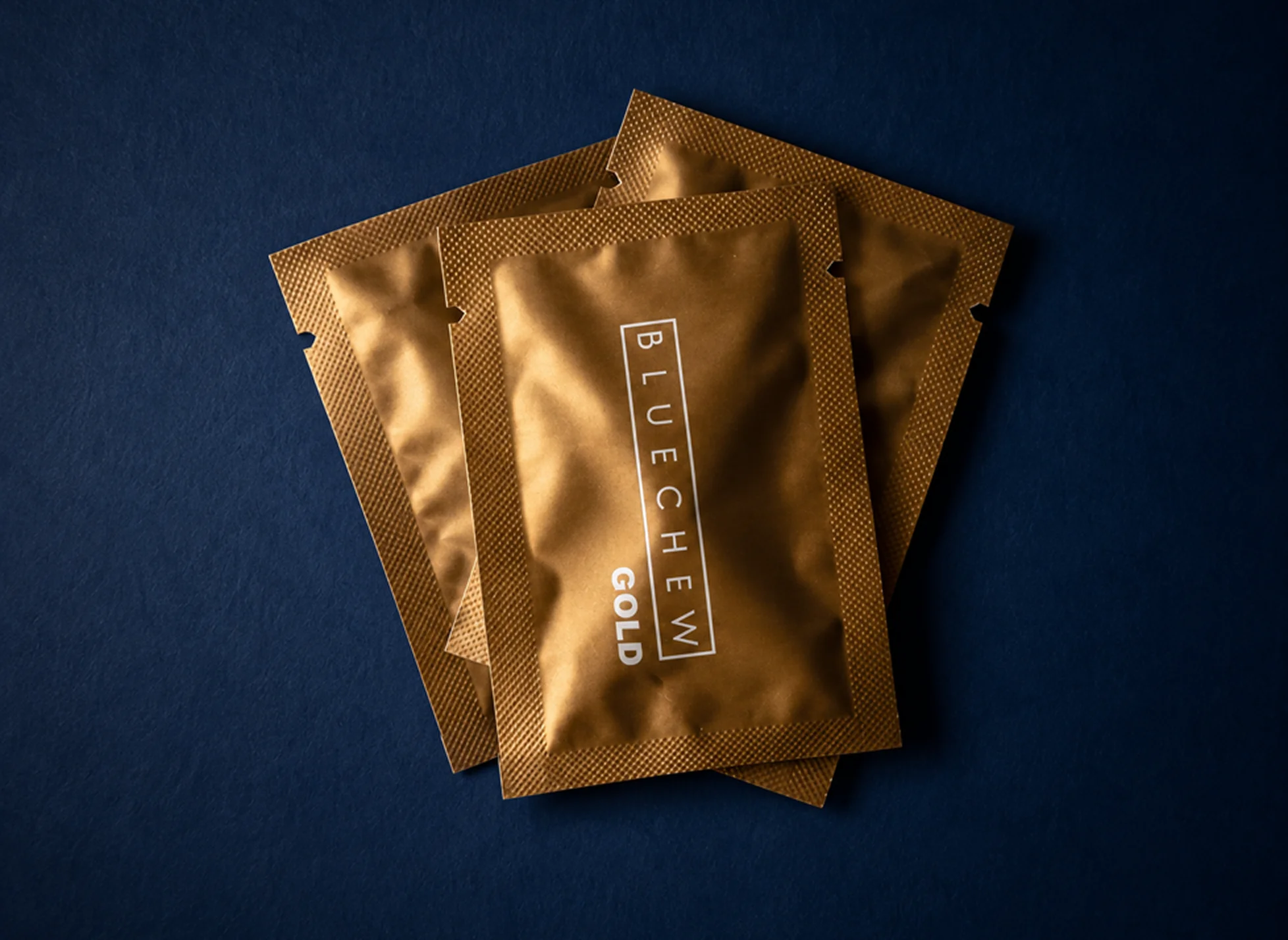
BlueChew's GOLD formulation represents an innovative approach to the mind-body challenge of ED treatment. Rather than requiring separate interventions for physical and psychological factors, GOLD combines four active ingredients that target different aspects of sexual function in a single sublingual tablet.
The Quad-Ingredient Formula
Sildenafil and Tadalafil (PDE5 Inhibitors): Address the physical dimension by enhancing blood flow through the nitric oxide/cGMP pathway. The combination provides both immediate effect and extended duration.
Apomorphine (Dopamine Agonist): Targets brain-based arousal by acting on dopamine receptors. Dopamine plays a crucial role in desire, motivation, and the neurological "wanting" component of sexual response—addressing psychological ED factors at the neurochemical level.
Oxytocin: Oxytocin is involved in social bonding and stress regulation, although its direct clinical role in improving erectile dysfunction in humans remains under investigation.
Why This Matters
For men whose ED involves both physical and psychological components—which research suggests is most cases—GOLD's multi-target approach is designed to support multiple aspects of sexual response in a single formulation. The sublingual delivery allows for relatively fast onset, while the tadalafil component provides an extended duration window of up to 36 hours.
Rather than treating mind and body as separate problems requiring separate solutions, GOLD is positioned as a multi-target option that reflects growing interest in more integrated approaches to sexual health. This format offers an alternative delivery option for men who prefer not to use traditional tablets.
BlueChew's Complete Lineup
While GOLD offers a comprehensive multi-target approach, BlueChew provides options for different needs and preferences. SIL, VAR, and TAD come in a sublingual tablet, and DailyTAD comes in a chewable tablet. MAX, VMAX, and GOLD are available as a sublingual tablet.
- SIL: 30 mg or 45 mg sildenafil, works within 15 minutes, lasting up to 6 hours
- TAD: 6 mg or 9 mg tadalafil, effective within 15 minutes, lasting up to 36 hours
- VAR: 8 mg vardenafil, takes effect within 15 minutes, lasting up to 6 hours
- DailyTAD: 9 mg tadalafil plus 7 essential vitamins, lasting up to 36 hours
- MAX: 45 mg sildenafil + 18 mg tadalafil combo, lasting up to 36 hours
- VMAX: 14 mg vardenafil + 18 mg tadalafil combo, lasting up to 36 hours
- GOLD: sildenafil, tadalafil, oxytocin, and apomorphine sublingual tablet, lasting up to 36 hours
BlueChew provides prescription compounded medications containing the active ingredients sildenafil, vardenafil, and tadalafil. Sildenafil, vardenafil, and tadalafil are the active ingredients in Viagra, Levitra, and Cialis, respectively.
Why BlueChew's Approach Matters
The evidence is clear: ED treatment that addresses only physical or only psychological factors leaves many men with incomplete results. While traditional approaches often separate these dimensions—sending men to their doctor for a prescription and a therapist for performance anxiety—BlueChew's formulations recognize that mind and body work together in sexual function.
BlueChew's range of chewable and sublingual medications offers flexible options that match different needs. Whether you're looking for the proven effectiveness of single-ingredient PDE5 inhibitors like SIL, TAD, or VAR, the extended support of combination formulas like MAX and VMAX, or the comprehensive multi-target approach of GOLD, BlueChew provides discreet access to prescription treatment designed around how ED actually works.
The goal isn't just symptom management—it's restoring confidence, breaking the anxiety cycle, and supporting the natural connection between mental state and physical response. By offering multiple formulations with varying mechanisms of action, BlueChew allows men and their medical providers to find the approach that best fits their individual situation, recognizing that successful ED treatment is rarely one-size-fits-all.
Frequently Asked Questions
Can ED be purely psychological, or is there always a physical component?
While some cases begin as primarily psychological—particularly in men with sudden onset, situational ED, and normal nocturnal erections—research indicates that chronic psychological stress can contribute to physical changes, including autonomic nervous system imbalance and vascular dysfunction. The current clinical consensus suggests most ED is mixed etiology, and even cases that start purely psychological tend to develop physical components over time.
Are combination therapies more effective than single agents for ED?
Clinical evidence supports this. A systematic review of 13 studies found combined approaches (medication plus psychological intervention) superior to medication alone in 7 studies. Long-term data shows that combined therapy patients continued improving at 18 months while monotherapy patients plateaued or declined. BlueChew's GOLD takes a similar integrated philosophy by combining multiple active ingredients targeting different aspects of sexual function.
What lifestyle changes can help improve both psychological and physical ED?
Several modifications address both dimensions: regular aerobic exercise improves vascular function while reducing stress and anxiety; stress management techniques like mindfulness may help restore parasympathetic balance; addressing sleep quality affects both hormones and mood; and open communication with partners can reduce performance pressure while improving relationship quality.
How quickly does BlueChew GOLD work compared to traditional pills?
BlueChew GOLD uses sublingual delivery (placed under the tongue), which may allow for relatively fast absorption. The combination of sildenafil and tadalafil means you get both quicker onset and extended duration of up to 36 hours.
Is BlueChew a permanent cure for ED, or does it manage symptoms?
BlueChew provides symptom management rather than a permanent cure—however, reliable physical support may help break the anxiety cycle that perpetuates ED for many men. Research suggests that when men experience consistent success, confidence rebuilds and some may eventually require less pharmaceutical support. The goal is removing barriers so you can be fully present and confident with your partner.
BLUECHEW EDITORIAL STANDARDS
This article is provided for informational purposes only and does not constitute medical advice. The information presented is not a substitute for professional medical advice, diagnosis, or treatment. Always consult your healthcare provider to discuss the risks, benefits, and appropriateness of any treatment.
BlueChew offers access to healthcare providers who may prescribe compounded medications for the treatment of erectile dysfunction.
The featured products include compounded medications that have not been approved by the FDA. Compounded medications may be prescribed under federal law but are not the same as, nor are they generic versions of, any FDA-approved medication. The FDA does not review compounded medications for safety, effectiveness, or manufacturing quality of compounded products. A prescription will only be written if deemed appropriate after the digital consultation by the licensed medical provider. Individual results may vary.
BlueChew is not a compounding pharmacy but a telemedicine service that links patients to licensed medical providers.
RELATED ARTICLES


Have Better Sex
- 100% online process
- No office visit required
- Discreet shipping, if prescribed
*Prescription products require an online review by a licensed provider. Restrictions apply.

 Medically reviewedEvery article is reviewed by a licensed provider on the BlueChew medical team.