Second Marriage and ED: Starting Over Sexually

A second marriage can feel like a new beginning, but it can also bring pressure into the bedroom. Even when the relationship feels loving and stable, erectile dysfunction can make early married intimacy feel more complicated than expected.
ED in a second marriage does not automatically mean the relationship is weak, attraction is missing, or the past is repeating itself. It may be related to stress, health changes, medication effects, performance pressure, blended-family responsibilities, or anxiety shaped by previous relationship experiences.
Research on remarriage and intimacy has explored how economic distress can affect perceptions of sexual intimacy among remarried couples. That does not mean financial or family stress directly causes ED in every remarriage, but it supports a careful point: second marriages can bring real-life pressures that may affect sexual connection.
Key Takeaways
- ED in a second marriage may be connected to stress, performance pressure, medication effects, health factors, or unresolved concerns from past relationships.
- A second marriage can bring added responsibilities, including co-parenting, blended-family dynamics, finances, and comparison anxiety.
- ED should not automatically be treated as a sign of low attraction or relationship failure.
- Open communication can help prevent misunderstanding and reduce pressure around sex.
- BlueChew offers compounded sublingual medications for eligible patients after an online provider review.

Why ED Can Feel Different in a Second Marriage
Second marriages are not just first marriages repeated with a different partner. Each person may bring past disappointments, expectations, family responsibilities, and ideas about what intimacy “should” look like.
A review on divorce and stepfamilies describes how repartnering and stepfamily life can create complex family structures. For couples, that complexity can show up in daily routines, parenting decisions, time alone, stress, and emotional bandwidth.
The Relationship Is New, but the History Is Not
A second marriage may include:
- Comparison with a former spouse
- Fear of repeating old relationship patterns
- Worry that ED will be misunderstood
- Stress from blended-family responsibilities
- Less privacy than expected
- Pressure to make the new marriage feel “better” than the first
- Unspoken grief or defensiveness from past experiences
None of these factors guarantees ED. But they can make intimacy feel more emotionally loaded, especially early in the marriage.
Performance Pressure Can Be Stronger the Second Time
Some men entering a second marriage feel they need to prove that this relationship will be different. If sexual problems affect a prior relationship, even indirectly, that pressure can be stronger.
The thought may not be, “Can I have sex?” It may be, “What if this becomes a problem again?”
That fear can pull attention away from pleasure and connection. When the bedroom starts to feel like a test, erections may become less predictable.
ED Is Not Always About the Marriage
It is easy to assume ED in a second marriage must be about the relationship. Sometimes it is. But often, ED has multiple contributors.
A study on men’s experiences of ED and premature ejaculation found that men described sexual dysfunction as connected to physical health, relationships, and treatment motivation. The authors noted that visits for male sexual dysfunction can create opportunities to discuss lifestyle, relationships, and possible underlying illness through a broader health lens. You can review the study on men’s ED experiences.
Physical Health Can Change Between Marriages
Many men enter a second marriage at a different life stage than their first. Health, stress, medications, sleep, blood pressure, and metabolic factors may have changed.
Possible contributors include:
- Cardiovascular or blood-flow changes
- Diabetes or blood sugar concerns
- High blood pressure
- Sleep problems
- Depression or anxiety
- Lower libido
- Medication side effects
- Alcohol or smoking habits
- Reduced physical activity
These factors can affect erectile function even in a happy relationship.
ED Can Be a Health Signal
ED can sometimes be connected to vascular health. A review on ED and cardiovascular risk discusses ED as a possible early marker of cardiovascular risk because erections depend heavily on blood flow and endothelial function.
That does not mean every case of ED signals heart disease. It does mean persistent ED should be taken seriously, especially if it appears suddenly, worsens, or comes with other symptoms.
How ED Can Affect a New Marriage Dynamic
ED can create misunderstanding if couples do not talk about it. One spouse may see it as rejection. The other may feel ashamed and withdraw. Over time, silence can become more damaging than the ED itself.
A cross-sectional study on ED and dyadic adjustment evaluated the association between erectile function, relationship dynamics, couple relationship quality, and intimacy. The broader takeaway is useful for remarried couples: ED is not only an individual issue. It can affect the relationship context around intimacy.
Misreading the Moment Can Create Distance
Without communication, ED may be interpreted as:
- Lack of attraction
- Emotional distance
- Regret about the marriage
- Comparison with a former partner
- Infidelity concerns
- Loss of interest in sex
Those interpretations can be painful, even when they are not accurate.
A simple explanation can protect the relationship from unnecessary assumptions.
How to Talk About ED in a Second Marriage
The conversation does not need to be long or overly clinical. It should be honest enough to prevent misunderstanding and calm enough to keep ED from becoming the center of the relationship.
Start Outside the Bedroom
Choose a private, calm moment. Avoid bringing it up only after sex has become tense.
You might say:
“I’m attracted to you, and I want us to have a good sex life. I’ve been feeling pressure around ED, and I do not want silence to make it feel bigger than it is.”
This kind of wording does three things:
- Reassures your partner that attraction is present
- Names the pressure without blaming either person
- Makes the issue something you can address together
Avoid Turning ED Into a Relationship Verdict
One ED episode does not define marriage. It also does not prove that the relationship is repeating old problems.
Try to separate the symptom from the story around it. Instead of “This means we have a problem,” the frame can be, “This is something we can understand and address.”
Building Intimacy Without Making Sex a Test
A second marriage can be a chance to build a healthier sexual rhythm than before. That may mean slowing down, communicating more directly, and making intimacy broader than intercourse.
Create Space for More Than Penetration
When penetration becomes the only measure of success, pressure builds quickly. Kissing, touch, massage, oral sex, cuddling, and slower physical closeness can help preserve intimacy when erections feel less reliable.
This does not mean avoiding treatment. It means keeping the relationship connected while you figure out what support may be needed.
Make Room for Real Life
Second marriages often come with less clean-slate simplicity. There may be children, ex-spouses, financial responsibilities, custody schedules, aging parents, or work demands. Expecting sex to feel effortless all the time may add unnecessary pressure.
It may help to plan time for connection without making every private moment carry sexual expectations.
When to Speak With a Healthcare Provider
Occasional ED during a stressful or emotionally loaded period may not be unusual. But persistent ED is worth discussing with a healthcare provider.
Consider medical guidance if ED:
- Continues for more than a few weeks
- Happens in multiple situations
- Appears suddenly or feels severe
- Causes avoidance of intimacy
- Comes with chest pain or shortness of breath
- Comes with urinary symptoms
- Comes with low libido, fatigue, or mood changes
- Began after starting a new medication
A provider can help evaluate whether the issue may be related to blood flow, medications, hormone concerns, mental health, lifestyle, or relationship stress.
Medication Review Matters
Some medications may affect sexual function for some men. These can include certain antidepressants, blood pressure medications, opioid medications, sedatives, anxiety medications, or prostate medications.
Do not stop prescribed medication on your own. If you think a medication may be contributing to ED, ask a healthcare provider about safe alternatives or adjustments.

How ED Treatment Can Fit Into a Second Marriage
ED treatment is not a substitute for communication, emotional repair, or relationship work. But for some men, treatment can reduce one source of pressure while the couple works on trust and intimacy.
PDE5 inhibitors are commonly used in ED care. Sildenafil, tadalafil, and vardenafil are active ingredients in Viagra, Cialis, and Levitra, respectively. These medications are intended to support the body’s erectile response during sexual arousal. They do not create desire on their own and are not appropriate for everyone.
A scoping review on ED treatment guidelines reviewed clinical practice guidelines for erectile disorder and highlights that ED management is typically individualized rather than one-size-fits-all.
Provider guidance is especially important if you take nitrates, guanylate cyclase stimulators, blood pressure medications, heart-related medications, or other ED treatments.
A Private Step Before ED Becomes the Main Story
In a second marriage, ED can feel bigger when it stays unspoken. BlueChew may be worth discussing if you want a provider-reviewed prescription option while also working on communication, health factors, and lower-pressure intimacy.
BlueChew offers:
- Prescription compounded medications for erectile dysfunction and sexual performance enhancement
- Online provider review before treatment is prescribed
- Sublingual tablets designed to be placed under the tongue
- Options containing active ingredients such as sildenafil, vardenafil, tadalafil, apomorphine, or oxytocin, depending on the prescribed product
BlueChew provides prescription compounded medications containing active ingredients such as sildenafil, vardenafil, tadalafil, apomorphine, and oxytocin, depending on the prescribed product. Sildenafil, vardenafil, and tadalafil are the active ingredients in Viagra, Levitra, and Cialis, respectively.
Neither MAX nor GOLD should be viewed as a guarantee. A licensed provider should review your health history, current medications, and risk factors before treatment is prescribed.
BlueChew Product Lineup
Note: SIL, VAR, TAD, DailyTAD, ENERGY, and VMAX are only available to existing BlueChew subscribers already enrolled in those plans. New customers can choose from MAX or GOLD only.
For new customers, BlueChew offers:
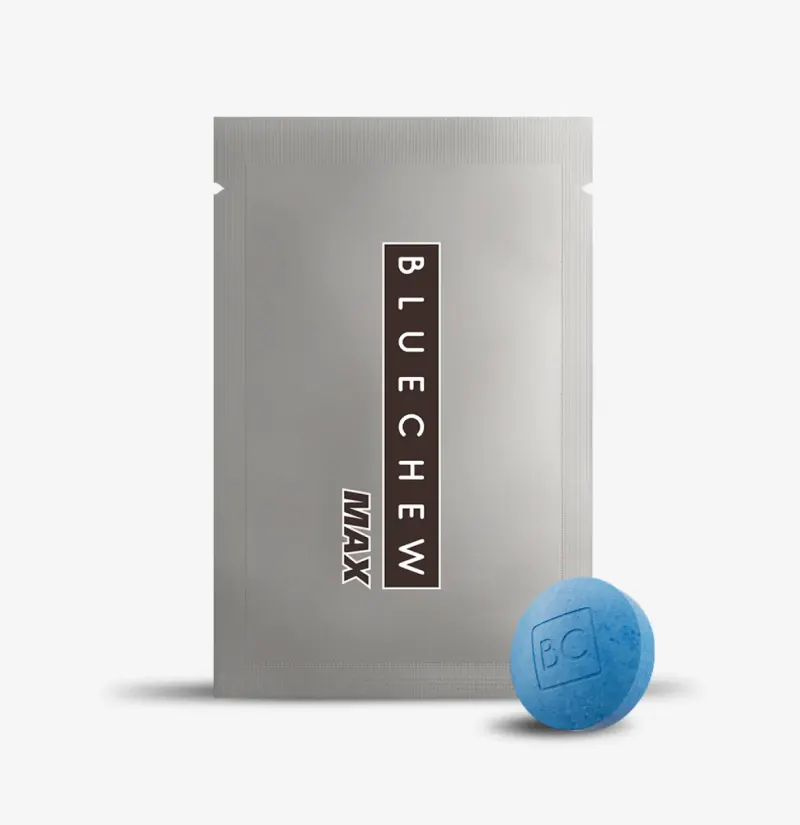
- MAX: 45 mg sildenafil + 18 mg tadalafil combo, $5.63 per tablet, lasting up to 36 hours
- GOLD: sildenafil, tadalafil, oxytocin, and apomorphine sublingual tablet, from $7.30 per tablet, lasting up to 36 hours
For people dealing with SSRI-related sexual side effects, GOLD may be worth discussing with a licensed provider because it includes ingredients that may support both blood-flow and arousal-related pathways.
BlueChew’s complete product lineup includes:
- SIL: 30 mg or 45 mg sildenafil, from $2.95/tablet, works in 30 minutes, lasting up to 6 hours
- TAD: 6 mg or 9 mg tadalafil, from $3.58/tablet, effective within 30 minutes, lasting up to 36 hours
- VAR: 8 mg vardenafil, from $4.34/tablet, takes effect in 30 minutes, lasting up to 6 hours
- DailyTAD: 9 mg tadalafil plus 7 essential vitamins, $2.23/tablet, lasting up to 36 hours
- MAX: 45 mg sildenafil + 18 mg tadalafil combo, $5.63/tablet, lasting up to 36 hours
- VMAX: 14 mg vardenafil + 18 mg tadalafil combo, $5.63/tablet, lasting up to 36 hours
- GOLD: sildenafil, tadalafil, oxytocin, and apomorphine sublingual tablet, from $7.30/tablet, lasting up to 36 hours
Product format note: BlueChew offers sublingual tablet options, including SIL, TAD, VAR, MAX, VMAX, and GOLD. ENERGY is available as a liquid shot. DailyTAD format may vary by plan eligibility.
Starting over sexually does not mean starting perfectly. It means building a more honest, flexible, and supportive approach to intimacy than the one you may have known before. If you want to understand the next step, review how BlueChew works or learn how to manage your account.

Frequently Asked Questions
Can ED affect a second marriage differently than a first marriage?
Yes. ED in a second marriage may carry extra emotional weight because both partners may bring past experiences, expectations, or fears into the relationship. A man may worry about repeating old patterns, disappointing a new spouse, or being compared with a previous partner. That does not mean ED is a sign the marriage is failing. It means the couple may need more communication, patience, and medical guidance if symptoms continue.
What can cause ED around the time of remarriage?
ED around remarriage can have physical, emotional, and lifestyle-related contributors. Possible factors include stress, performance pressure, medication effects, cardiovascular health, diabetes, sleep problems, alcohol use, anxiety, depression, or blended-family responsibilities. Many men have more than one contributor at the same time. A healthcare provider can help assess what may be involved.
How should I talk to my spouse about ED?
Choose a calm time outside the bedroom and keep the conversation simple. Reassure your spouse that attraction is present, then explain that pressure, stress, or health factors may be affecting your body’s response. It can help to frame ED as something you want to address together rather than something either person caused. A brief, honest conversation can prevent misunderstanding.
Should I seek ED treatment before it affects the marriage?
If ED is causing distress, avoidance, or repeated tension, it may be worth speaking with a healthcare provider sooner rather than waiting. ED can sometimes be related to health conditions, medication effects, or stress that deserves attention. Getting guidance does not mean the issue is severe. It can simply help you understand the next step.
Can BlueChew be an option in a second marriage?
BlueChew may be an option for eligible patients who want to discuss prescription ED treatment with a licensed provider. BlueChew offers compounded sublingual medications after an online provider review. This may be worth considering if ED concerns are adding pressure to intimacy. The right option depends on your health history, current medications, and provider approval.
This article is provided for informational purposes only and does not constitute medical advice. The information presented is not a substitute for professional medical advice, diagnosis, or treatment. Always consult your healthcare provider to discuss the risks, benefits, and appropriateness of any treatment.
BlueChew offers access to healthcare providers who may prescribe compounded medications for the treatment of erectile dysfunction.
The featured products include compounded medications that have not been approved by the FDA. Compounded medications may be prescribed under federal law but are not the same as, nor are they generic versions of, any FDA-approved medication. The FDA does not review compounded medications for safety, effectiveness, or manufacturing quality of compounded products. A prescription will only be written if deemed appropriate after the digital consultation by the licensed medical provider. Individual results may vary.
Other Helpful Articles