Key Takeaways
Key Takeaways
MINDSET6 minute read
How to Talk Sexual Health Like an Adult

Erectile dysfunction is common, especially as men get older—yet many men delay seeking treatment because conversations about sexual health can feel difficult to start. Whether you're discussing concerns with a healthcare provider, bringing up changes with a partner, or simply acknowledging that you could use some support, learning to communicate openly about sexual health is one of the most valuable skills you can develop for your overall wellbeing. And modern telehealth platforms have made it easier than ever to start that conversation.
Here's something that might reframe how you think about this topic: ED isn't just about sexual function—it can also be an early warning sign of cardiovascular issues, sometimes appearing 2–3 years before angina and 3–5 years before adverse cardiovascular events. The same vascular issues affecting blood flow to the penis often affect the heart. This means talking about sexual health isn't just about intimacy—it's about your long-term health.
The stigma surrounding these discussions costs men years of treatment, strains relationships, and may even mask serious health conditions. This guide will help you navigate these conversations with confidence, whether you're preparing to talk to a doctor, approach your partner, or simply get more comfortable with the topic yourself.
Key Takeaways
- ED is common, especially as men get older—you're far from alone, and seeking help is a sign of proactive health management
- Sexual health conversations with providers should feel like discussions about any other health concern—prepare your questions and be direct
- Talking to your partner outside the bedroom, in a relaxed setting, leads to more productive conversations
- Telehealth platforms have removed major barriers by offering text-based consultations and discreet delivery
- Addressing erectile concerns isn't just about sex—it's connected to cardiovascular health and overall wellbeing

Breaking the Silence: Why Open Communication About Sexual Health Matters
Many men still avoid talking about sexual health with both healthcare providers and partners, even though these conversations can be important for treatment and overall health.
This silence has real consequences—both for relationships and for physical health.
The Health Connection You Can't Ignore
ED often serves as an early warning system for serious health conditions. The penile arteries are smaller (1-2mm) than coronary arteries (3-4mm), meaning the same vascular damage causing heart disease often shows up in erectile function first.
Conditions ED may precede:
- Coronary artery disease—by approximately 3 years
- Heart attack or stroke—by 3-5 years
- Diabetes—ED is commonly associated with diabetes and other metabolic conditions
- Hypertension—often concurrent
Understanding this connection can reframe the conversation entirely. You're not just discussing sexual performance—you're taking charge of your cardiovascular health.
What Keeps Men Silent
Several barriers prevent open discussion:
- Fear of judgment: Concerns about appearing "less masculine"
- Medical environment discomfort: Clinical settings can feel intimidating
- Privacy concerns: Some men feel uncomfortable with in-person pickup, which can delay treatment
- Partner communication gaps: Uncertainty about how to start the conversation
Recognizing these barriers is the first step toward overcoming them. The good news? Modern solutions address nearly every one of these concerns.
 Reviewed by a licensed provider
 Understanding the Basics: What Sexual Health Actually Means
Sexual health encompasses far more than the absence of disease or dysfunction. It includes physical, emotional, and mental wellbeing related to sexuality—and it's a normal part of overall health that deserves attention.
Key components of sexual health:
- Physical function and satisfaction
- Emotional connection and intimacy
- Mental wellbeing and body confidence
- Communication with partners
- Reproductive health decisions
- Consent and boundaries
When we limit sexual health discussions to STI prevention or pregnancy planning, we miss the bigger picture. Sexual function and satisfaction are legitimate health concerns that deserve the same attention as any other aspect of your wellbeing.
Navigating Conversations: Practical Tips for Discussing Sexual Health
Whether you're talking to a healthcare provider or your partner, preparation and approach make all the difference.
Talking to Your Healthcare Provider
Before the Visit:
- Write down specific concerns: "I'm having difficulty maintaining erections" is more useful than "I have a problem"
- Track patterns: When does it happen? How often? Any potential triggers?
- List all medications—many can contribute to ED, including blood pressure medications and antidepressants
- Prepare your questions in advance
Starting the Conversation:
- Be direct: "I'd like to discuss my sexual health today"
- Frame it as a health issue: "I know ED can signal heart problems—I want to be proactive"
- Use specific language: "How satisfied are you with your erections?" works better than vague complaints
Healthcare providers see these concerns regularly. Research from the National Coalition for Sexual Health emphasizes that normalizing the discussion helps both patients and providers communicate more effectively.
Talking to Your Partner
Partner conversations require thoughtful timing and approach.
Choose the Right Setting:
- Private, relaxed environment
- Outside the bedroom—not during or immediately after intimacy
- When neither of you is rushed, stressed, or tired
- Avoid starting during arguments or right before bed
Conversation Starters That Work:
- "I've been noticing some changes in my sexual health, and I want to talk about it"
- "I read that ED can be an early sign of heart problems—I'm going to see a doctor to check it out"
- "I'm exploring treatment options. Can we talk about what would work for us?"
What Partners Need to Understand:
- ED is a medical condition, not a reflection of attraction
- Treatment success rates are high—up to 70% of men respond to PDE5 inhibitors
- Multiple treatment options exist, from lifestyle changes to medications
- This affects both partners, and working together improves outcomes
The key is framing the conversation as a partnership issue, not an individual failing. You're tackling this together.
Addressing Erectile Dysfunction: Modern Solutions and Discreet Options
The landscape of ED treatment has transformed dramatically. Where men once faced uncomfortable in-person doctor visits and pharmacy pickups, telehealth platforms now offer entirely new pathways to care.
The Rise of Telemedicine for ED
Many patients find digital, low-pressure communication formats more comfortable for discussing sensitive concerns.
Why telehealth works for sexual health:
- More privacy—no waiting rooms or face-to-face conversations
- Complete at your own pace—no pressure to "perform" appropriate reactions
- Access from anywhere—no geographic barriers
- Easier to discuss sensitive topics when typing versus speaking
Healthcare providers have noted that telehealth removes the step of "having to go somewhere in person," which significantly reduces barriers to seeking care.
What to Look For in Discreet Treatment Options
When evaluating ED treatment options, consider:
- Consultation type: Text-based options remove face-to-face pressure
- Delivery discretion: Unmarked packaging that doesn't reveal contents
- Format options: Chewable and sublingual formulations may be helpful for people who prefer alternatives to standard tablets
- Ongoing support: Access to providers for questions and adjustments
- Flexibility: Ability to pause, cancel, or switch treatments as needed
Beyond Pills: Exploring Diverse Medication Formulations for ED
Traditional ED treatment often meant standard pills with specific timing requirements. Today's options are far more varied.
Why Formulation Matters
Different formats offer distinct advantages:
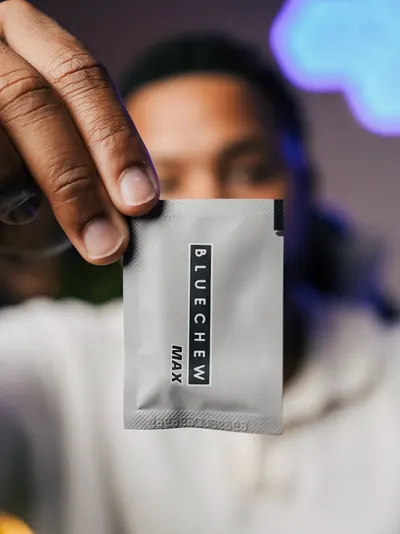
Chewable tablets offer a convenient alternative to traditional tablets and may begin working within 30 minutes. They're discreet—individual sachets resemble mint wrappers and fit easily in a wallet or pocket.
Sublingual tablets are placed under the tongue and may work faster for some men, depending on the formulation and individual response.
Understanding the Active Ingredients
The primary ED medications work as PDE5 inhibitors, blocking an enzyme that breaks down the chemicals responsible for erections. This mechanism has over 20 years of clinical validation.
Sildenafil (the active ingredient in Viagra): Works within 15-30 minutes, lasting 4-6 hours. Best for planned encounters.
Tadalafil (the active ingredient in Cialis): Works within 15-30 minutes, lasting 24-36 hours. Often called the "weekend pill" for its extended duration.
Vardenafil (the active ingredient in Levitra): Works within 15-30 minutes, lasting 4-6 hours. Another option for planned intimacy.
Combination therapies may help men who don't respond adequately to single ingredients. Research indicates combination approaches can improve results for non-responders.

The Science Behind the Solutions: How ED Medications Work
Understanding how these medications function can help you have more informed conversations with providers and feel confident in your treatment choices.
Understanding PDE5 Inhibitors
When you're sexually aroused, your body releases nitric oxide, which triggers the production of cyclic GMP—a chemical that relaxes smooth muscle cells and increases blood flow to the penis.
PDE5 inhibitors work by blocking the enzyme (phosphodiesterase-5) that breaks down cyclic GMP. The result: blood flow improves, leading to harder, longer-lasting erections when you're sexually aroused.
Important to note: These medications require sexual arousal to work. They enhance your natural response rather than creating an automatic erection.
The Role of Combination Therapies
For men who don't respond adequately to single-ingredient medications, combination approaches may offer better results. Some formulations combine PDE5 inhibitors with other ingredients designed to support both physical response and brain-based arousal pathways.
Cost-Effective and Convenient: Accessible ED Treatment Options
Cost and convenience have historically been major barriers to ED treatment. Brand-name medications can cost $70 or more per pill, making consistent treatment prohibitively expensive for many men.
What Makes Treatment Accessible
Modern telehealth platforms have disrupted this model by offering:
- Lower prices: Compounded medications can cost a fraction of brand-name alternatives
- Transparent pricing: No hidden fees or insurance complexity
- Subscription flexibility: Pause, cancel, or adjust anytime
- FSA/HSA eligibility: Many plans qualify for health spending accounts
- Free consultations: Medical evaluation included with treatment
How BlueChew Supports Your Sexual Health Journey
If you're ready to address erectile concerns, BlueChew offers a streamlined path from conversation to treatment.
BlueChew provides compounded prescription medications containing the active ingredients sildenafil, vardenafil, and tadalafil—the same active ingredients found in Viagra, Levitra, and Cialis, respectively. Our online platform connects you with licensed medical providers through a simple text-based intake, typically with prescription review within 24-48 hours.
What sets BlueChew apart:
- 100% online process: No in-person visits or pharmacy lines
- Text-based consultations: No video required
- Discreet delivery: Unmarked kraft mailers with mint-like sachets
- 7 formulation options: Including chewable and sublingual formats
- 24/7 support: Licensed providers available for questions
BlueChew's complete lineup includes:
- SIL: 30 mg or 45 mg sildenafil, works within 15 minutes, lasting up to 6 hours
- TAD: 6 mg or 9 mg tadalafil, effective within 15 minutes, lasting up to 36 hours
- VAR: 8 mg vardenafil, takes effect within 15 minutes, lasting up to 6 hours
- DailyTAD: 9 mg tadalafil plus 7 essential vitamins, lasting up to 36 hours
- MAX: 45 mg sildenafil + 18 mg tadalafil combo, lasting up to 36 hours
- VMAX: 14 mg vardenafil + 18 mg tadalafil combo, lasting up to 36 hours
- GOLD: sildenafil, tadalafil, oxytocin, and apomorphine sublingual tablet, lasting up to 36 hours
Learn more about how BlueChew works or explore our advanced formulation, BlueChew GOLD, which addresses both physical and psychological factors of sexual function.

Frequently Asked Questions
What is the best way to start a conversation about sexual health with a partner?
Choose a private, relaxed setting outside the bedroom—not during or immediately after intimacy. Be direct but compassionate: "I've noticed some changes in my sexual health and want to talk about it." Frame it as a health issue you're addressing proactively, and emphasize that you want to work together. Avoid starting these conversations during arguments or when either partner is stressed.
Are online ED medications as effective as those from a traditional doctor's visit?
Online platforms like BlueChew provide the same active ingredients found in brand-name ED medications prescribed by traditional doctors. The difference is in the delivery model—telehealth removes the barriers of in-person visits and pharmacy pickups while still involving licensed medical providers who review your health history and prescribe appropriate treatment.
What are compounded medications, and are they safe?
Compounded medications are custom-made by licensed pharmacies to specific dosages or formats that may not be available commercially—such as chewable or sublingual formulations. BlueChew's compounded medications contain clinically validated active ingredients with over 20 years of research backing their safety and efficacy. While compounded formulations themselves aren't FDA-approved, the active ingredients they contain are well-established.
How does BlueChew ensure discretion and privacy for its customers?
BlueChew ships all medications in unmarked kraft mailers with no logos or identifying marks. Individual doses come in sachets resembling mint wrappers. Billing appears as a generic company name rather than anything revealing the product. The entire process—from consultation to delivery—happens online, eliminating waiting rooms, pharmacy lines, and face-to-face conversations.
What is the difference between sildenafil and tadalafil in terms of duration and onset?
Both work within approximately 30 minutes, but tadalafil lasts significantly longer. Sildenafil (the active ingredient in Viagra) typically provides 4-6 hours of effectiveness, making it ideal for planned encounters. Tadalafil (the active ingredient in Cialis) can last 24-36 hours, earning it the nickname "weekend pill" and allowing for more spontaneous intimacy without timing pressure. Your choice depends on your preferences and lifestyle.
This article is provided for informational purposes only and does not constitute medical advice. The information presented is not a substitute for professional medical advice, diagnosis, or treatment. Always consult your healthcare provider to discuss the risks, benefits, and appropriateness of any treatment.
BlueChew offers access to healthcare providers who may prescribe compounded medications for the treatment of erectile dysfunction.
The featured products include compounded medications that have not been approved by the FDA. Compounded medications may be prescribed under federal law but are not the same as, nor are they generic versions of, any FDA-approved medication. The FDA does not review compounded medications for safety, effectiveness, or manufacturing quality of compounded products. A prescription will only be written if deemed appropriate after the digital consultation by the licensed medical provider. Individual results may vary.
BlueChew is not a compounding pharmacy but a telemedicine service that links patients to licensed medical providers.
BLUECHEW EDITORIAL STANDARDS
BlueChew is committed to providing accurate, clear, and up-to-date health information. Our writers and medical reviewers rely on peer-reviewed research, clinical guidelines, academic institutions, government health agencies, and professional medical organizations. Whenever possible, we cite primary sources and update our content as new evidence becomes available.
See something that needs correction? Let us know at blog@bluechew.com.



 Medically reviewed