Key Takeaways
Key Takeaways
SEX10 minute read
How to Break the Performance Anxiety Loop

Performance anxiety can turn one difficult sexual experience into a repeating pattern: worry builds before intimacy, the body shifts into stress mode, and the result confirms the fear you were trying to avoid. Clinical reviews describe sexual performance anxiety as a common concern that can contribute to psychogenic erectile dysfunction and other sexual difficulties. Understanding how that loop works is the first step toward interrupting it.
Research in Sexual Medicine Reviews estimates that sexual performance anxiety affects 9-25% of men, though the exact experience varies from person to person. For some men, it shows up as occasional nervousness. For others, it becomes a recurring pattern of self-monitoring, avoidance, and worry around sexual performance. This guide focuses on practical ways to reduce that pressure without overpromising quick fixes.
Key Takeaways
- Performance anxiety can create a self-reinforcing loop where worry and physical response feed into each other
- Psychological strategies and medical support may work better together for some men than either approach on its own
- Mindfulness, grounding, and cognitive reframing can help shift attention away from self-monitoring
- Partner communication can reduce isolation and make performance concerns easier to address
- When erectile concerns are part of the pattern, a medical provider can help determine whether treatment is appropriate
Understanding Performance Anxiety: What It Is and Why It Happens
Performance anxiety in sexual contexts occurs when worry about sexual performance activates your body's stress response, which then interferes with the very function you're worried about. It's a feedback loop that can feel impossible to escape once it starts.
The Cycle Explained
When you anticipate a sexual encounter and feel anxious about performing, your body can shift toward a stress response. The sympathetic nervous system becomes more active, and that stress state can make arousal and erection more difficult.
The cycle typically follows this pattern:
- Anticipatory anxiety builds before intimacy
- Stress makes it harder to stay relaxed and engaged
- Physical response becomes less predictable
- The experience reinforces worry about the next encounter
- Repeated episodes make the pattern feel harder to interrupt
Common Triggers and Manifestations
Performance anxiety can emerge from various sources, and understanding your triggers helps target your approach.
Frequent triggers include:
- A previous negative sexual experience that created doubt
- Relationship changes or new partners introducing uncertainty
- Life stressors like work pressure, financial concerns, or health worries
- Excessive self-monitoring during intimacy rather than staying present
- Unrealistic expectations from media or comparisons to past experiences
Performance anxiety often shows a situational pattern. A man might notice erections during sleep or solo activity, but have more difficulty with a partner or in specific situations. That pattern can suggest a psychological component, though a medical provider is the right person to rule out physical contributors.
 Reviewed by a licensed provider
 Immediate Relief: Managing Anxiety in the Moment
When anxiety strikes before or during intimacy, having techniques to calm your nervous system can prevent the spiral from taking hold.
Breathing Exercises for Calm
Slow breathing can help signal safety to the body and create a calmer starting point before intimacy.
Try this 4-7-8 breathing technique:
- Inhale quietly through your nose for 4 seconds
- Hold your breath for 7 seconds
- Exhale completely through your mouth for 8 seconds
- Repeat 3-4 times before intimacy or when you notice anxiety building
Quick Mindfulness Techniques
Mindfulness anchors you to the present moment, breaking the pattern of catastrophic thinking about what might go wrong.
Sensory grounding exercise:
- Notice 5 things you can see in the room
- Identify 4 things you can physically feel (your partner's skin, the sheets, temperature)
- Listen for 3 distinct sounds
- Notice 2 scents
- Focus on 1 taste
This technique gives your attention something concrete to return to when your mind starts scanning for problems.
Rewiring Your Mind: How to Stop Negative Anxiety Thoughts
The thoughts fueling performance anxiety often contain distortions that do not hold up to careful examination. Cognitive restructuring helps identify these unhelpful patterns and replace them with more balanced alternatives.
Identifying Thought Distortions
Common distortions that drive performance anxiety include:
- Catastrophizing: "If I can't perform, my relationship is over"
- All-or-nothing thinking: "One failure means I'll always fail"
- Mind reading: "My partner thinks I'm inadequate"
- Fortune telling: "I know this won't work"
Strategies for Cognitive Reframing
Once you identify the distortion, challenge it with evidence and replace it with a more balanced perspective.
Reframing examples:
- Instead of "I must perform perfectly," try "Sex is about connection and pleasure, not just erection performance"
- Instead of "One failure means permanent problems," try "My body has worked before; stress is temporary"
- Instead of "My partner will judge me," try "My partner wants us both to enjoy intimacy"
Education and reassurance can be helpful because performance anxiety often grows when men misread one difficult encounter as proof of a permanent problem.
Building Confidence: Overcoming Anxiety for Long-Term Performance
Longer-term progress usually comes from building repeat experiences that feel lower pressure and more predictable.
Setting Realistic Expectations
Perfectionism fuels anxiety. Shifting your definition of successful intimacy removes much of the pressure.
Helpful mindset shifts:
- Focus on pleasure and connection rather than specific outcomes
- Recognize that variation in erectile response is normal
- View intimacy as an ongoing conversation, not a test
- Celebrate progress rather than demanding perfection
The Power of Incremental Progress
Gradual desensitization builds confidence through manageable steps. The sensate focus approach, developed by Masters and Johnson, exemplifies this principle.
- Early phase: Non-genital touching for pleasure only, with no performance expectations
- Middle phase: Gradual inclusion of genital touch without erection or intercourse goals
- Later phase: Progress toward intercourse only when both partners feel ready
Throughout this process, the focus stays on sensation and communication rather than proving that sex has to go a certain way.
When Physiology Plays a Role: Addressing Physical Aspects
Performance anxiety creates real physical changes, and sometimes addressing the physiological component helps break the psychological cycle.
The Link Between Anxiety and Physical Response
Erections depend on a coordinated mix of arousal, relaxation, nerve signaling, and blood flow. When anxiety takes over, that coordination can become harder to maintain.
PDE5 inhibitors work by blocking the phosphodiesterase-5 enzyme, which helps support blood-vessel relaxation and blood flow when a man is sexually aroused. They do not create automatic erections, and they are not a substitute for addressing stress, communication, or relationship factors.
Consulting a Healthcare Provider
Speaking with a medical provider helps determine whether physical factors contribute to your experience and what treatment approach makes sense. A telemedicine model can make that conversation more private and convenient for some men.

How BlueChew Supports Confidence and Performance
When erectile concerns are part of the anxiety loop, BlueChew offers access to prescription compounded medications after an online provider review.
Breaking the Cycle with Physical Support
Medication can be one part of a broader plan when erectile difficulty is contributing to performance worry. For some men, treating the physical component makes it easier to practice lower-pressure intimacy and communication.
A systematic review on psychological interventions and PDE5 inhibitors found that psychological approaches may be useful alone or alongside PDE5 inhibitors for erectile dysfunction. That supports a combined, individualized approach rather than relying on one strategy for every situation.
BlueChew's Product Options
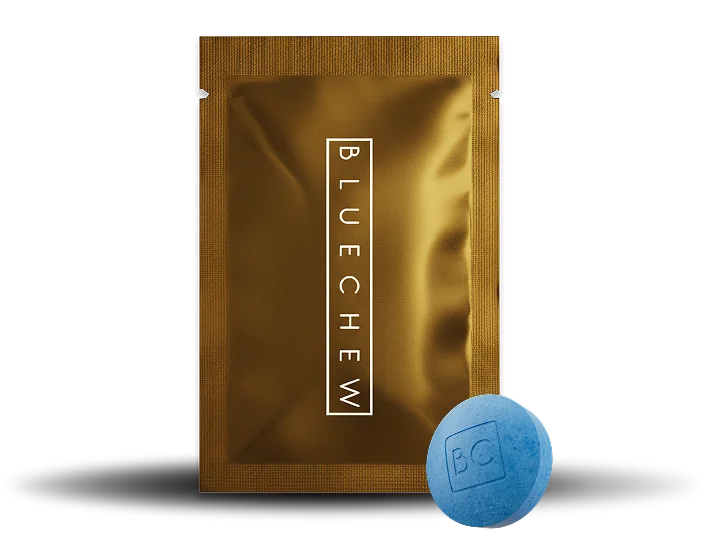
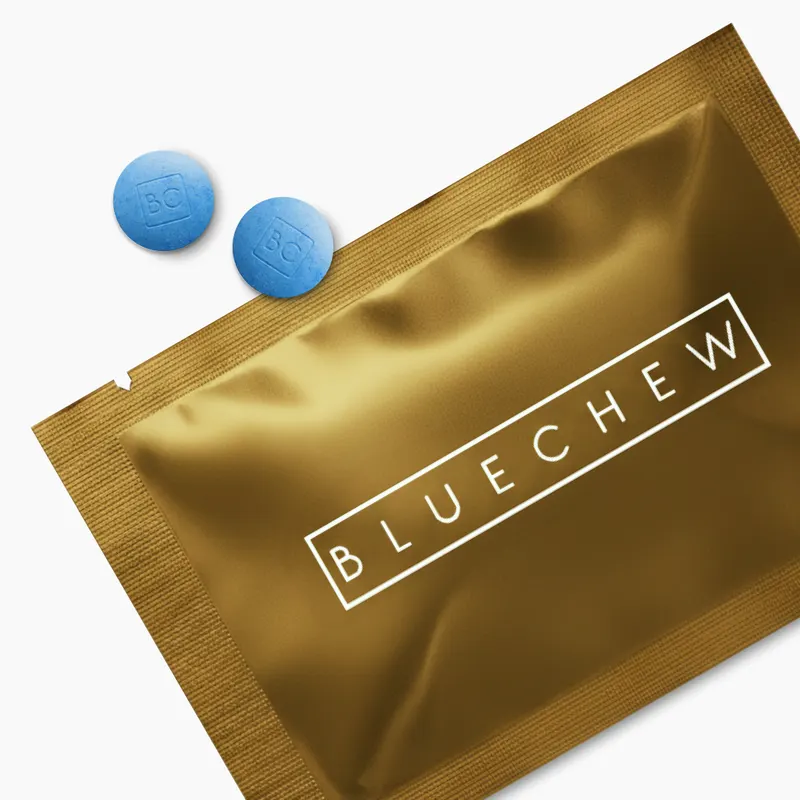
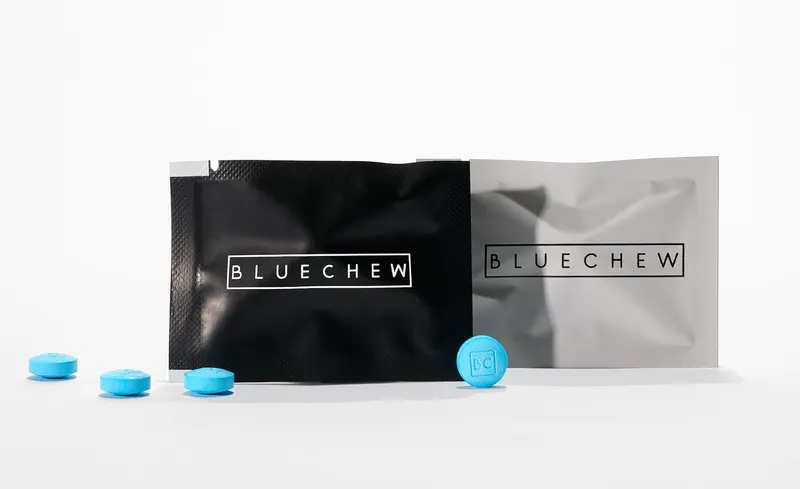
BlueChew provides prescription medications containing the active ingredients sildenafil, vardenafil, and tadalafil. Sildenafil, vardenafil, and tadalafil are the active ingredients in Viagra, Levitra, and Cialis, respectively.
BlueChew’s complete product lineup includes:
- SIL: 30 mg or 45 mg sildenafil, works within 15 minutes, lasting up to 6 hours
- TAD: 6 mg or 9 mg tadalafil, effective within 15 minutes, lasting up to 36 hours
- VAR: 8 mg vardenafil, takes effect within 15 minutes, lasting up to 6 hours
- DailyTAD: 9 mg tadalafil plus 7 essential vitamins, lasting up to 36 hours
- MAX: 45 mg sildenafil + 18 mg tadalafil combo, lasting up to 36 hours
- VMAX: 14 mg vardenafil + 18 mg tadalafil combo, lasting up to 36 hours
- GOLD: sildenafil, tadalafil, oxytocin, and apomorphine sublingual tablet, lasting up to 36 hours
For men whose performance concerns involve both erectile response and arousal, GOLD may be worth discussing with a provider. It contains sildenafil, tadalafil, oxytocin, and apomorphine in a sublingual tablet. You can also read more about how fast GOLD works.
Beyond Medication: Holistic Strategies for Anxiety Management
Daily health habits cannot erase performance anxiety on their own, but they can support the systems involved in mood, energy, circulation, and sexual function.
The Role of a Healthy Lifestyle
Exercise: Regular physical activity supports cardiovascular health, circulation, and stress regulation, all of which can affect sexual function.
Sleep: Consistent sleep helps with mood, energy, and hormone regulation. Poor sleep can make anxiety harder to manage.
Nutrition: A heart-healthy eating pattern can support vascular health. Alcohol moderation and avoiding smoking may also help protect erectile function.
Connecting with Your Partner
Partner communication can change how performance anxiety feels in the relationship. A review in Nature Reviews Urology describes ED as a shared sexual health concern and notes that partner involvement can play an important role in education, counseling, and treatment decisions.
Communication strategies:
- Frame the issue as something you're working on together, not individual failure
- Discuss preferences, concerns, and what feels good without judgment
- Involve your partner early in any treatment approach
- Celebrate intimacy in all forms, not just intercourse
Seeking Professional Help: When to Consult an Expert
While self-help strategies work for many men, professional support becomes valuable when anxiety is severe or persistent.
The Benefits of Therapy
Cognitive behavioral and sex-therapy approaches may help men work through self-monitoring, avoidance, and anxious interpretations around sex. In one randomized trial, cognitive behavior sex therapy and integrated treatment improved erectile-function scores in men with non-organic erectile dysfunction compared with placebo.
Consider professional help if:
- Severe anxiety prevents intimate attempts altogether
- Self-help techniques are not leading to meaningful change
- Past trauma may be contributing to current difficulties
- Relationship conflict is worsening due to sexual concerns
- Depression or substance use complicates the picture
Telemedicine for Accessible Support
BlueChew's online platform can make it easier to discuss ED-related concerns privately and review prescription options with a provider.

Frequently Asked Questions
Can performance anxiety cause erectile dysfunction?
Yes. Performance anxiety can contribute to erectile difficulties because anxiety shifts attention away from arousal and can make the body less responsive in the moment. It can also create a feedback loop where one difficult experience increases worry about the next one. A medical provider can help determine whether psychological, physical, or mixed factors are involved.
How quickly can BlueChew help with performance challenges?
BlueChew's product lineup includes sublingual options that are described as working within 15 minutes, including GOLD. Individual response can vary, so it is important to follow the prescribing provider's guidance and use medication only as directed.
What's the difference between BlueChew's MAX and GOLD for performance anxiety?
MAX combines sildenafil and tadalafil in a sublingual tablet with effects described as lasting up to 36 hours. GOLD also contains sildenafil and tadalafil, plus oxytocin and apomorphine. A provider can help determine which option fits a patient's needs and medical history.
Is BlueChew discreet, and how does it help with privacy concerns?
BlueChew emphasizes privacy through online access and discreet shipping. This may be helpful for men who feel uncomfortable discussing ED in traditional healthcare settings.
Can I use BlueChew if my performance anxiety is mostly psychological?
A provider may still consider medication when erectile difficulty is part of the anxiety cycle, even if stress or self-monitoring plays a major role. For many men, the best plan includes both practical anxiety-management strategies and medical guidance.
This article is provided for informational purposes only and does not constitute medical advice. The information presented is not a substitute for professional medical advice, diagnosis, or treatment. Always consult your healthcare provider to discuss the risks, benefits, and appropriateness of any treatment.
BlueChew offers access to healthcare providers who may prescribe compounded medications for the treatment of erectile dysfunction.
The featured products include compounded medications that have not been approved by the FDA. Compounded medications may be prescribed under federal law but are not the same as, nor are they generic versions of, any FDA-approved medication. The FDA does not review compounded medications for safety, effectiveness, or manufacturing quality of compounded products. A prescription will only be written if deemed appropriate after the digital consultation by the licensed medical provider. Individual results may vary.
BlueChew is not a compounding pharmacy but a telemedicine service that links patients to licensed medical providers.
BLUECHEW EDITORIAL STANDARDS
BlueChew is committed to providing accurate, clear, and up-to-date health information. Our writers and medical reviewers rely on peer-reviewed research, clinical guidelines, academic institutions, government health agencies, and professional medical organizations. Whenever possible, we cite primary sources and update our content as new evidence becomes available.
See something that needs correction? Let us know at blog@bluechew.com.



 Medically reviewed