Key Takeaways
Key Takeaways
SEX8 minute read
The Dopamine-Oxytocin Connection in Sex

When most people think about sexual function, blood flow tends to dominate the conversation. But the real story starts in your brain, where two powerful neurochemicals—dopamine and oxytocin—orchestrate everything from that initial spark of desire to the deep sense of connection you feel afterward. Understanding how these brain chemicals work together can transform how you approach intimacy and help you recognize when something might be off. For those exploring options to support their sexual health, BlueChew's GOLD actually includes oxytocin alongside other active ingredients—a formulation that reflects just how central this neurochemistry is to sexual experience.
The science here is fascinating: dopamine and oxytocin work together to regulate not just sexual performance, but also the motivation that drives you toward intimacy and the bonding that follows. When these systems function well, sex feels rewarding, connected, and satisfying. When they're disrupted—by stress, anxiety, or other factors—the effects can ripple through every phase of the sexual experience.
Key Takeaways
- Dopamine drives sexual desire and motivation, creating the "wanting" that initiates intimate encounters
- Oxytocin facilitates both physical sexual response and emotional bonding with your partner
- These two neurochemicals form a feedback loop that amplifies both pleasure and connection during sex
- Stress and performance anxiety can disrupt this neurochemical balance, affecting desire and function
- Supporting the physical aspects of sexual response can help restore healthy neurochemical signaling
Understanding the Neurochemical Symphony of Sexual Desire and Arousal
Sexual experience isn't a single event—it's a carefully coordinated sequence of neurochemical signals that begins long before physical contact and continues well after. Your brain's reward system, limbic structures, and hormone-producing regions all communicate through dopamine and oxytocin to create the complete sexual response cycle.
The process starts with dopamine, released in the ventral tegmental area (VTA) when you encounter sexual stimuli. This creates that familiar sense of anticipation and motivation—the "wanting" that pulls you toward your partner. From there, dopamine facilitates penile erection by activating central oxytocinergic neurons in the paraventricular nucleus (PVN), linking desire to the physical mechanisms of arousal.
The brain regions involved include:
- Ventral Tegmental Area (VTA): Produces dopamine in response to sexual cues
- Nucleus Accumbens: Processes reward and reinforcement
- Paraventricular Nucleus (PVN): Links dopamine activity to oxytocin release
- Medial Preoptic Area: Integrates sexual motivation with physical arousal
This isn't a simple on-off switch. It's more like a symphony where different instruments come in at different times, building toward a crescendo.
 Reviewed by a licensed provider
 Dopamine: The Neurotransmitter of Pleasure and Reward in Sex
Dopamine is often called the brain's "motivation molecule," and for good reason. In the context of sex, it's what makes you want to pursue intimacy in the first place. Research shows that dopamine is positively implicated in the pre-copulatory or appetitive phase of sexual behavior, driving the seeking and courtship behaviors that precede physical intimacy.
How Dopamine Drives Sexual Motivation
When you're attracted to someone or anticipating a sexual encounter, dopamine levels surge in your brain's reward pathways. This creates:
- The desire to initiate or pursue sexual activity
- Heightened attention to your partner
- A sense of excitement and anticipation
- The reinforcement that makes sex feel rewarding
The mesolimbic dopamine pathway is central to this process. Dopamine neurons in the VTA project to the nucleus accumbens, creating that rewarding sensation that makes sexual experiences memorable and motivates you to seek them again.
Dopamine's Role in Erectile Function
Beyond motivation, dopamine plays a direct role in facilitating erections. Dopamine facilitates penile erection by activating central oxytocinergic neurons in the PVN. The D2 and D4 dopamine receptors are particularly important here—they're located on oxytocin-producing neurons and trigger the downstream cascade that leads to physical arousal.
This is why conditions that affect dopamine—like depression or certain medications—can impact both sexual desire and erectile function. Understanding what PDE5 inhibitors do helps explain how medications can support the physical component while your brain handles the neurochemical side.
Oxytocin: The 'Love Hormone' and Its Role in Bonding and Intimacy
While dopamine gets you motivated, oxytocin deepens the experience. Often called the 'love hormone' or 'cuddle chemical', oxytocin is associated with trust, sexual arousal, and relationship building. But it does far more than create warm feelings—it's directly involved in the physical mechanics of sex.
Physical Functions of Oxytocin
Oxytocin contributes to sexual function in several concrete ways:
- Erectile Support: Oxytocin facilitates penile erection through spinal cord pathways
- Orgasm Intensity: Levels surge dramatically during orgasm, contributing to pleasure
- Ejaculation: Involved in the contractile mechanisms of ejaculation
Studies show that oxytocin levels soar during and after sex and don't return to baseline until about 30 minutes post-ejaculation. This sustained elevation is part of what creates the "afterglow" feeling.
The Bonding Effect
Oxytocin's emotional effects are equally important. Research indicates that higher oxytocin levels correlate with:
- Increased partner commitment
- Enhanced perception of partner attractiveness
- Reduced interest in alternative partners
- Stronger emotional connection after sexual activity
Some experimental research suggests oxytocin may reduce romantic jealousy and the negative emotional response to perceived partner infidelity in controlled settings—one possible way it could support relationship maintenance. Human relationships are more complex, but this aligns with oxytocin’s broader role in bonding.
Oxytocin plays a key role in regulating emotional interactions and interpersonal bonding, which indirectly influences sexual health. This creates a positive feedback loop: better sex leads to more oxytocin, which strengthens your relationship, which leads to better sex.
The Interplay: How Dopamine and Oxytocin Work Together
These two neurochemicals don't operate in isolation—they form an integrated circuit that creates the full sexual experience. Central dopaminergic and oxytocinergic systems work together to regulate penile erection and sexual behavior.
The Feedback Loop
The interaction follows a predictable pattern:
- Arousal Phase: Sexual stimuli activate dopamine release, creating motivation
- Activation Phase: Dopamine triggers oxytocin neurons; physical arousal begins
- Amplification Phase: Oxytocin stimulates more dopamine release in the VTA, creating a positive feedback loop
- Orgasm Phase: Both neurochemicals peak—dopamine in reward centers, oxytocin throughout the system
- Resolution Phase: Dopamine decreases (satisfaction), while oxytocin remains elevated (bonding)
This is why satisfying sexual experiences feel both pleasurable in the moment and connecting afterward. The dopamine creates the reward sensation; the oxytocin creates the emotional attachment.
When Both Systems Are Needed
Preclinical research suggests dopamine-driven erectile responses rely heavily on intact oxytocin signaling pathways in the hypothalamus. In studies where the paraventricular nucleus was damaged, dopamine agonists failed to produce erections because the oxytocin pathway was disrupted.
This has practical implications: addressing sexual function often requires supporting both systems, not just one. A man might have plenty of desire (dopamine) but struggle with physical response (oxytocin pathway), or vice versa.
External Factors Influencing Dopamine and Oxytocin Levels
Your neurochemistry doesn't exist in a vacuum. Several lifestyle and psychological factors can enhance or disrupt the dopamine-oxytocin balance during sex.
Factors That Support Healthy Neurochemistry
Positive influences include:
- Exercise: Regular physical activity boosts dopamine production
- Quality Sleep: Proper rest regulates both neurotransmitter systems
- Partner Intimacy: Physical touch and emotional closeness naturally increase oxytocin
- Stress Reduction: Lower cortisol allows dopamine pathways to function optimally
- Novelty: New experiences with your partner can activate dopamine's reward circuits
Factors That Can Disrupt the Balance
Negative influences include:
- Chronic Stress: Elevates cortisol, which suppresses both dopamine and oxytocin
- Depression: Alters dopamine signaling, reducing desire and reward sensitivity
- Relationship Conflict: Impairs oxytocin bonding mechanisms
- Certain Medications: Some drugs block dopamine receptors
- Sleep Deprivation: Dysregulates neurotransmitter production
Understanding these factors helps explain why sexual function can fluctuate based on life circumstances—and why addressing underlying issues often improves intimate experiences.
Addressing Performance Anxiety: Bridging Neurochemistry and Confidence
Performance anxiety represents one of the clearest examples of how psychology and neurochemistry intersect. When you're anxious about sexual performance, your body releases stress hormones that directly interfere with the dopamine-oxytocin pathway.
The Neurochemical Impact of Anxiety
Erectile dysfunction can be psychogenic, organic, or (very commonly) mixed—meaning both physical and psychological factors may contribute.
When anxiety takes over:
- Cortisol suppresses dopamine release, reducing desire and reward
- The sympathetic "fight or flight" response counteracts the parasympathetic signals needed for erection
- Negative experiences create a feedback loop where anticipation of failure triggers more anxiety
Breaking the Cycle
The key to addressing performance anxiety is interrupting this negative feedback loop. When the physical aspects of sexual response are reliable—whether naturally or with support—anxiety decreases. This allows your natural dopamine-oxytocin systems to function without interference.
Research suggests that combining treatment with positive social interaction can enhance the body's natural oxytocin feedback loop. In practical terms, this means that addressing physical concerns while also nurturing emotional connection creates the best outcomes.
How BlueChew Supports Sexual Neurochemistry
Understanding the dopamine-oxytocin connection reveals why supporting the physical aspects of sexual function can have cascading positive effects. When erections are reliable, performance anxiety decreases. When anxiety decreases, dopamine flows more freely. When dopamine functions well, the oxytocin response strengthens. This creates an upward spiral toward more satisfying intimate experiences.
BlueChew provides prescription medications containing the active ingredients sildenafil, vardenafil, and tadalafil. Sildenafil, vardenafil, and tadalafil are the active ingredients in Viagra, Levitra, and Cialis, respectively. These PDE5 inhibitors work by enhancing blood flow to support erectile function, addressing the peripheral component of sexual response.
DailyTAD comes in a chewable tablet. SIL, VAR, TAD, MAX, VMAX, and GOLD are available as a sublingual tablet.
BlueChew’s complete product lineup includes:
- SIL: 30 mg or 45 mg sildenafil, works within 15 minutes, lasting up to 6 hours
- TAD: 6 mg or 9 mg tadalafil, effective within 15 minutes, lasting up to 36 hours
- VAR: 8 mg vardenafil, takes effect within 15 minutes, lasting up to 6 hours
- DailyTAD: 9 mg tadalafil plus 7 essential vitamins, lasting up to 36 hours
- MAX: 45 mg sildenafil + 18 mg tadalafil combo, lasting up to 36 hours
- VMAX: 14 mg vardenafil + 18 mg tadalafil combo, lasting up to 36 hours
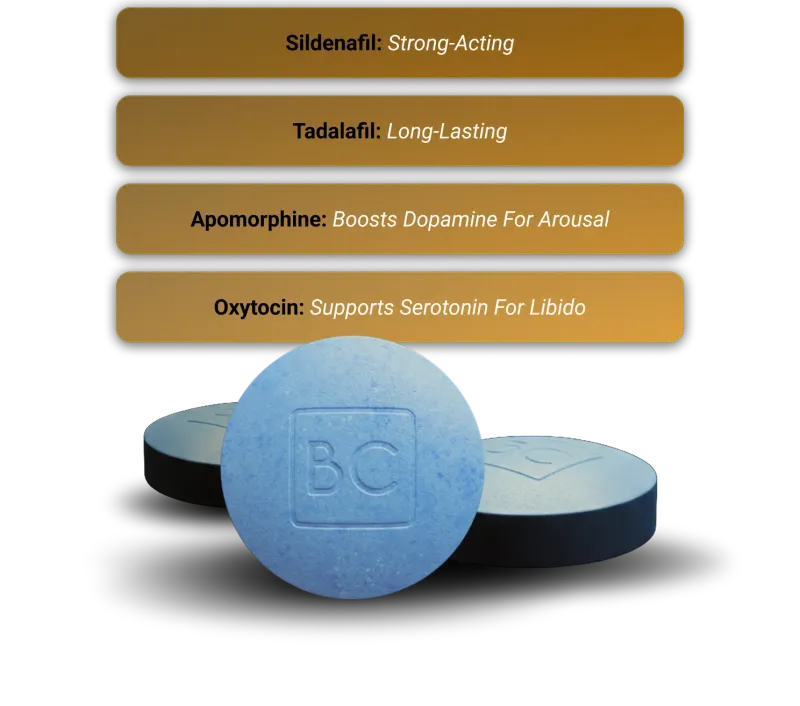
- GOLD: sildenafil, tadalafil, oxytocin, and apomorphine sublingual tablet, lasting up to 36 hours
GOLD is particularly relevant to this discussion—it includes oxytocin alongside apomorphine (a dopamine agonist) and PDE5 inhibitors, addressing multiple aspects of the neurochemical pathway discussed throughout this article.
By supporting reliable physical response, BlueChew helps create the conditions for healthy neurochemical signaling. When you're not worried about whether your body will respond, you can stay present with your partner—exactly where the dopamine-oxytocin connection works best.
Getting started is straightforward: complete a free online consultation, receive a prescription if medically appropriate, and have your treatment shipped discreetly. Explore your options to find the right fit for your needs.

Frequently Asked Questions
What is the primary role of dopamine in sexual activity?
Dopamine serves as the brain's primary driver of sexual desire and motivation. It creates the "wanting" sensation that initiates pursuit of sexual activity by activating reward circuits in the mesolimbic pathway. Dopamine is positively implicated in the pre-copulatory or appetitive phase of sexual behavior—essentially, it's what makes you want to have sex in the first place. Beyond motivation, dopamine also plays a direct role in facilitating erections by activating oxytocin neurons that trigger the physical arousal response.
How does oxytocin contribute to intimacy and connection after sex?
Oxytocin levels surge during orgasm and remain elevated for about 30 minutes post-ejaculation, creating the "afterglow" feeling many people experience. This sustained elevation strengthens emotional bonds between partners, increases feelings of trust and attachment, and enhances perception of partner attractiveness. Oxytocin is associated with trust, sexual arousal, and relationship building, which is why it's often called the "love hormone." This bonding effect helps explain why regular sexual intimacy tends to strengthen relationships over time.
Can stress or anxiety affect dopamine and oxytocin during sex?
Absolutely. Chronic stress elevates cortisol, which directly suppresses both dopamine and oxytocin production. Performance anxiety creates a particularly damaging cycle: worry triggers the sympathetic nervous system, which counteracts the parasympathetic signals needed for arousal. This reduces dopamine's reward sensation and blocks the oxytocin release that follows successful sexual experiences. The result can be reduced desire, difficulty with physical arousal, and diminished satisfaction—even when you want to connect with your partner.
Do medications like sildenafil or tadalafil directly impact dopamine or oxytocin levels?
PDE5 inhibitors like sildenafil and tadalafil work primarily on the peripheral vascular system—they enhance blood flow by blocking the PDE5 enzyme, which allows nitric oxide to relax smooth muscle tissue. They don't directly increase dopamine or oxytocin levels. However, by supporting reliable erectile function, these medications can indirectly benefit neurochemical balance: when performance anxiety decreases because physical response is reliable, dopamine pathways function more freely, and the positive experiences create natural oxytocin release.
What are natural ways to support healthy dopamine and oxytocin in relationships?
Several lifestyle factors support optimal neurochemical balance. Regular exercise boosts dopamine production, while quality sleep regulates both systems. Physical touch and emotional closeness with your partner naturally increase oxytocin—even simple gestures like hugging can trigger release. Combining positive social interaction with treatment may enhance the body's natural oxytocin feedback loop. Introducing novelty into your relationship can activate dopamine's reward circuits, while stress reduction techniques like mindfulness help prevent cortisol from suppressing these beneficial neurochemicals. Addressing any underlying relationship conflicts also supports the oxytocin bonding pathway.
This article is provided for informational purposes only and does not constitute medical advice. The information presented is not a substitute for professional medical advice, diagnosis, or treatment. Always consult your healthcare provider to discuss the risks, benefits, and appropriateness of any treatment.
BlueChew offers access to healthcare providers who may prescribe compounded medications for the treatment of erectile dysfunction.
The featured products include compounded medications that have not been approved by the FDA. Compounded medications may be prescribed under federal law but are not the same as, nor are they generic versions of, any FDA-approved medication. The FDA does not review compounded medications for safety, effectiveness, or manufacturing quality of compounded products. A prescription will only be written if deemed appropriate after the digital consultation by the licensed medical provider. Individual results may vary.
BlueChew is not a compounding pharmacy but a telemedicine service that links patients to licensed medical providers.
BLUECHEW EDITORIAL STANDARDS
BlueChew is committed to providing accurate, clear, and up-to-date health information. Our writers and medical reviewers rely on peer-reviewed research, clinical guidelines, academic institutions, government health agencies, and professional medical organizations. Whenever possible, we cite primary sources and update our content as new evidence becomes available.
See something that needs correction? Let us know at blog@bluechew.com.



 Medically reviewed