How to Keep Sex Fun When Plans Change

You've got the evening planned—dinner's sorted, the bedroom's tidy, maybe you even lit a candle or two. Then your partner texts: "Crazy day at work, completely exhausted." Or the kids refuse to sleep. Or your own energy just evaporates somewhere between the couch and the bedroom. Suddenly, your carefully planned intimate evening feels less like a romance novel and more like a logistical puzzle.
Here's what most couples don't realize: the ability to adapt when plans change might actually be more important for your sex life than perfect timing ever was. Research shows that sexual script flexibility—basically, your willingness to pivot from your usual routine—directly correlates with higher sexual satisfaction and lower distress. The couples keeping things fun aren't the ones with flawless schedules. They're the ones who've learned to roll with changes without letting intimacy disappear entirely.
And if you're dealing with performance concerns, changing plans can feel even more stressful. The pressure to "get it right" when timing is already unpredictable adds another layer of complexity. But with the right mindset shifts, communication tools, and yes, sometimes a little medical support, you can actually use those unexpected moments to keep things fresh and connected.
Key Takeaways
- Couples who embrace flexibility in their intimate lives report higher satisfaction than those stuck in rigid routines
- Communication about changing plans matters more than the plans themselves—simple scripts can prevent frustration
- Redefining "sex" beyond intercourse gives you more options when time or energy shifts
- Performance pressure decreases when you remove timing constraints and focus on connection
- Medical support can significantly ease the anxiety of spontaneous moments, making adaptability easier
Why Plans Change (And Why That's Completely Normal)
Life has a funny way of interfering with intimacy. Work stress, exhaustion, unexpected obligations, mood shifts—they're all part of being human. Yet somehow, when these things derail our sexual plans, we often feel like we're failing.
The truth is, spontaneity matters in sexual relationships, but the irony is that most long-term couples who rely solely on "spontaneous" sex actually have less of it. Between work schedules, family responsibilities, and daily exhaustion, waiting for the perfect spontaneous moment is like waiting for lightning to strike.
Common plan-changers include:
- Energy depletion from demanding days
- Stress affecting desire for one or both partners
- Schedule conflicts that weren't there this morning
- Physical discomfort or minor illness
- Kids, pets, or other household interruptions
- Simply not feeling "in the mood" when the planned time arrives
The couples who maintain satisfying sex lives don't avoid these challenges—they've just learned to work with them instead of against them.
The Flexibility Mindset: Your Secret Weapon
Here's where things get interesting. Researchers studying sexual script flexibility found that people who can adapt their expectations about when, where, and how sex happens experience significantly higher satisfaction. It's not about lowering your standards—it's about expanding your options.
Challenging Your Assumptions
Most of us carry unconscious "rules" about sex:
- It should happen at night
- It requires an hour or more
- Both people need to be equally aroused from the start
- It must include intercourse to "count"
- The bedroom is the only appropriate location
Try this exercise: Write down your assumptions about what makes for "proper" intimacy. Then ask yourself—where did these rules come from? Often, they're just habits we've never questioned.
Creating New Possibilities
Once you identify your rigid patterns, you can intentionally experiment with alternatives:
If you always wait until bedtime: Try morning intimacy when energy levels are higher, or a midday weekend connection.
If intercourse feels mandatory: Explore sensual massage, extended foreplay, or mutual pleasure without the pressure of penetration.
If you need an hour: Discover what's possible in 15 focused, present minutes.
The goal isn't to replace what you love—it's to give yourself more tools when your preferred approach isn't available.
Communication Scripts That Actually Work
When plans change, how you talk about it matters as much as what you do instead. Most relationship friction around sex comes from unspoken expectations and assumptions.
The "I" Statement Framework
Instead of: "You never want to have sex when I do." Try: "I've been looking forward to connecting with you tonight. Can we check in about where you're at?"
Instead of: "Fine, we just won't have sex then." Try: "I hear that you're exhausted. What would feel good to you right now—maybe just cuddling, or we could try again tomorrow morning?"
Establishing Communication Channels
Try naming your conversational mode to help partners understand what you need:
Sharing Channel: "I just want to talk about this and feel heard—I'm not looking for solutions right now."
Problem-Solving Channel: "I'd like to figure out a plan together for when this happens."
This simple distinction prevents the frustration of one partner wanting empathy while the other jumps to fix-it mode.
Creating Safe Signals
Some couples find non-verbal cues helpful for navigating changing plans:
- A specific candle lit means "I'm interested tonight"—partner can leave it burning (yes) or blow it out (not tonight, no hard feelings)
- Code phrases that feel playful rather than pressured
- "Intimacy windows" where connection might happen, removing the pressure of exact timing
The key is agreeing on these systems together, so both people feel empowered to initiate or decline respectfully.

Redefining Intimacy Beyond the Usual Script
When your original plans change, having a broader menu of intimate options makes adaptation much easier. Couples who define intimacy more broadly often report higher satisfaction during stressful life periods.
Building Your Intimacy Menu
Take 20 minutes together to brainstorm intimate activities across different categories:
Sensual Connection:
- Extended massage with no expectation of sex
- Taking a bath or shower together
- Slow dancing in your living room
- Feeding each other dessert
Erotic Connection:
- Oral pleasure for one or both partners
- Manual stimulation
- Watching or reading something arousing together
- Trying new positions or locations
Emotional Connection:
- Deep conversations with eye contact
- Sharing fantasies or desires verbally
- Writing love notes or texts
- Vulnerability exercises
Playful Connection:
- Flirtatious banter
- Playful wrestling or tickling
- Creating inside jokes
- Planning future intimate adventures
The "Yes/No/Maybe" Exercise
Each partner independently categorizes activities:
- Yes: Enthusiastically interested
- No: Not comfortable with this
- Maybe: Willing to explore under the right conditions
Then compare lists. Your "yes" overlap becomes your go-to menu when plans change. Your "maybes" become opportunities for gentle exploration when you both have energy.
This exercise alone can transform a cancelled plan from frustration into, "Well, we can't do X, but what about trying Y instead?"

When Performance Concerns Add Pressure
For many men, changing plans introduces an extra layer of stress: performance anxiety. If intimacy needs to happen "right now" instead of on your timeline, worries about erectile function can intensify.
This creates a challenging cycle. Spontaneous moments feel risky. Hesitation builds. Avoiding intimacy becomes easier than facing potential disappointment. Research highlights a strong link between intimacy and desire—higher levels of daily emotional intimacy are associated with higher levels of sexual desire. When avoidance patterns develop, connection suffers.
Breaking the Anxiety Cycle
Redefine Success: If "success" only means achieving and maintaining an erection for intercourse, you've set a narrow target that performance anxiety will make harder to hit. Reframe success as: "Did we feel connected? Did we experience pleasure? Did we enjoy each other?"
Practice Sensate Focus: This technique, developed by sex therapists, involves touching each other with zero goal beyond experiencing sensation. No intercourse, no orgasm pressure—just exploration. Starting with non-sexual areas (arms, back, shoulders), then gradually including more intimate touch over multiple sessions. This rebuilds physical comfort and removes the performance metric entirely.
Communicate Your Concerns: Saying "I want to connect with you, but I'm feeling some anxiety about performing" is vulnerable but powerful. Most partners respond with reassurance rather than judgment. And naming anxiety often reduces its grip.

Confidence in Your Corner: When You Want Medical Support
Sometimes, mindset shifts and communication aren't enough. If performance concerns are genuinely interfering with intimacy—especially when plans change unexpectedly—medical support can be a game-changer.
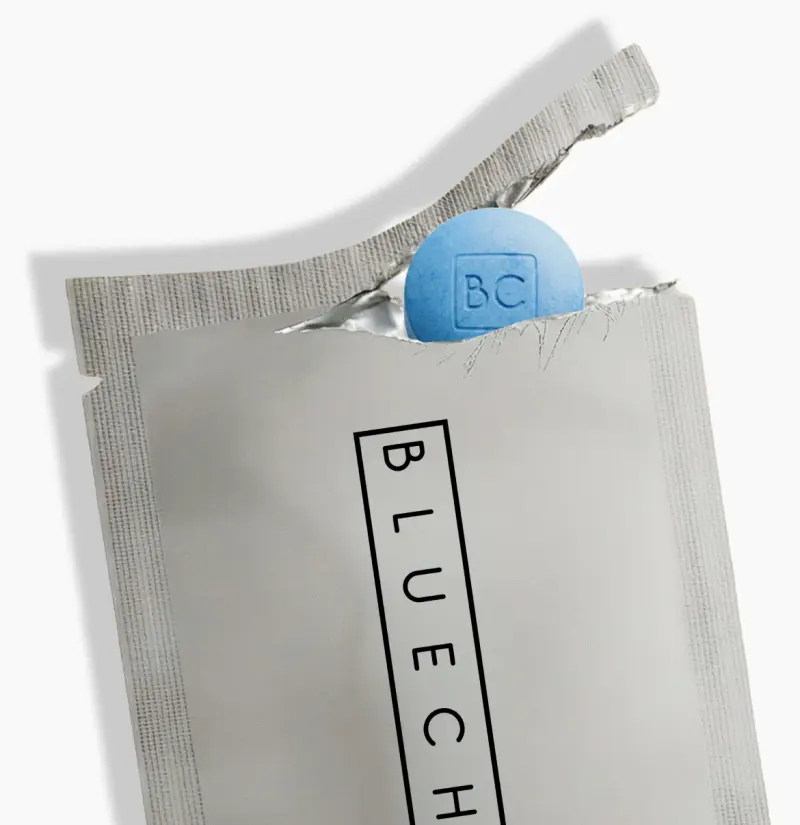
BlueChew provides prescription medications containing the active ingredients sildenafil, vardenafil, and tadalafil. Sildenafil, vardenafil, and tadalafil are the active ingredients in Viagra, Levitra, and Cialis, respectively. Different formulations serve different needs when it comes to adapting to changing plans:
- SIL: 30 mg or 45 mg sildenafil, from $2.95/tablet, works in 15 minutes, lasting up to 6 hours
- TAD: 6 mg or 9 mg tadalafil, from $3.58/tablet, effective within 15 minutes, lasting up to 36 hours
- VAR: 8 mg vardenafil, from $4.34/tablet, takes effect in 15 minutes, lasting up to 6 hours
- DailyTAD: 9 mg tadalafil plus 7 essential vitamins, $2.23/tablet, lasting up to 36 hours
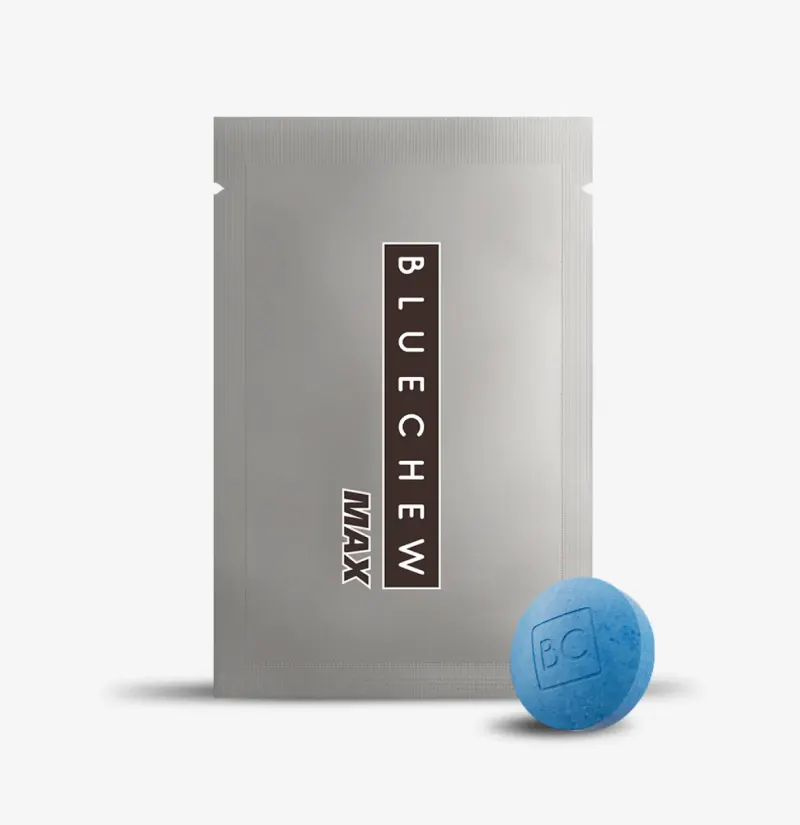
- MAX: 45 mg sildenafil + 18 mg tadalafil combo, $5.63/tablet, lasting up to 36 hours
- VMAX: 14 mg vardenafil + 18 mg tadalafil combo, $5.63/tablet, lasting up to 36 hours
- GOLD: sildenafil, tadalafil, oxytocin, and apomorphine sublingual tablet, from $7.30/tablet, lasting up to 36 hours
The convenience factor matters too. BlueChew's completely online process means no pharmacy visits, no uncomfortable conversations at checkout, and discreet delivery to your door. When you're already juggling changing plans, removing logistical hurdles helps.
What many men report is that the confidence boost extends beyond physical support. Knowing you have reliable backup reduces anticipatory anxiety. And reduced anxiety often means you need the support less frequently—a positive cycle replacing the negative one.
Quick Pivots for Common Scenarios
Let's get practical. Here are real-situation adaptations that keep intimacy alive when plans change:
Scenario: Your Partner Comes Home Exhausted
Rigid response: Feel rejected, abandon all physical connection, create distance.
Flexible response: "I can see you're wiped out. How about I give you a massage with zero expectations? We can just enjoy the connection and see how you feel."
Why it works: You're offering comfort and touch without demanding energy they don't have. Often, low-pressure physical connection leads to arousal—but if it doesn't, you still bonded.
Scenario: Interruption Mid-Intimacy
Rigid response: "The moment is ruined, we can't get back in the mood now."
Flexible response: After handling the interruption—"That was frustrating, but I'm still really into you. Want to pick this up in 20 minutes, or shift to something quicker right now?"
Why it works: You're acknowledging the disruption without letting it end everything. If you're using TAD or DailyTAD with extended coverage (lasting 24-36 hours), you have the luxury of a pause without losing support.
Scenario: Mismatched Desire Levels
Rigid response: Higher-desire partner feels rejected; lower-desire partner feels pressured; both end up frustrated.
Flexible response: "I'm really feeling connected to you right now. Where are you at? I'm open to full intimacy, just making out, or planning for tomorrow morning when you might have more energy."
Why it works: You're offering a menu rather than a single demand. Research shows that this kind of flexibility reduces pressure and often leads to more frequent connection overall.
Scenario: Location Change
Rigid response: "Our romantic hotel got canceled, so I guess the weekend is ruined."
Flexible response: "New plan—we're going to make our bedroom feel like a hotel room. New sheets, candles, we're ordering room service from our favorite restaurant, and we're pretending we're on vacation."
Why it works: Novelty drives excitement more than luxury does. Creating a special atmosphere anywhere keeps the adventure alive.

Frequently Asked Questions
What if I'm the one who always wants to stick to plans, but my partner is more go-with-the-flow?
This is actually pretty common, and it's less about who's "right" and more about finding middle ground. If you prefer structure, communicate that you feel more comfortable when you can anticipate intimacy—it helps you relax. Your partner might appreciate spontaneity because it feels less pressured. Try creating "intimacy windows" where you've both agreed connection might happen, but the exact timing and activities remain flexible.
How do I bring up trying something new without making it seem like our current sex life isn't good enough?
Emphasize that you're excited to explore together, not trying to fix a problem. Another approach: "I read about couples creating an intimacy menu together—basically listing things we both enjoy and things we might want to try. Want to do that together sometime this week?" Making it a joint project removes the pressure of one person proposing changes.
What if performance anxiety is really affecting my confidence, even with medication support?
Medical support handles the physical side, but if anxiety persists, it might be worth exploring a few sessions with a sex therapist. They can provide specific techniques for managing performance thoughts and rebuilding sexual confidence. The goal is to separate physical touch from performance expectations. And communicate with your partner—you'll likely find they care far more about connection than any specific physical outcome.
Is it normal for sex to become less spontaneous in long-term relationships?
Absolutely. Research shows that spontaneous desire naturally decreases over time, especially after the first 2-3 years together. The key is creating "psychological spontaneity"—where intimacy feels free and exciting even if there's some planning involved. Building anticipation throughout the day, sending flirty texts, and maintaining playfulness all contribute to this.
How often should couples be having sex? I worry we're not doing it enough.
There's no universal "enough." Research suggests that once per week correlates with relationship happiness, and having sex more than once weekly shows diminishing returns for satisfaction. Quality matters far more than quantity. What's important is that both partners feel generally satisfied with your frequency.
This article is provided for informational purposes only and does not constitute medical advice. The information presented is not a substitute for professional medical advice, diagnosis, or treatment. Always consult your healthcare provider to discuss the risks, benefits, and appropriateness of any treatment.
BlueChew offers access to healthcare providers who may prescribe compounded medications for the treatment of erectile dysfunction.
The featured products include compounded medications that have not been approved by the FDA. Compounded medications may be prescribed under federal law but are not the same as, nor are they generic versions of, any FDA-approved medication. The FDA does not review compounded medications for safety, effectiveness, or manufacturing quality of compounded products. A prescription will only be written if deemed appropriate after the digital consultation by the licensed medical provider. Individual results may vary.
BlueChew is not a compounding pharmacy but a telemedicine service that links patients to licensed medical providers.
Other Helpful Articles