How to Use Humor Like the Pros (Flirting → Sex)

A well-timed joke can do what hours of small talk cannot—it creates an instant spark of connection that makes someone want to know you better. Research shows that humor isn't just charming; it's a powerful signal of creative intelligence that makes you more memorable and approachable when flirting. Yet most people either force jokes that fall flat or play it safe with conversation that never builds romantic momentum.
The science behind humor in attraction reveals something surprising: being funny isn't about memorizing punchlines or becoming a stand-up comedian. Studies from Arizona State University involving 1,600+ participants found that what makes humor attractive isn't perceived intelligence—it's the signal that you can think on your feet and handle unpredictable social situations with creativity. This is genuinely good news, because creative wit can be learned and practiced.
Whether you're starting a conversation with someone new, keeping the spark alive on date night, or bringing more playfulness into the bedroom, understanding how professionals use humor gives you a genuine advantage. The path from first laugh to deeper intimacy follows a learnable pattern—one that builds attraction naturally while keeping both partners engaged and enjoying the journey.
Key Takeaways
- Humor signals creative problem-solving ability, which research shows is more attractive than perceived intelligence alone.
- Shared laughter often builds stronger connection than one-way ‘performance’—focus on laughing together, not putting on a show.
- Self-deprecating humor only works when delivered from a place of genuine confidence; avoid it in vulnerable moments.
- The "Yes, And..." improv technique can help improve conversational flow and prevent those dead-end moments.
- Wordplay and observational humor consistently outperform aggressive or sarcastic approaches in romantic contexts.
The Psychology of Laughter: Why Humor Creates Attraction
Understanding why humor works helps you use it more effectively. The brain responds to shared laughter in ways that directly support romantic connection.
The Neurochemistry of a Good Joke
When you make someone laugh—and especially when you laugh together—laughter can trigger feel-good neurochemical responses that reinforce positive connection. Dopamine activates reward pathways, creating positive associations with your presence. Oxytocin promotes bonding and trust. Endorphins reduce stress and create feelings of happiness.
Key neurological effects of shared humor include reduced cortisol levels that lower defensive barriers, activation of brain regions associated with reward and pleasure, enhanced feelings of safety and social connection, and increased receptivity to physical touch and closeness. Shared laughter can help create the relaxed, open vibe that makes intimacy feel more natural.
What Your Humor Signals About You
According to research from Arizona State University, people don't actually rate funny potential partners as smarter or more socially skilled. Instead, they consistently infer creative problem-solving abilities—the sense that this person can adapt, think quickly, and handle life's curveballs.
This is significant because it means you don't need to be the funniest person in the room. You need to demonstrate that you're comfortable, adaptable, and able to find lightness even in unexpected moments.
Breaking the Ice: Flirting Examples That Actually Work
First impressions happen fast, and humor can make yours memorable in the best way. The goal isn't to get the biggest laugh—it's to create a moment of shared amusement that opens the door to real conversation.
Observational Humor: Your Most Reliable Tool
Professional comedians like Jerry Seinfeld and Aziz Ansari built careers on observational humor—pointing out the absurdities hiding in everyday experiences. Applied to flirting, this means noticing and commenting on your shared environment.
The observational formula: Identify something universal in your immediate situation, question the default assumption about it, and exaggerate slightly toward absurdity.
Examples in action:
At a coffee shop: "I think every first date in this city happens at a place with exposed brick and oat milk options. It's practically required."
At a bar: "The music here is so loud that meaningful conversation is basically impossible. So... want to just make stuff up about each other?"
At a party: "I'm trying to figure out who actually knows the host. I think most of us are just following the appetizers."
This approach works because it creates an "aha moment" where the other person feels understood. You're not performing—you're inviting them into a shared observation.
The Art of Playful Teasing
Light teasing, done right, creates flirtatious tension. Done wrong, it feels mean. The key is ensuring your tease comes with warmth and that you'd genuinely laugh if the tables were turned.
Safe teasing territory includes her taste in something subjective (music, coffee order, phone case), a shared situation you're both experiencing, and your own competitive spirit ("I'm definitely going to beat you at darts, just so you know").
Never tease about physical appearance, intelligence, anything they seem genuinely insecure about, or topics they haven't brought up themselves.
Mastering the Banter: Building Connection Through Conversation
Once you've broken the ice, humor becomes the engine that keeps conversation flowing naturally toward deeper connection.
The "Yes, And..." Technique
Borrowed from improv comedy, this principle can significantly improve conversational flow. The technique: accept whatever your conversation partner offers (Yes), then build upon it collaboratively (And).
How it works:
She says: "I've been really into hiking lately."
Don't say: "I don't hike much. I'm more of a gym person."
Say instead: "Yes, and what's the most epic trail you've tackled? I need recommendations for when I finally stop making excuses."
This approach makes your partner feel heard while creating shared narrative momentum. You're building something together rather than trading disconnected statements.
Creating Inside Jokes
Some of the strongest romantic connections develop through callback humor—referencing something funny from earlier in your conversation or relationship.
Building callbacks: Notice something that made you both laugh, file it away mentally, reference it again later with a slight twist, and watch as the shared memory creates instant connection.
Inside jokes signal intimacy. They say "we have a history together, however brief." This is why couples often have nicknames and references that make zero sense to outsiders—those shared laughs become relationship currency.

From Flirting to Date: Humor That Builds Toward Intimacy
Moving from initial attraction to actual dates requires humor that maintains interest while building trust.
Storytelling With Humor
Good storytellers are engaging dates. The key is structuring your stories with humor woven through rather than saving the "funny part" for the end.
Humorous storytelling structure: Set up a relatable situation, include self-aware observations along the way, let the ending surprise slightly, and invite their reaction or similar story.
For example: "So I'm at this networking event, thinking I'm making a great impression on this senior exec. Nodding at all the right moments. Twenty minutes in, I realize I've been talking to someone from a completely different company. We're now LinkedIn connections, though."
Reading the Room
Not every moment calls for humor. Learning to sense when your partner wants depth versus lightness demonstrates emotional intelligence—which is itself attractive.
Signals to dial back the jokes: They're sharing something personal or vulnerable, the conversation has naturally deepened, they seem stressed or tired, or you've been joking for a while and it's feeling forced.
When dates have room to breathe without humor, the funny moments become more meaningful by contrast.
Avoiding the Pitfalls: When Humor Goes Wrong
Understanding what doesn't work is just as important as knowing what does.
Self-Deprecating Humor: The Confidence Catch
Research shows that self-deprecating humor correlates with higher attractiveness ratings—but only when delivered by people with established confidence. The same joke that makes a confident person seem charming makes an insecure person seem needy.
When self-deprecation works: You've already established competence, the topic is changeable (your terrible parallel parking), your body language says "I'm fine with this," and you're genuinely laughing at yourself, not hating yourself.
When it backfires: Early in interactions before trust exists, about unchangeable traits, in vulnerable moments (especially sexual situations), or when it becomes a pattern.
Humor Styles to Avoid
The Gottman Institute highlights that hostile or contempt-tinged humor (sarcasm, mockery, put-downs) can be especially damaging in relationships:
Aggressive sarcasm often masks hostility and creates defensiveness. Contempt disguised as jokes—putting others down isn't funny. Self-defeating humor is different from confident self-deprecation and broadcasts insecurity. Superiority-based humor makes yourself look better by making others look worse.
If you wouldn't want the same joke told about you, don't tell it about someone else.

Building Intimacy: Humor as a Bridge to Connection
The couples with the strongest relationships share a specific pattern: laughing together frequently. Research from the Gottman Institute shows that couples who maintain playfulness and share frequent laughter report higher relationship satisfaction and longevity.
Playfulness in the Bedroom
Humor doesn't disappear when intimacy becomes physical—it evolves. Playfulness signals comfort and reduces performance pressure for both partners.
Intimacy-enhancing humor includes laughing together when something doesn't go as planned, playful commentary that keeps you both present, inside jokes that reference your shared experiences, and future-focused playfulness ("We're definitely doing that again").
What to avoid in intimate moments: Self-critical jokes about performance, anything that could be interpreted as criticism, and humor that breaks connection rather than building it.
When Performance Concerns Create Mental Noise
Humor flows naturally when you're relaxed and present. When performance concerns occupy mental space, both conversation and intimacy suffer. Addressing physical confidence allows you to focus entirely on connection and playfulness.
How BlueChew Supports Confident Connection
Building attraction through humor requires mental presence—and that's difficult when you're worried about physical performance. BlueChew helps address ED-related performance concerns, which may make it easier to stay present, relaxed, and playful with a partner.
When physical confidence is handled, you can stay present in conversation instead of anticipating concerns, maintain the playful energy that builds attraction, focus on your partner rather than monitoring yourself, and bring humor into intimate moments naturally.
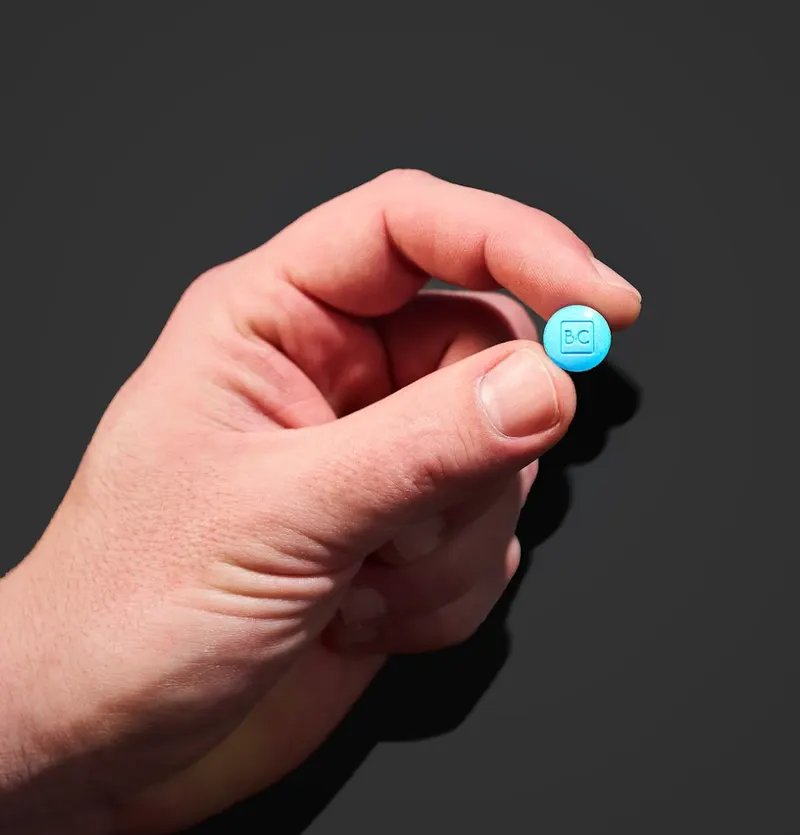
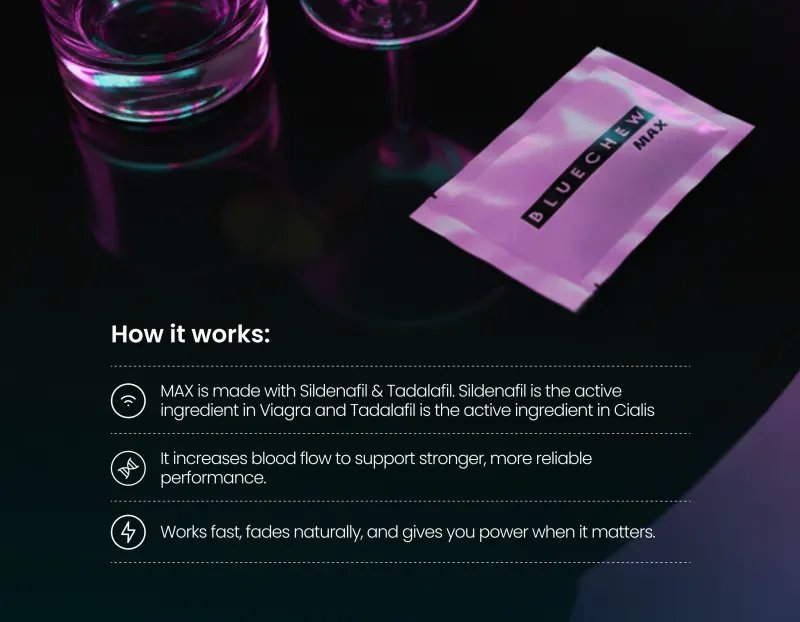
BlueChew provides compounded prescription medications containing sildenafil, vardenafil, and tadalafil—the active ingredients in Viagra, Levitra, and Cialis, respectively.
SIL, VAR, TAD, and DailyTAD come in a chewable tablet. MAX, VMAX, and GOLD are available as a sublingual tablet. ENERGY is available as a liquid shot.
BlueChew's complete lineup includes:
- SIL: 30 mg or 45 mg sildenafil, from $2.95/chew, works in 30 minutes, lasting up to 6 hours
- TAD: 6 mg or 9 mg tadalafil, from $3.58/chew, effective within 30 minutes, lasting up to 36 hours
- VAR: 8 mg vardenafil, from $4.34/chew, takes effect in 30 minutes, lasting up to 6 hours
- DailyTAD: 9 mg tadalafil plus 7 essential vitamins, $2.23/chew, lasting up to 36 hours
- MAX: 45 mg sildenafil + 18 mg tadalafil combo, $5.63/tablet, lasting up to 36 hours
- VMAX: 14 mg vardenafil + 18 mg tadalafil combo, $5.63/tablet, lasting up to 36 hours
- GOLD: sildenafil, tadalafil, oxytocin, and apomorphine sublingual tablet, from $7.30/tablet, lasting up to 36 hours
- ENERGY: 30 mg sildenafil + 60 mg caffeine liquid shot, $4.50/ea, lasting up to 6 hours
Whether you prefer TAD's extended spontaneity window or GOLD's comprehensive approach that includes oxytocin for enhanced connection, the goal remains the same: removing barriers so humor and attraction can flow naturally.
Frequently Asked Questions
Can humor really make someone more physically attracted to me?
Yes, and the research is compelling. Studies from Arizona State University show humor signals creative adaptability—a trait consistently rated as attractive across research. More importantly, shared laughter creates neurochemical responses that build genuine connection and make you more memorable.
What's the difference between good humor and bad humor in flirting?
Good humor creates connection through shared amusement, builds on what your conversation partner offers, and leaves both people feeling good. Bad humor often involves putting others down, aggressive sarcasm, or self-deprecation that broadcasts insecurity. Research from the Gottman Institute identifies contempt-based humor as particularly damaging—if your joke makes you look better by making someone else look worse, skip it.
What if I'm not naturally funny—can I still use humor effectively?
Absolutely. Humor in romantic contexts isn't about being a comedian—it's about creating moments of shared amusement. Observational humor (noticing absurdities around you) and the "Yes, And..." technique are both learnable skills. Start by practicing observational comments in low-stakes situations and gradually build comfort. The goal is playfulness, not performance.
Is it possible to rely too much on humor when dating?
Yes. Constant joking can prevent deeper emotional connection and sometimes signals discomfort with vulnerability. The most attractive approach alternates between humor and genuine depth. When your partner shares something meaningful, resist the urge to deflect with a joke. Knowing when to be sincere makes your humor more effective by contrast.
How does humor help maintain intimacy in long-term relationships?
Research from the Gottman Institute shows that couples who maintain playfulness report higher relationship satisfaction. Inside jokes, shared laughter during challenging moments, and playful teasing (done with warmth) all contribute to lasting connection. Humor becomes relationship glue that helps partners weather stress together.
This article is for informational purposes only and does not constitute medical advice. The content provided here is not a substitute for, and should never be relied upon as, professional medical advice. Always consult your doctor to discuss the risks, benefits, and appropriateness of any treatment. BlueChew offers compounded medications prescribed solely for the treatment of erectile dysfunction and sexual performance enhancement. Compounded medications are not FDA-approved.
Other Helpful Articles