Michael Douglas on Sex: What the Legend Said About Staying Young

When Hollywood legend Michael Douglas speaks about staying vital, people listen. In 2024, at 79, the Academy Award-winning actor remains active in his career, happily married to Catherine Zeta-Jones, and refreshingly candid about what keeps him feeling young. In a Radio Times interview, Douglas shared insights from his six decades in film—and what emerged was a philosophy on intimacy, communication, and prioritizing connection that science is now validating. For men looking to maintain their own vitality, understanding both Douglas's wisdom and the science of sexual wellness offers a compelling roadmap.
The research supports what Douglas seems to understand intuitively: sexual health isn't just about pleasure—it's connected to cardiovascular function, mental clarity, stress reduction, and overall longevity. And for men who want to stay in the game, modern solutions like BlueChew's chewable tablets make supporting that goal more accessible than ever.
Key Takeaways
- Michael Douglas's approach to staying young emphasizes communication, prioritizing intimacy, and staying engaged—principles backed by longevity research
- Scientific studies show regular sexual activity supports cardiovascular health, reduces stress, and may promote brain function
- Research indicates strong correlations between relationship quality, sexual activity, and longevity outcomes in populations with exceptional lifespans
- Testosterone naturally declines 1-2% yearly after 30, but lifestyle factors and modern treatments can help men maintain sexual wellness
- In one U.S. survey, only 7.7% reported receiving a formal ED diagnosis from a provider, despite many men meeting screening criteria
Michael Douglas's Perspective on Longevity and Staying Youthful
Douglas has never shied away from discussing topics most people avoid. In his Radio Times interview discussing the Apple TV+ series Franklin, he reflected on decades of performing intimate scenes, saying they're "like fight scenes—it's all choreographed." But the key insight wasn't about filmmaking. It was about communication and intentionality.
"You take responsibility as the man to make sure the woman is comfortable," Douglas explained. "You talk it through...very slow but looks organic."
This philosophy extends beyond Hollywood sets. Douglas's approach to staying vital centers on:
Staying engaged: At 79, he continues working on demanding projects, maintaining an active career that keeps him mentally sharp.
Prioritizing relationships: His more-than-two-decade marriage to Catherine Zeta-Jones demonstrates long-term commitment to partnership and connection.
Being realistic about change: "I'm past the age where I've got to worry about that," Douglas said regarding certain aspects of on-set dynamics—showing self-awareness about how experience and stage of life shape perspective.
Communicating openly: His willingness to discuss intimate topics publicly helps normalize conversations many men avoid.
What makes Douglas's perspective valuable isn't celebrity status—it's the validation it provides. If a 79-year-old Hollywood legend can discuss sexual wellness openly, it signals that men at any stage of life can too.
The Role of Intimacy in Maintaining Youthful Vigor
Douglas's public comments suggest he understands something researchers are increasingly documenting: intimacy plays a meaningful role in overall vitality. This connection goes beyond the physical act to encompass emotional bonding, stress relief, and the biochemical responses that support health.
Research published in the Journal of Sexual Medicine demonstrates that sexual satisfaction correlates significantly with relationship quality, mental health outcomes, and overall life satisfaction in aging populations. The physiological mechanisms involve complex interactions between cardiovascular function, neurological pathways, and endocrine responses that collectively support wellness across multiple body systems.
Douglas & Zeta-Jones: A Partnership in Vitality
The Douglas-Zeta-Jones marriage offers a window into how prioritizing connection can support longevity. After Douglas's 2010 cancer diagnosis, he reflected on gaining "a deeper appreciation of marriage" and seeing "priorities differently."
That recalibration—recognizing what matters most—aligns with research on long-term relationships. Studies published in psychosomatic medicine journals show that partner involvement improves treatment outcomes across various health conditions, with some research indicating adherence rates improving substantially when partners are engaged in health decisions.
The Connection Between Relationships and Lifespan
Research on populations with exceptional longevity reveals consistent patterns regarding social connection and intimate relationships. While causation remains difficult to establish, longitudinal studies demonstrate strong correlations between relationship quality, regular intimate activity, and health outcomes in aging populations.
The mechanisms likely involve multiple pathways: reduced chronic stress through social support, maintained physical activity, stronger motivation for health-promoting behaviors, and the direct physiological benefits of regular intimate contact.
For men interested in the emotional and physiological dimensions of intimacy, solutions like GOLD—which combines sildenafil, tadalafil, apomorphine, and oxytocin—address both the physical mechanics and the brain-based aspects of arousal and connection.
The Science Behind Sexual Activity and Health
What Douglas intuitively practices, science increasingly validates. The health benefits of regular sexual activity extend across multiple body systems.
Cardiovascular Benefits
Research published in the American Journal of Cardiology examined the relationship between sexual frequency and cardiovascular outcomes in a cohort of men followed over multiple years. The findings revealed that men reporting sex once a month or less had about a 50% higher risk of incident cardiovascular disease compared to those reporting sex 2–3 times per week.
The physiological mechanisms involve nitric oxide production, which supports endothelial function and vascular health. During sexual arousal and activity, increased blood flow promotes vascular elasticity and may help maintain the health of blood vessels throughout the body. Additionally, the physical exertion provides cardiovascular conditioning similar to moderate exercise, while the associated stress hormone reduction supports arterial health.
Brain Health and Cognitive Function
The neurological benefits of sexual activity extend beyond immediate pleasure. Research in neuroplasticity demonstrates that activities involving reward pathways, sensory stimulation, and emotional connection support the formation of new neural pathways and may help maintain cognitive function.
Studies examining brain activity during sexual arousal and orgasm show activation across multiple brain regions, including areas involved in emotion regulation, sensory processing, and reward. This comprehensive neural engagement may contribute to maintaining brain health over time, though human longitudinal studies are still emerging.
Stress Reduction and Immune Function
Sexual activity triggers complex biochemical responses involving endorphins, oxytocin, and other neurochemicals that regulate stress responses. Research published in the Journal of Sexual Medicine indicates that regular sexual activity correlates with:
- Lower baseline cortisol levels
- Improved stress response regulation
- Better sleep quality
- Enhanced immune markers
The stress-reducing effects appear to extend beyond the immediate post-activity period, potentially contributing to better overall stress management and reduced chronic inflammation.
Prostate Health
For men specifically, research published in European Urology examined the relationship between ejaculation frequency and prostate cancer risk. The study found that men who ejaculated 21 or more times per month showed a 20% reduction in prostate cancer risk compared to those with lower frequency.
While the mechanisms remain under investigation, hypotheses include the potential removal of potentially harmful substances from prostatic fluid and reduced inflammation. This represents an area where regular sexual activity may offer specific protective benefits for men's health.
Understanding Changes in Sexual Wellness Over Time
Douglas's self-aware comment—"I'm past the age where I've got to worry about that"—reflects an understanding that sexual experience changes over time. This isn't decline; it's evolution.
The Testosterone Factor
Testosterone naturally declines by approximately 1-2% yearly after age 30. By 50, many men have significantly lower testosterone than in their 20s. This affects:
- Libido and sexual desire
- Energy levels
- Muscle mass
- Mood regulation
A 2024 study published in medical literature found that "in middle-aged and older men with hypogonadism and low libido, testosterone replacement therapy for 2 years improved sexual activity, hypogonadal symptoms, and sexual desire, but not erectile function."
This distinction matters: testosterone affects desire, but erectile function involves vascular health—requiring different approaches.
The Treatment Gap
Despite the availability of effective treatments, research published in the Journal of Sexual Medicine found that only 7.7% of men with ED ever receive a formal diagnosis. The reasons are well-documented:
- Embarrassment about discussing sexual health
- Misconceptions that ED is inevitable or untreatable
- Access barriers (cost, time, needing in-person appointments)
- Lack of awareness about modern solutions
This gap represents a significant missed opportunity. Effective treatments exist, and accessing them has never been more straightforward.

Navigating Sexual Wellness: Practical Insights for Men
Douglas's approach offers lessons applicable beyond Hollywood. His emphasis on communication, intentionality, and staying engaged translates into actionable strategies.
Prioritize the Connection
Sexual wellness isn't just about function—it's about relationship quality. Research consistently shows that partner communication improves outcomes across multiple dimensions:
- Greater satisfaction for both partners
- Reduced performance anxiety
- Improved treatment adherence when issues arise
- Enhanced emotional intimacy
Be Proactive About Health
Douglas's openness about his cancer experience and subsequent health journey demonstrates the value of addressing issues directly. For sexual wellness, this means:
- Regular cardiovascular health monitoring (ED can be an early indicator of heart issues)
- Honest conversations with healthcare providers
- Staying informed about treatment options
- Not waiting for problems to become severe
Adapt Rather Than Accept Decline
Modern approaches to men's wellness increasingly emphasize proactive optimization rather than reactive problem-solving. Recognizing that changes in sexual function may signal broader health concerns allows men to address issues comprehensively rather than viewing them as isolated problems.

How BlueChew Supports Sexual Wellness
For men seeking to maintain their vitality without the friction of traditional healthcare, BlueChew offers a streamlined approach. Our telemedicine platform connects patients with licensed medical providers for prescription ED medications—all from home.
What BlueChew Provides
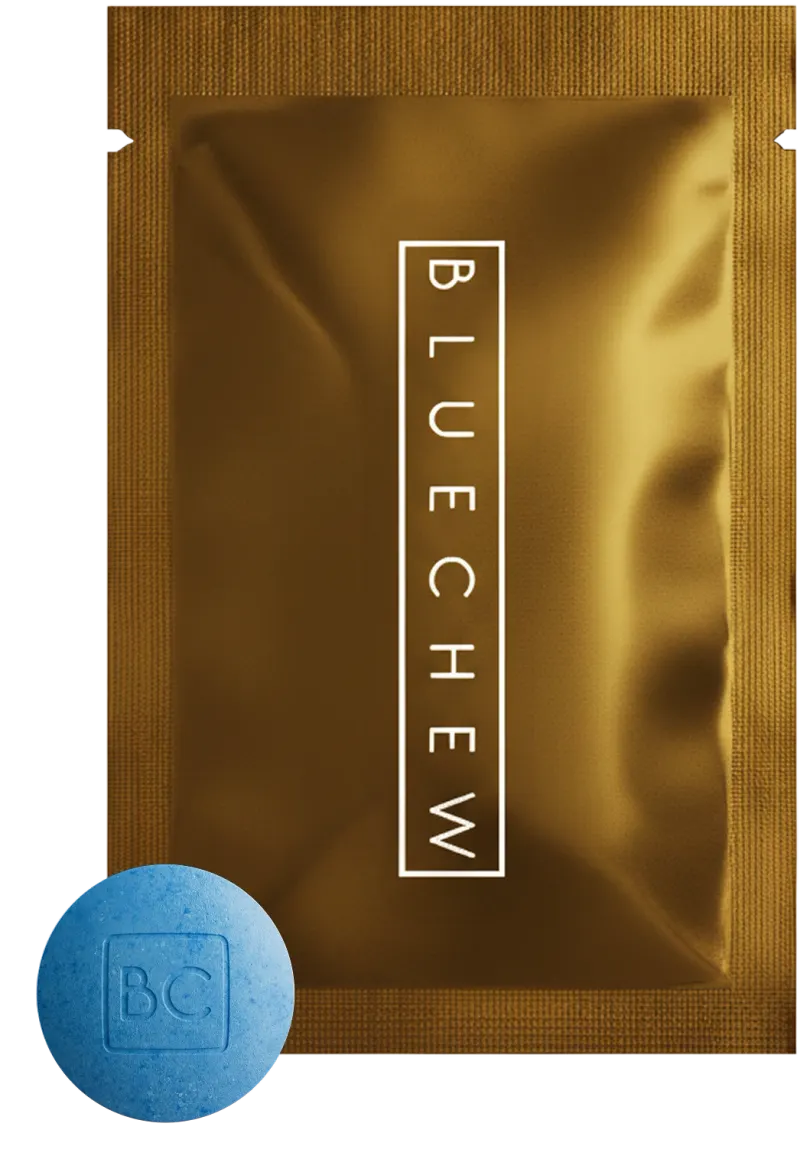
BlueChew provides prescription medications containing the active ingredients sildenafil, vardenafil, and tadalafil. Sildenafil, vardenafil, and tadalafil are the active ingredients in Viagra, Levitra, and Cialis, respectively.
Our formulations include:
- SIL: 30 mg or 45 mg sildenafil, from $2.94/chew, works in 30 minutes, lasting up to 6 hours
- TAD: 6 mg or 9 mg tadalafil, from $3.57/chew, effective within 30 minutes, lasting up to 36 hours
- VAR: 8 mg vardenafil, from $4.33/chew, takes effect in 30 minutes, lasting up to 6 hours
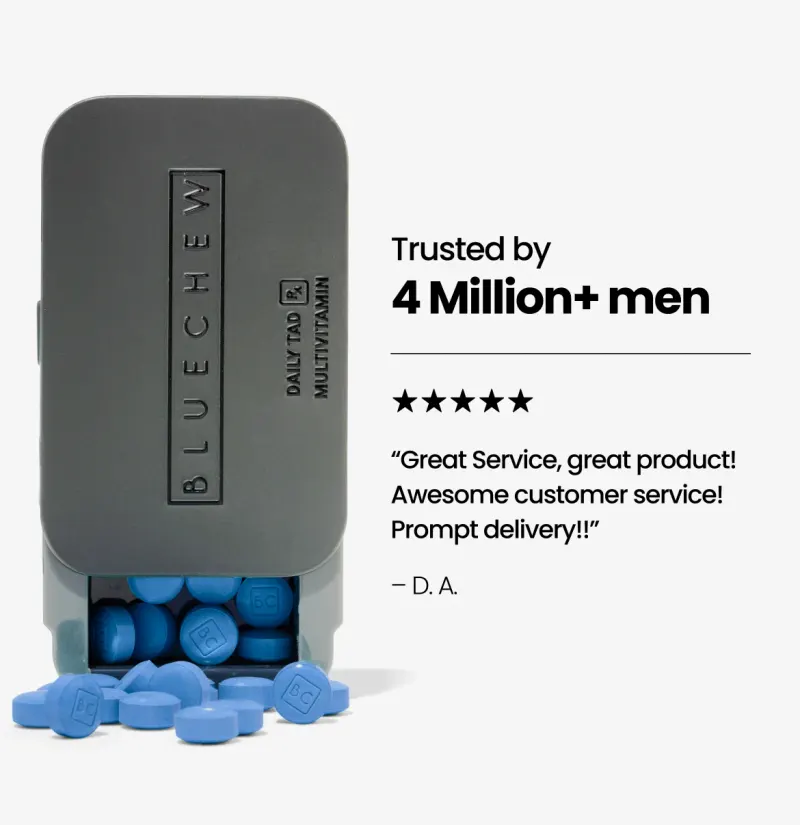
- DailyTAD: 9 mg tadalafil plus 7 essential vitamins, $2.22/chew, lasting up to 36 hours
- MAX: 45 mg sildenafil + 18 mg tadalafil combo, $5.63/tablet, lasting up to 36 hours
- VMAX: 14 mg vardenafil + 18 mg tadalafil combo, $5.63/tablet, lasting up to 36 hours
- GOLD: sildenafil, tadalafil, oxytocin, and apomorphine sublingual tablet, from $6.94/tablet, lasting up to 36 hours
- ENERGY: 30 mg sildenafil + 60 mg caffeine, $4.50/ea, lasting up to 6 hours
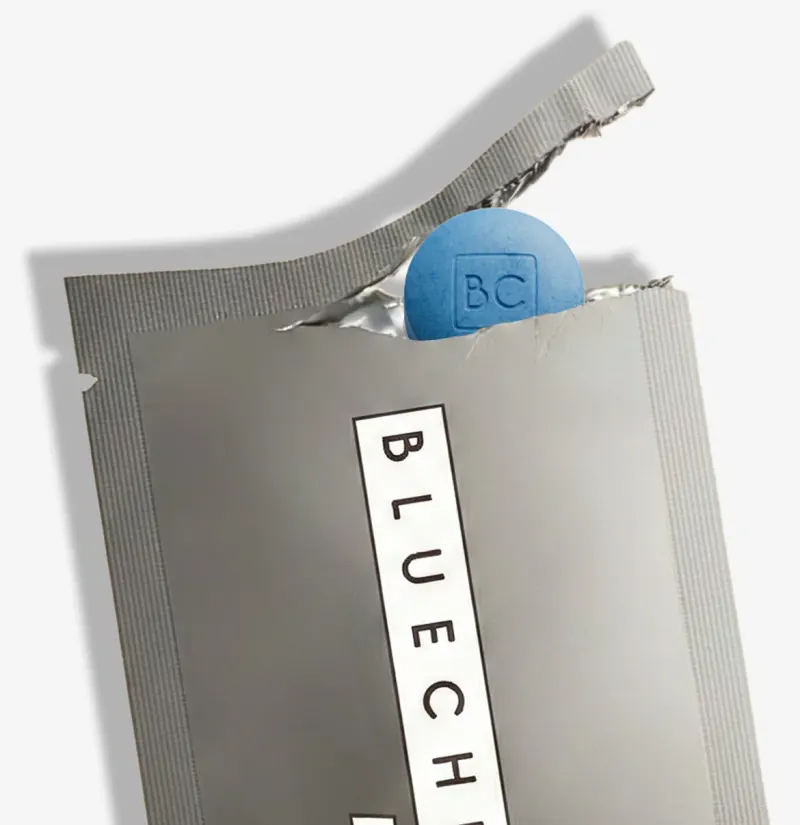
SIL, VAR, TAD, and DailyTAD come in a chewable tablet. MAX, VMAX, and GOLD are available as a sublingual tablet. Energy is available as a liquid shot.
Why the Format Matters
BlueChew's chewable and sublingual formats address real-world needs:
- Convenient for on-the-go – easy to take when you need it
- Discreet packaging – shipped in packaging designed for privacy
- Portable sachets – fit easily in a wallet or pocket
The Access Advantage
The 100% online process eliminates traditional barriers:
- Complete a 5-minute medical intake online
- Licensed providers review your information (typically within 24-48 hours)
- Medication ships directly to your door
- No in-person visits, no pharmacy lines, no insurance paperwork
For men ready to take Douglas's advice about staying engaged and prioritizing connection, explore BlueChew's plans to find the right option.

Frequently Asked Questions
What are Michael Douglas's philosophies on staying young?
Douglas emphasizes communication, prioritizing relationships, staying professionally active, and being realistic about how life evolves. His approach centers on engagement rather than retirement—continuing to work on challenging projects while maintaining his 25-year marriage to Catherine Zeta-Jones. He's spoken openly about intimacy, suggesting that comfort, communication, and intentionality matter more than any specific technique.
Is there scientific evidence that sexual activity helps with longevity?
Yes. Research published in cardiovascular and gerontology journals demonstrates associations between regular sexual activity and improved health outcomes. Studies in the American Journal of Cardiology found that men with regular sexual activity showed significantly lower cardiovascular disease risk. Additional research links regular sexual activity to improved immune function, reduced stress hormones, and potentially enhanced brain health, though establishing direct causation requires further investigation.
How can men maintain sexual wellness as they get older?
Key strategies include: maintaining cardiovascular health (which directly impacts erectile function), staying physically active, managing stress, communicating openly with partners, and addressing issues proactively rather than waiting for them to worsen. For many men, prescription treatments like PDE5 inhibitors offer effective support. Regular check-ups are also important, since ED can be an early indicator of cardiovascular issues.
Why do so few men with ED seek treatment?
Despite effective solutions being widely available, research in the Journal of Sexual Medicine found that only 7.7% of men with ED ever receive a diagnosis. Barriers include embarrassment, misconceptions about treatment, time constraints, and access issues. Telemedicine platforms like BlueChew help address these barriers by offering discreet, home-based treatment without in-person appointments.
What makes BlueChew different from traditional ED treatment options?
BlueChew focuses exclusively on ED with a 100% online model—no in-person doctor visits or pharmacy lines required. All medications ship in unmarked packaging for discretion. The chewable and sublingual formats are designed to be simple and discreet to take, without adding extra friction to your routine. With 8 different formulations (versus 2-3 from most competitors), BlueChew provides options ranging from single-ingredient chewables to combination therapies like GOLD that address both physical and psychological factors.
This article is for informational purposes only and does not constitute medical advice. The content provided here is not a substitute for, and should never be relied upon as, professional medical advice. Always consult your doctor to discuss the risks, benefits, and appropriateness of any treatment. BlueChew offers compounded medications prescribed solely for the treatment of erectile dysfunction and sexual performance enhancement. Compounded medications are not FDA-approved.
Other Helpful Articles