Key Takeaways
Key Takeaways
SEX9 minute read
How to Beat Performance Anxiety in the Bedroom

You're in the moment with your partner, but your mind is somewhere else entirely. Maybe you're replaying a previous encounter that didn't go as planned, or you're worried about whether your body will cooperate tonight. Sexual performance anxiety has been reported to affect 9-25% of men, and it can create a frustrating cycle where fear of sexual difficulty increases pressure during intimacy. The good news is that performance anxiety can often be addressed with practical strategies, professional guidance, and medical support when appropriate.
Understanding how anxiety physically interferes with erections is the first step toward breaking free from its grip. When stress hormones flood your system, they actually work against the very physiological processes needed for sexual function. But here's what matters most: this isn't a character flaw or something wrong with you. It's a predictable biological response that responds well to targeted solutions, including mindset shifts, lifestyle changes, communication strategies, and when appropriate, medical support.
Whether you're dealing with occasional nerves or persistent worry that's affecting your intimate life, this guide covers the science behind performance anxiety, practical techniques to overcome it, and how to rebuild the sexual confidence you deserve.
Key Takeaways
- Performance anxiety triggers your body's stress response, which directly interferes with the blood flow needed for erections
- The combination of psychological techniques and medical support often produces better results than either approach alone
- Communication with your partner can transform anxiety from an isolating struggle into a shared challenge you tackle together
- Lifestyle factors like sleep, exercise, and stress management significantly impact sexual performance
- Consistent use of psychological strategies, lifestyle changes, and medical support when appropriate may help reduce performance pressure over time
Understanding Performance Anxiety: More Than Just Nerves
Performance anxiety in the bedroom isn't simply feeling nervous before sex. It's a complex interplay between your mind and body that can derail intimacy even when you're genuinely attracted to your partner.
The Vicious Cycle of Anxiety and Performance
When you worry about sexual performance, your body may shift toward a stress-response state commonly known as "fight or flight." That stress response can make it harder to stay present and can interfere with the relaxation and blood-flow processes involved in erection.
The cruel irony? One disappointing experience can create anticipatory anxiety about the next encounter. That anxiety then increases the likelihood of another disappointing experience, which amplifies the worry further. Without intervention, this cycle can become deeply entrenched.
Common Triggers for Bedroom Anxiety
Several factors commonly contribute to performance concerns:
Psychological triggers:
- Fear of judgment or not satisfying your partner
- Past negative sexual experiences
- Body image concerns
- Relationship stress or communication issues
- General anxiety or depression
Situational triggers:
- New partners or unfamiliar situations
- Unrealistic expectations influenced by media or pornography
- Pressure to perform on special occasions
- Self-monitoring during sex (sometimes called "spectatoring")
Recognizing your specific triggers helps you develop targeted strategies for managing them.
 Reviewed by a licensed provider
 Is It Performance Anxiety or Something Else?
Before assuming your difficulties are purely psychological, it's important to consider whether physical factors might be contributing to the problem.
Distinguishing Between Physical and Psychological ED
Psychogenic ED typically shows certain patterns. You might have no trouble getting erections during sleep or masturbation, but struggle with a partner. Or your difficulties might be situation-specific, occurring with one partner but not another, or in certain locations but not others.
Physical ED, by contrast, tends to be more consistent across all situations. It may develop gradually and is often associated with underlying health conditions like cardiovascular disease, diabetes, or hormonal imbalances.
Signs that suggest psychological factors:
- Erections during sleep or upon waking
- Ability to achieve erection through masturbation
- Situational difficulties (works with some partners or scenarios)
- Sudden onset, often after a triggering event
- Anxiety or stress preceding sexual encounters
When to Consult a Medical Professional
Consider seeing a healthcare provider if:
- Symptoms persist despite self-help efforts for three or more months
- Erectile difficulties occur in all situations, not just with a partner
- You notice physical symptoms like chest pain, painful erections, or blood in urine
- You have underlying health conditions such as diabetes, heart disease, or high blood pressure
- You're taking medications that might affect sexual function
A thorough evaluation can help determine whether your situation is primarily psychological, physical, or a combination of both.
Medications That Interfere with Performance
Sometimes the medications treating one health condition inadvertently create another problem. Several common drug classes are known to affect erectile function.
Common Pharmaceutical Culprits
Blood pressure medications including beta-blockers and diuretics can reduce blood flow and affect erections. Antidepressants, particularly SSRIs, frequently impact sexual function through their effects on neurotransmitters.
Other medications that may contribute to difficulties include:
- Antihistamines (both prescription and over-the-counter)
- Opioid pain medications
- Sedatives and anti-anxiety medications
- Some statins
- Certain prostate medications
Important Considerations
Never stop or adjust prescribed medications without consulting your doctor first. The underlying condition being treated may pose greater risks than the sexual side effects. However, your healthcare provider may be able to adjust dosages, switch to alternative medications, or add treatments that address the side effects while maintaining therapeutic benefits.

Beyond the Bedroom: Lifestyle Strategies That Make a Difference
Your daily habits have more influence on sexual performance than you might realize. Building a foundation of healthy practices supports both physical function and mental readiness.
Exercise and Physical Health
Regular physical activity supports cardiovascular health, mood, and stress management. Because erectile function depends partly on vascular health, movement can be a helpful part of an overall plan.
Exercise may also support body image and self-confidence, which can influence how you feel in intimate situations.
Stress Management and Sleep
Chronic stress can affect mood, sleep, relationship dynamics, and sexual confidence. Daily stress management practices may create cumulative benefits:
Approaches include:
- Meditation or mindfulness practice
- Yoga or deep breathing exercises
- Regular sleep schedule with 7-9 hours nightly
- Setting boundaries around work and responsibilities
Sleep deprivation can affect mood, stress tolerance, and mental clarity, which may make it harder to stay present during intimacy.
Substance Considerations
Alcohol may lower inhibitions, but it can also make erectile function and sensation less reliable for some people. Nicotine and recreational drugs can also affect sexual function in different ways.
Moderating or avoiding substances before intimacy may help reduce performance-related concerns.
Rebuilding Sexual Confidence Through Communication
One of the most powerful tools for overcoming performance anxiety is something many men avoid: talking about it with their partner.
Talking to Your Partner About Performance Anxiety
Open dialogue reduces the isolation that makes anxiety worse and transforms the situation from your problem into a shared challenge. Choose calm moments outside the bedroom for these conversations.
Conversation starters that work:
- "I've noticed I've been in my head during sex, and I want to work on being more present with you."
- "Can we talk about ways to make intimacy feel less pressured?"
- "I'd like to focus on connection rather than performance. What would help you feel good about that?"
Use "I" statements rather than anything that could sound like blame. Share your experience without expecting your partner to fix it.
Exploring Intimacy Beyond Intercourse
Expanding your definition of satisfying intimacy removes enormous pressure. When penetrative sex isn't the sole measure of success, you can relax and enjoy the experience.
Consider exploring:
- Extended foreplay without goals
- Sensate focus exercises (structured touching that removes performance pressure)
- Non-penetrative intimacy that prioritizes pleasure and connection
- Taking turns focusing entirely on one partner's enjoyment
These practices often improve sexual function by reducing the anxiety associated with "performing."
Breaking the Cycle: Practical Tips for Managing Anxiety During Sex
When anxiety strikes in the moment, having specific techniques ready can help you stay present rather than spiraling into worry.
The "Focus on Feel" Approach
Instead of monitoring your body's response, redirect attention to physical sensations. Notice the temperature of your partner's skin, the sounds in the room, the rhythm of your breathing together.
Mindfulness techniques for the moment:
- Focus on one sensation at a time
- When thoughts drift to performance, gently return attention to what you're feeling
- Synchronize your breathing with your partner's
- Stay present with each touch rather than anticipating what comes next
Setting Realistic Expectations
Letting go of the expectation that every encounter will be perfect removes enormous pressure. Great sex includes moments of adjustment, laughter, and imperfection. Redefining success as connection and mutual enjoyment rather than flawless performance creates space for genuine intimacy.
Pre-sexual rituals can also help. Taking five deep breaths together, putting phones away, or having a brief conversation about what you're both in the mood for creates a transition from daily stress into intimate connection.
Exploring Medical Solutions for Erectile Dysfunction
When lifestyle changes and psychological techniques need additional support, medical options can help break the anxiety cycle by providing physical reliability.
How PDE5 Inhibitors Work
- Medications containing sildenafil, tadalafil, and vardenafil are known as PDE5 inhibitors.
- PDE5 inhibitors work by blocking an enzyme that restricts blood flow, allowing blood vessels to relax and expand when you're sexually aroused.
- They don't create automatic erections; sexual stimulation and desire are still needed.
- For men with performance anxiety, these medications may help address the physical component of erectile difficulty.
- Having medical support available may also reduce some of the worry around whether the body will cooperate.
The Power of Combination Approaches
Research on erectile dysfunction treatment suggests that psychological interventions, alone or combined with PDE5 inhibitors, can be useful depending on the person’s needs. Medication may support the physical side of erectile function, while therapy and lifestyle changes can address psychological and relationship factors.
Some men use medical support while also building psychological and communication skills. Others continue using treatment as part of a broader plan developed with a healthcare provider.
How BlueChew Supports Confidence and Connection
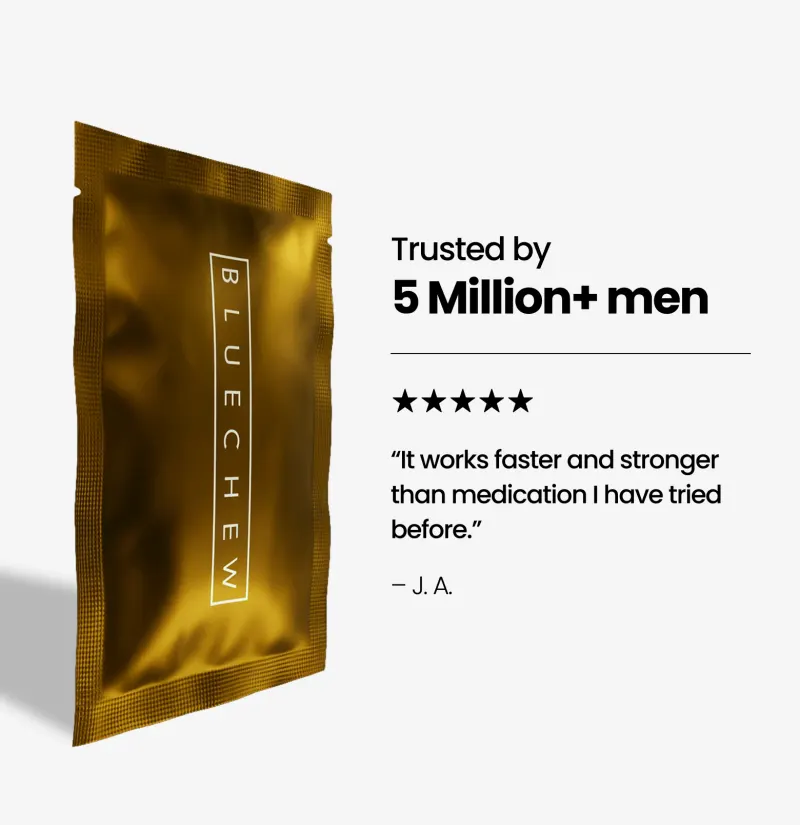
When performance concerns keep you in your head instead of present with your partner, BlueChew offers prescription support that may help address erectile-function concerns.
BlueChew provides compounded prescription medications containing the active ingredients sildenafil, vardenafil, and tadalafil. Sildenafil, vardenafil, and tadalafil are the active ingredients in Viagra, Levitra, and Cialis, respectively. The entire process happens online, with no in-person doctor visits or pharmacy pickups required.
For men dealing with performance anxiety, addressing erectile-function concerns may make it easier to focus on emotional presence and connection with your partner.
BlueChew's complete product lineup includes:
- SIL: 30 mg or 45 mg sildenafil, works within 15 minutes, lasting up to 6 hours
- TAD: 6 mg or 9 mg tadalafil, effective within 15 minutes, lasting up to 36 hours
- VAR: 8 mg vardenafil, takes effect within 15 minutes, lasting up to 6 hours
- DailyTAD: 9 mg tadalafil plus 7 essential vitamins, lasting up to 36 hours
- MAX: 45 mg sildenafil + 18 mg tadalafil combo, lasting up to 36 hours
- VMAX: 14 mg vardenafil + 18 mg tadalafil combo, lasting up to 36 hours
- GOLD: sildenafil, tadalafil, oxytocin, and apomorphine sublingual tablet, lasting up to 36 hours
GOLD may be relevant for men whose performance concerns involve both physical and arousal-related factors. The formulation includes sildenafil, tadalafil, oxytocin, and apomorphine. Learn more about how fast GOLD works to understand this option.
All BlueChew products ship in unmarked kraft mailers for complete discretion, and you can manage your subscription to fit your needs.

Frequently Asked Questions
Can performance anxiety cause erectile dysfunction?
Yes. Performance anxiety can contribute to erectile difficulties, especially when worry pulls attention away from sensation and connection. Anxiety can create a cycle where fear of difficulty increases pressure, which may make erectile function less reliable.
How long does it take to overcome performance anxiety?
Improvement timelines vary. Some men notice changes as they reduce pressure, communicate more openly, and address erectile concerns with a healthcare provider. Others may need more time, especially when anxiety, relationship stress, or underlying health issues are involved.
How does BlueChew help with performance anxiety?
BlueChew offers compounded medications that may help address erectile-function concerns. For some men, addressing the physical side of erectile difficulty can make it easier to focus on connection rather than monitoring the body’s response. GOLD includes ingredients intended to support both blood flow and arousal-related factors.
Should I tell my partner about my performance anxiety?
Open communication with your partner can help reduce pressure and misunderstanding. When your partner understands what you're experiencing, they may be better able to offer support rather than wondering if the difficulty reflects their attractiveness or your interest.
What's the difference between physical and psychological erectile dysfunction?
Psychological ED is typically situation-specific and may not affect erections during sleep or masturbation. Physical ED tends to be more consistent across all situations and is often associated with underlying health conditions. Many men experience a combination of both factors. A healthcare provider can help determine which factors are most significant in your situation.
This article is provided for informational purposes only and does not constitute medical advice. The information presented is not a substitute for professional medical advice, diagnosis, or treatment. Always consult your healthcare provider to discuss the risks, benefits, and appropriateness of any treatment.
BlueChew offers access to healthcare providers who may prescribe compounded medications for the treatment of erectile dysfunction.
The featured products include compounded medications that have not been approved by the FDA. Compounded medications may be prescribed under federal law but are not the same as, nor are they generic versions of, any FDA-approved medication. The FDA does not review compounded medications for safety, effectiveness, or manufacturing quality of compounded products. A prescription will only be written if deemed appropriate after the digital consultation by the licensed medical provider. Individual results may vary.
BlueChew is not a compounding pharmacy but a telemedicine service that links patients to licensed medical providers.
BLUECHEW EDITORIAL STANDARDS
BlueChew is committed to providing accurate, clear, and up-to-date health information. Our writers and medical reviewers rely on peer-reviewed research, clinical guidelines, academic institutions, government health agencies, and professional medical organizations. Whenever possible, we cite primary sources and update our content as new evidence becomes available.
See something that needs correction? Let us know at blog@bluechew.com.



 Medically reviewed