First Time Having Sex With a New Partner After ED

Meeting someone new can feel exciting, but it can also bring pressure if you have experienced erectile dysfunction before. Even when attraction is strong, the first intimate moment with a new partner may come with questions about confidence, timing, and whether your body will respond the way you want.
ED with a new partner does not always mean there is a new physical problem. It can happen when nerves, stress, self-monitoring, medication effects, alcohol, sleep, or health factors make arousal harder to access. The first time with someone new can feel especially high-pressure because there is less familiarity and more uncertainty.
Research on sexual communication study has found that sexual communication is positively associated with several dimensions of sexual function, including erectile function and overall sexual function. That does not mean one conversation fixes ED, but it supports a practical point: openness and lower-pressure intimacy can matter..
Key Takeaways
- ED with a new partner can be related to performance pressure, anxiety, unfamiliar intimacy, health factors, medications, alcohol, or sleep.
- A new relationship can make existing erectile concerns feel more noticeable because the situation may feel less predictable.
- Open communication may help reduce pressure and prevent a partner from misreading ED as lack of attraction.
- ED medications do not create desire on their own. They are intended to support the body’s erectile response when sexual arousal is present.
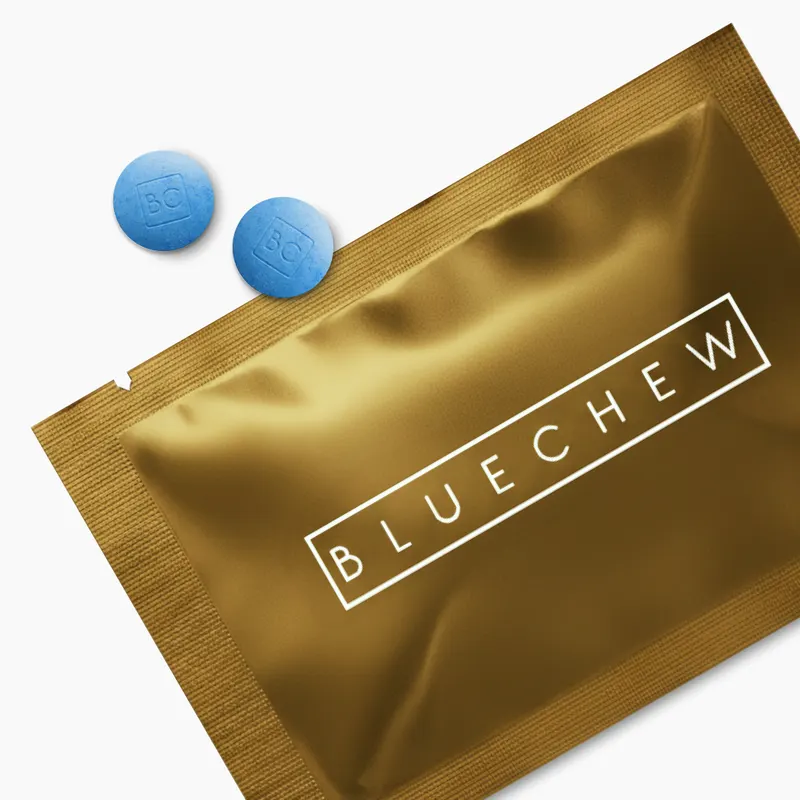
- BlueChew offers compounded sublingual medications for eligible patients after an online provider review.

Why ED Can Feel Different With a New Partner
Sex with a new partner can feel different from sex in a familiar relationship. You may be excited, but you may also feel watched, evaluated, or unsure how the other person will respond if something does not go as planned.
That pressure can matter because erections depend on both physical and psychological readiness. Arousal, nerve signaling, blood flow, smooth muscle relaxation, emotional comfort, and attention all work together.
The First Encounter Can Feel Like a Test
When you have experienced ED before, the first time with someone new may bring thoughts like:
- What if it happens again?
- What if they think I am not attracted to them?
- What if I cannot explain it well?
- What if this changes how they see me?
- What if I am not ready?
Those thoughts are understandable, but they can pull attention away from pleasure and connection. The more you monitor your erection, the harder it may be to stay present.
A position statement on anxiety sexual response describes anxiety as a factor that can interfere with multiple phases of sexual response. In a new-partner setting, that may show up as pressure before or during intimacy.
ED Does Not Automatically Mean Low Attraction
One of the most important points to remember is that ED does not automatically mean you are not attracted to your partner. Erections can be affected by stress, fatigue, alcohol, medication, nervousness, and health factors.
That distinction matters because a new partner may personalize the moment if there is no context. A simple explanation can prevent confusion and reduce pressure for both people.
How to Talk About ED With a New Partner
Talking about ED can feel uncomfortable, but it does not need to be dramatic. The goal is not to give a full medical history. The goal is to keep the moment from becoming silent, tense, or misunderstood.
Choose the Right Moment
A conversation may be easier before intimacy becomes urgent. You might bring it up during a calm private moment rather than in the middle of sex.
You can keep it simple:
“I’m really attracted to you. I’ve had some ED before, and sometimes pressure makes it harder for my body to respond right away. I just wanted to be honest so we can take things at a pace that feels good.”
This kind of wording does three things:
- It reassures your partner that attraction is present.
- It explains that pressure can be part of the issue.
- It invites patience without making the conversation overly clinical.
Avoid Over-Apologizing
It is natural to feel embarrassed, but repeated apologies can make the moment feel heavier. Instead of treating ED like a failure, treat it like something you can navigate.
A useful phrase might be:
“I’m in my head right now, but I still want to be close to you.”
That keeps intimacy open without forcing a specific outcome.
What to Do During the First Encounter
New-partner sex does not have to be built around proving performance. It can be about learning each other, building comfort, and creating trust.
Make Room for More Than Intercourse
Intercourse does not need to be the only measure of a successful encounter. Kissing, touching, oral sex, massage, cuddling, and slower exploration can all keep intimacy present even if an erection takes longer or changes during the moment.
When penetration becomes the only goal, pressure can build quickly. When the goal is shared pleasure, the experience may feel less like a test.
Stay Present Instead of Checking Yourself
Self-monitoring can become a problem. If your attention keeps shifting to whether you are hard enough, how long the erection will last, or what your partner is thinking, the moment can start to feel stressful.
Try shifting attention toward:
- Physical sensations
- Breathing
- Your partner’s responses
- Touch and closeness
- What feels good right now
This does not guarantee an erection. It simply helps reduce the pressure that can make arousal more difficult.
When ED May Need Medical Attention
Occasional ED during a high-pressure first encounter may not mean anything serious. But recurring erectile difficulties are worth discussing with a healthcare provider, especially if they happen across different situations.
Consider medical guidance if ED:
- Persists for more than a few weeks
- Happens with multiple partners or during masturbation
- Appears suddenly or feels severe
- Comes with chest pain or shortness of breath
- Comes with urinary symptoms
- Comes with low libido, fatigue, or mood changes
- Began after starting a new medication
- Causes significant distress or dating avoidance
ED can sometimes be associated with cardiovascular disease, diabetes, high blood pressure, medication effects, hormonal concerns, anxiety, depression, or other health issues. A provider can help determine what may be contributing.
Medication Review Matters
Some medications may contribute to ED or reduced desire for some men. These can include certain antidepressants, blood pressure medications, opioid medications, sedatives, anxiety medications, or prostate medications.
Do not stop prescribed medication on your own. If you think a medication may be affecting your sex life, speak with a healthcare provider about safe alternatives or adjustments.
How ED Medications Fit Into a New-Partner Situation
ED medications can be part of a larger plan, but they are not the entire plan. Communication, realistic expectations, health habits, and provider guidance still matter.
PDE5 Inhibitors in Plain Language
PDE5 inhibitors are a commonly used medication class for erectile dysfunction. Sildenafil, tadalafil, and vardenafil are active ingredients in Viagra, Cialis, and Levitra, respectively.
The ED clinical guidance from the American Urological Association recommends that men with ED be informed about treatment options through shared decision-making and that care should consider health history, contraindications, and patient goals.
PDE5 inhibitors are intended to support the body’s erectile response during sexual arousal. They do not create attraction, desire, or automatic erections.
Timing Can Take Practice
Finding the right approach may take adjustment. Food, alcohol, stress level, sleep, timing, dose, and medication type can all influence the experience.
That is why one attempt should not be treated as the final answer. If a prescribed ED medication does not work the way expected, discuss it with a provider before changing dose, combining medications, or giving up on treatment.
Psychological Support Can Also Help
If the main issue feels like anxiety, pressure, avoidance, or fear of repeating a past ED episode, psychological support may be useful.
A systematic review on psychological ED interventions found evidence that psychological interventions, PDE5 inhibitors, and combined approaches may help men with ED, though individual results can vary.
Support may include:
- Cognitive behavioral therapy
- Sex therapy
- Couples counseling
- Anxiety management
- Stress-reduction practices
- Guided communication strategies
This does not mean ED is “all in your head.” It means the body and mind can influence each other during sex.
Lifestyle Factors That May Support Sexual Function
Lifestyle changes are not guaranteed ED fixes, but they can support the systems involved in erectile function over time.
Sleep and Energy
Poor sleep can affect energy, mood, stress tolerance, and libido. If you are dating while tired, overworked, or anxious, your body may be less responsive than usual.
Try to protect sleep before important plans when possible. Better rest may support confidence and focus during intimacy.
Alcohol and Nerves
Alcohol may lower nerves at first, but too much can make erections less reliable. If you are already worried about ED with a new partner, heavy drinking can add another barrier.
Moderation can help you stay more present and responsive.
Movement and Cardiovascular Health
Erections depend on blood flow, so cardiovascular health matters. Regular movement, even simple walking or strength training, may support vascular health, mood, and energy.
A review of lifestyle ED interventions found that lifestyle modifications were among interventions associated with improvements in erectile dysfunction, though the best approach depends on individual health factors.
Where BlueChew May Fit
For some men, ED with a new partner can create both physical concern and added pressure around the next intimate moment. BlueChew may be worth discussing as part of a broader plan that also includes confidence-building, communication, and overall health support.
BlueChew may fit if you are looking for:
- A prescription option reviewed by a licensed provider
- Compounded medications for erectile dysfunction and sexual performance enhancement
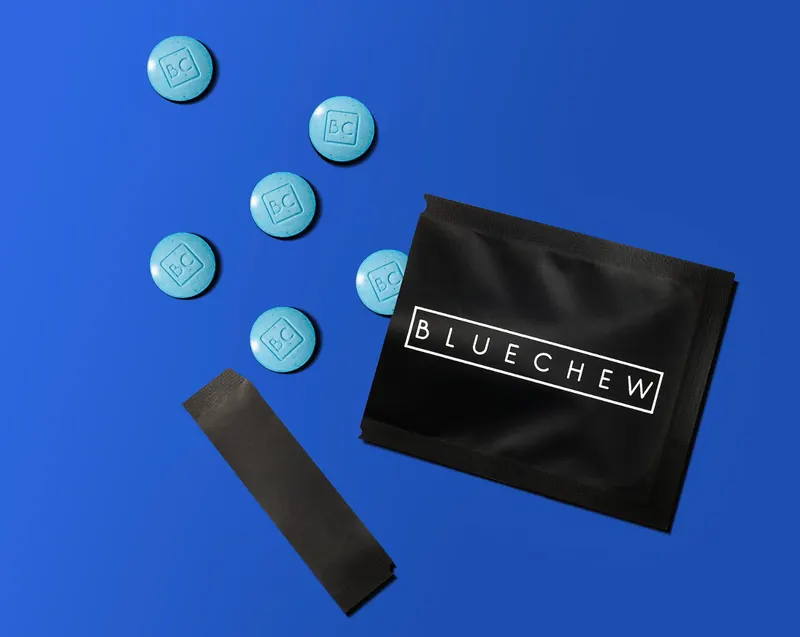
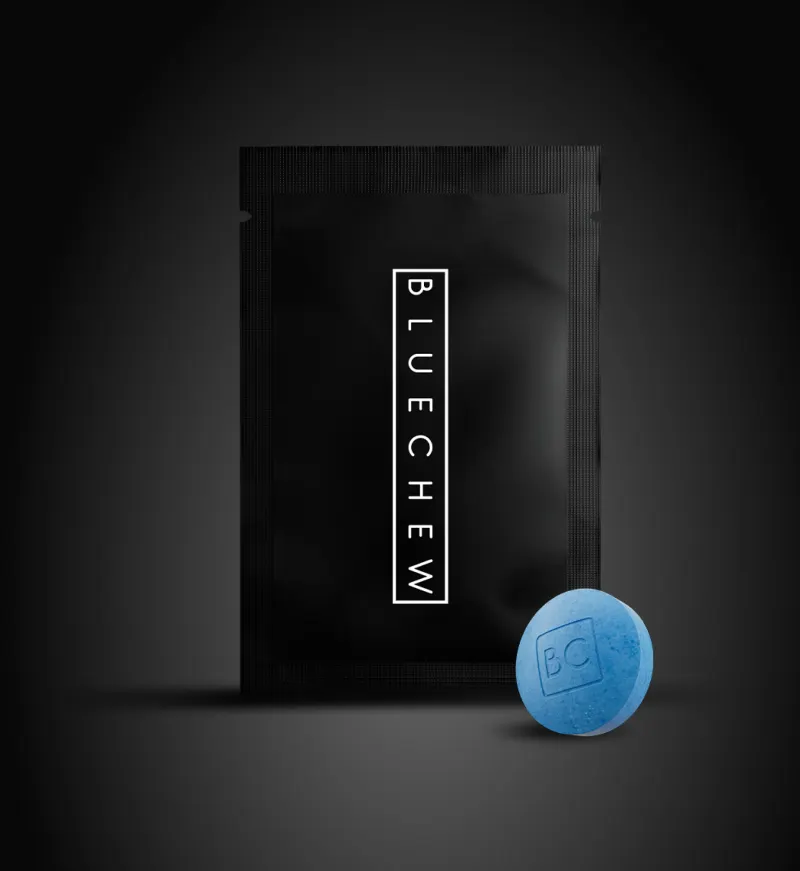
- Sublingual tablets designed to be placed under the tongue
- Options that may include active ingredients such as sildenafil, vardenafil, tadalafil, apomorphine, or oxytocin, depending on the prescribed product
Sildenafil, vardenafil, and tadalafil are the active ingredients in Viagra, Levitra, and Cialis, respectively. Neither MAX nor GOLD should be viewed as a guarantee. A licensed provider should review your health history, current medications, and risk factors before treatment is prescribed.
BlueChew Product Lineup
- SIL: 30 mg or 45 mg sildenafil, from $2.95/tablet, works in 30 minutes, lasting up to 6 hours
- TAD: 6 mg or 9 mg tadalafil, from $3.58/tablet, effective within 30 minutes, lasting up to 36 hours
- VAR: 8 mg vardenafil, from $4.34/tablet, takes effect in 30 minutes, lasting up to 6 hours
- DailyTAD: 9 mg tadalafil plus 7 essential vitamins, $2.23/tablet, lasting up to 36 hours
- MAX: 45 mg sildenafil + 18 mg tadalafil combo, $5.63/tablet, lasting up to 36 hours
- VMAX: 14 mg vardenafil + 18 mg tadalafil combo, $5.63/tablet, lasting up to 36 hours
- GOLD: sildenafil, tadalafil, oxytocin, and apomorphine sublingual tablet, from $7.30/tablet, lasting up to 36 hours
- ENERGY: 30 mg sildenafil + 60 mg caffeine, $4.50/ea, lasting up to 6 hours
Product format note: BlueChew offers sublingual tablet options, including SIL, TAD, VAR, MAX, VMAX, and GOLD. ENERGY is available as a liquid shot. DailyTAD format may vary by plan eligibility.
A new partner does not need a perfect performance. They need honesty, presence, and mutual care. If ED happens, it can be handled without turning the moment into a crisis.
Frequently Asked Questions
Is ED common with a new partner?
ED can happen with a new partner, especially when nerves, pressure, fatigue, alcohol, or past ED experiences make the moment feel more stressful. New-partner intimacy can feel less familiar, which may make it harder to stay relaxed and present. This does not automatically mean you are not attracted to your partner or that something is wrong with the connection.
Should I tell a new partner about ED before sex?
You do not have to share more than you are comfortable sharing, but a simple conversation can reduce misunderstanding. It can help to reassure your partner that attraction is present and that pressure sometimes affects your body’s response. Keeping the conversation calm and brief may make the first intimate experience feel less tense for both people.
What should I do if ED happens during the first encounter?
Pause, slow down, and avoid treating the moment as failure. Shift toward kissing, touching, or other forms of intimacy that feel less pressured. One difficult moment does not define your sexual function or the relationship. If ED continues across several encounters or causes distress, consider speaking with a healthcare provider.
Can ED medication help with new-partner anxiety?
ED medication may help some eligible patients by supporting the body’s erectile response during arousal. However, medication does not remove anxiety, create desire, or guarantee a specific outcome. Communication, lower-pressure intimacy, and provider guidance still matter. The right approach depends on your health history, current medications, and what is contributing to the ED.
Can BlueChew be an option before sex with a new partner?
BlueChew may be an option for eligible patients who want to discuss prescription ED treatment with a licensed provider. BlueChew offers compounded sublingual medications after an online provider review. This may be worth considering if ED concerns are adding pressure before intimacy. The right option depends on your health history, current medications, and provider approval.
This article is provided for informational purposes only and does not constitute medical advice. The information presented is not a substitute for professional medical advice, diagnosis, or treatment. Always consult your healthcare provider to discuss the risks, benefits, and appropriateness of any treatment.
BlueChew offers access to healthcare providers who may prescribe compounded medications for the treatment of erectile dysfunction.
The featured products include compounded medications that have not been approved by the FDA. Compounded medications may be prescribed under federal law but are not the same as, nor are they generic versions of, any FDA-approved medication. The FDA does not review compounded medications for safety, effectiveness, or manufacturing quality of compounded products. A prescription will only be written if deemed appropriate after the digital consultation by the licensed medical provider. Individual results may vary.
BlueChew is not a compounding pharmacy but a telemedicine service that links patients to licensed medical providers.
Other Helpful Articles