Key Takeaways
Key Takeaways
SEX9 minute read
Touch, Talk, Tease: A Simple Foreplay Routine for Hotter Sex

Great sex doesn't start when clothes come off—it starts long before. The couples who report the highest sexual satisfaction aren't rushing to the finish line; they're savoring the journey with intentional foreplay that builds anticipation, deepens connection, and creates the kind of arousal that makes everything that follows feel more intense. Yet most couples spend just 5-10 minutes on foreplay, leaving significant pleasure potential untapped.
When you invest in proper foreplay, you're not just warming up—you're activating hormonal responses that enhance sensitivity, build emotional bonding, and can make the entire experience more satisfying for everyone involved.
The good news? Building a better foreplay routine doesn't require complicated techniques or hours of practice. This simple three-pillar framework—Touch, Talk, Tease—gives you a memorable structure that you can customize to your relationship and start using tonight.
Key Takeaways
- Effective foreplay combines three elements: physical touch, verbal communication, and playful teasing
- Women typically need longer arousal time to reach full arousal, while men may be ready more quickly—understanding this gap improves satisfaction for both partners
- Foreplay triggers oxytocin, dopamine, and other hormones that enhance pleasure and emotional connection
- Communication during foreplay isn't just helpful—it's essential for learning what works and building intimacy
- When performance concerns are addressed, you can focus entirely on connection rather than anxiety

The Power of Touch: Igniting Desire Through Physical Connection
Touch is the foundation of foreplay. It's how you communicate desire without words, how you help your partner relax into the experience, and how you discover what creates pleasure for each other.
Mapping Your Partner's Pleasure Zones
Every body responds differently to touch. While certain areas—neck, inner thighs, lower back—tend to be sensitive for most people, your partner's unique map of erogenous zones is something you discover together over time.
High-sensitivity areas to explore:
- Neck and behind the ears
- Inner wrists and forearms
- Lower back and hip creases
- Inner thighs
- Scalp during gentle massage
The key is paying attention to responses. Notice what makes your partner lean in, breathe deeper, or vocalize pleasure. These cues guide you toward what works.
From Gentle Caresses to Deepening Intensity
Effective touch builds gradually. Starting with light, teasing contact creates anticipation, while slowly increasing pressure and moving toward more intimate areas builds arousal naturally.
A progression that works:
- Start with clothed touch—shoulders, back, arms
- Move to exposed skin with light fingertips
- Add variation: gentle scratching, firmer pressure, kisses
- Gradually approach more sensitive areas
- Let your partner's responses guide your pace
Research published in Archives of Sexual Behavior demonstrates that foreplay helps create arousal on both physical and emotional levels. The extended touch not only increases blood flow but helps both partners attune to each other's needs and build excitement together.

 Reviewed by a licensed provider
 Talk Your Way to Turn-On: Verbal Cues for Heightened Excitement
Words during intimacy aren't optional—they're a powerful tool for connection, direction, and arousal. Communication helps you understand what your partner wants and creates emotional intimacy that enhances physical pleasure.
Sharing Your Desires and Fantasies
Many couples struggle to talk about what they want in bed. The solution? Start small and positive. Rather than critiquing what isn't working, express enthusiasm for what is.
Conversation starters that work:
- "I love when you..." followed by something specific
- "It would feel amazing if you..."
- "Remember when we tried...? I'd love to do that again"
- "I've been thinking about..."
Sharing fantasies requires trust. Start with lower-stakes desires before building toward more vulnerable sharing. The goal is creating a space where both partners feel safe expressing themselves.
The Art of Sexual Communication
Effective communication during foreplay includes both verbal and non-verbal elements. Moans, guided hands, and physical responses all count as communication—and paying attention to them matters.
During foreplay, try:
- Positive reinforcement: "Yes, right there" or "That feels incredible"
- Gentle guidance: moving your partner's hand or repositioning
- Checking in: "Does this feel good?" or "What would you like?"
- Expressing desire: "I want you" or "You're so attractive to me"
Research in the Journal of Sex & Marital Therapy found that sexual communication quality is strongly associated with higher relationship and sexual satisfaction. The conversation doesn't kill the mood—it enhances it.
Tease and Please: Building Anticipation for Mind-Blowing Sex
Teasing is the secret ingredient that transforms good foreplay into unforgettable foreplay. It's about building anticipation, creating tension, and making your partner want more before you give it to them.
The Art of Prolonged Foreplay
Rushing through foreplay is one of the most common mistakes couples make. When you slow down and extend the build-up, you're allowing arousal to reach its full potential.
Why slowing down matters:
- Arousal hormones need time to build
- Anticipation activates reward centers in the brain
- Extended foreplay leads to more intense orgasms
- Both partners become more attuned to each other
The 24-36 hour window offered by tadalafil options removes time pressure entirely, allowing couples to focus on extended foreplay without watching the clock.
Techniques for Creative Teasing
Teasing is about approaching pleasure and pulling back—creating a pattern of anticipation and reward that keeps your partner engaged and wanting more.
Teasing techniques to try:
- Get close to sensitive areas, then pull away
- Use breath and light touches before firmer contact
- Build up to a moment, then pause
- Alternate between giving attention and receiving
- Use sensory elements: blindfolds, temperature play, textures
The psychology behind teasing works because delayed gratification intensifies pleasure. When your brain anticipates reward, the eventual delivery feels more satisfying.

Beyond the Basics: Enhancing Your Routine for Deeper Connection
The best foreplay creates emotional connection alongside physical arousal. When partners feel truly seen and desired, the entire experience becomes more meaningful.
Creating a Safe Space for Exploration
Vulnerability is essential for great intimacy. Both partners need to feel safe trying new things, expressing desires, and being fully present without judgment.
Building emotional safety:
- Respond positively to your partner's suggestions
- Never mock or dismiss vulnerable sharing
- Create space for "not tonight" without pressure
- Debrief after trying new things—what worked, what didn't
World-renowned couples therapist Esther Perel notes that "foreplay starts at the end of the previous orgasm"—meaning that how you treat each other outside the bedroom directly impacts intimacy during it.
Tailoring Your Foreplay: Understanding Individual Preferences
There's no universal foreplay routine that works for every couple. What matters is learning your partner's specific preferences and being willing to adapt as those preferences evolve.
Decoding Body Language and Nonverbal Cues
Your partner's body constantly communicates during foreplay. Learning to read these signals helps you adjust in real-time.
What to watch for:
- Leaning in or pulling away
- Changes in breathing (deeper usually means good)
- Muscle tension—relaxation versus bracing
- Vocalizations—even subtle ones
- Eye contact or closed eyes
Adapting to Changing Desires
What worked last month might not work tonight. Factors like stress, energy levels, and hormonal cycles all influence what feels good. Staying curious and responsive keeps your foreplay routine fresh.
Couples who embrace this flexibility often find that spontaneity becomes easier. Understanding how PDE5 inhibitors work can help couples feel more confident exploring extended foreplay sessions without performance concerns interrupting the flow.
Boosting Confidence Inside and Out: The Role of Erection Support
Performance anxiety is one of the biggest barriers to being present during foreplay. When you're worried about what might or might not happen physically, it's nearly impossible to focus on connection and pleasure.
Addressing Performance Anxiety
Worrying about erectile function creates a self-fulfilling cycle: anxiety triggers stress hormones that make erections more difficult, which increases anxiety. Breaking this cycle often requires addressing the physical concern directly.
When physical confidence is handled, you can:
- Focus on your partner's pleasure without distraction
- Stay present in the moment
- Explore extended foreplay without internal time pressure
- Build vulnerability that deepens emotional connection
Research shows sildenafil improves erectile function in up to 88% of patients. Addressing the physical side frees mental bandwidth for emotional presence.
Overcoming Roadblocks: Addressing Challenges to Intimate Connection
Even couples committed to better foreplay face obstacles. Recognizing common challenges helps you work through them together.
Recognizing and Addressing Discomfort
Physical discomfort—from insufficient arousal, medical conditions, or simply not being in the mood—requires patience and communication. Proper foreplay, including adequate time for natural lubrication, can address many concerns.
Common issues and solutions:
- Discomfort during intimacy: Slow down, add lubrication, ensure adequate arousal time
- Mismatched desire levels: Compromise, schedule intimate time, communicate needs
- Stress interfering: Create transition rituals, address stressors outside bedroom
- Body image concerns: Focus on sensation rather than appearance, affirm your partner
When physical challenges persist, seeking professional guidance from healthcare providers or therapists can make a significant difference.
Making it a Routine: Consistency for a Hotter Sex Life
The couples who maintain satisfying sex lives over time are those who prioritize intimacy consistently—not just when everything aligns perfectly.
Scheduling Time for Intimacy
Scheduling sex might sound unromantic, but it's actually one of the most effective ways to ensure foreplay gets the time it deserves. When intimacy is planned, you can mentally prepare, reduce stress, and create space for connection.
Making scheduled intimacy work:
- Treat it like any important appointment
- Build in transition time—no rushing from work to bedroom
- Plan ahead for any support you want (like having your BlueChew ready)
- Focus on connection, not just outcomes
Keeping the Spark Alive with Regular Foreplay
Research published in Archives of Sexual Behavior found that couples who engaged in comprehensive physical behaviors—both affectionate and sexual—reported significantly higher relationship satisfaction. Regular foreplay isn't just about sex; it's about maintaining connection.
For couples wanting consistent readiness without daily planning, combination options offer 24-36 hour coverage that supports spontaneous intimacy and extended foreplay sessions.
How BlueChew Supports Your Foreplay Routine
Great foreplay requires presence—and presence requires confidence. BlueChew addresses physical concerns so you can focus entirely on connection.
BlueChew provides prescription medications containing the active ingredients sildenafil, vardenafil, and tadalafil. Sildenafil, vardenafil, and tadalafil are the active ingredients in Viagra, Levitra, and Cialis, respectively.
BlueChew’s complete product lineup includes:
- SIL: 30 mg or 45 mg sildenafil, works within 15 minutes, lasting up to 6 hours
- TAD: 6 mg or 9 mg tadalafil, effective within 15 minutes, lasting up to 36 hours
- VAR: 8 mg vardenafil, takes effect within 15 minutes, lasting up to 6 hours
- DailyTAD: 9 mg tadalafil plus 7 essential vitamins, lasting up to 36 hours
- MAX: 45 mg sildenafil + 18 mg tadalafil combo, lasting up to 36 hours
- VMAX: 14 mg vardenafil + 18 mg tadalafil combo, lasting up to 36 hours
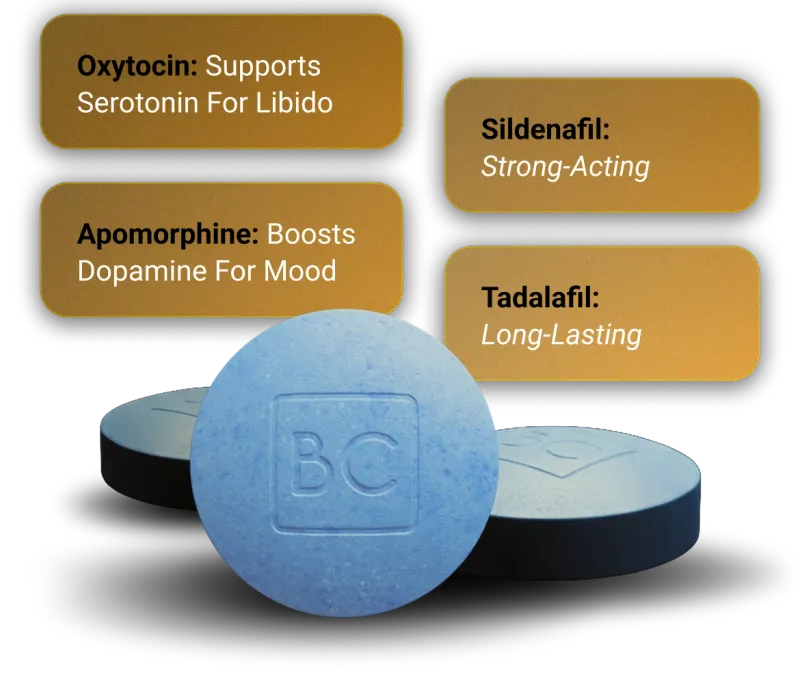
- GOLD: sildenafil, tadalafil, oxytocin, and apomorphine sublingual tablet, lasting up to 36 hours
Whether you prefer SIL for planned date nights or TAD for round-the-clock readiness, addressing physical confidence lets you invest fully in the Touch, Talk, Tease routine without distraction.

Frequently Asked Questions
How important is foreplay for overall sexual satisfaction?
Foreplay is essential—not optional. Research shows that couples who engage in extended foreplay report significantly higher sexual and relationship satisfaction. Beyond pleasure, foreplay triggers hormonal responses including oxytocin and dopamine that enhance bonding and make the entire experience more satisfying for everyone involved. For women especially, adequate foreplay time is often necessary for full arousal and orgasm.
What are some common mistakes to avoid during foreplay?
The most common mistake is rushing. Most couples spend only 5-10 minutes on foreplay when research suggests longer periods for peak arousal. Other mistakes include: skipping communication about what feels good, treating foreplay as obligatory rather than enjoyable, and assuming what worked before will always work. Staying curious and responsive prevents these patterns.
Can improving foreplay help with erectile dysfunction?
Extended foreplay can support erectile function in several ways. Proper arousal time allows blood flow to increase naturally, reducing pressure for immediate performance. Additionally, when foreplay is satisfying for both partners, performance anxiety often decreases—and anxiety reduction alone can improve erectile response. For persistent concerns, addressing erectile function directly with BlueChew removes the worry so you can focus on foreplay.
How can I communicate my desires during foreplay more effectively?
Start with positive statements about what you enjoy rather than criticism of what you don't. Use specific language: "I love when you touch me here" rather than vague requests. Non-verbal communication counts too—guiding your partner's hand or responding vocally to what feels good. Create conversations outside the bedroom about preferences, fantasies, and boundaries, so in-the-moment communication feels natural.
What if my partner and I have different preferences for foreplay?
Different preferences are normal and workable. Start by having an open conversation about what each of you enjoys most. Look for overlap and compromise—perhaps alternating whose preferences take the lead. Remember that foreplay is also about giving pleasure, so taking turns focusing on each other's desires can satisfy both partners. The key is viewing differences as an opportunity for discovery rather than a problem to solve.
This article is provided for informational purposes only and does not constitute medical advice. The information presented is not a substitute for professional medical advice, diagnosis, or treatment. Always consult your healthcare provider to discuss the risks, benefits, and appropriateness of any treatment.
BlueChew offers access to healthcare providers who may prescribe compounded medications for the treatment of erectile dysfunction.
The featured products include compounded medications that have not been approved by the FDA. Compounded medications may be prescribed under federal law but are not the same as, nor are they generic versions of, any FDA-approved medication. The FDA does not review compounded medications for safety, effectiveness, or manufacturing quality of compounded products. A prescription will only be written if deemed appropriate after the digital consultation by the licensed medical provider. Individual results may vary.
BlueChew is not a compounding pharmacy but a telemedicine service that links patients to licensed medical providers.
BLUECHEW EDITORIAL STANDARDS
BlueChew is committed to providing accurate, clear, and up-to-date health information. Our writers and medical reviewers rely on peer-reviewed research, clinical guidelines, academic institutions, government health agencies, and professional medical organizations. Whenever possible, we cite primary sources and update our content as new evidence becomes available.
See something that needs correction? Let us know at blog@bluechew.com.



 Medically reviewed