Peyronie's Disease and Erectile Dysfunction: What the Research Says About PDE5 Inhibitors

Noticing a new curve, bend, or firm lump in your penis can be unsettling. It can also bring up questions about your erections, your sex life, and what comes next. Peyronie's disease is more common than many men realize. Estimates vary widely; however, research suggests that Peyronie’s disease impacts between 0.3% and 20.3% of men, with an average of approximately 10%. That figure is likely low since embarrassment may keep some cases from being reported.
Peyronie's disease can affect men at any age, though research shows it becomes more common as men get older.
If you're navigating issues with Peyronie’s disease, many patients become curious about available treatment options. Specifically, whether medications like sildenafil or tadalafil — the active ingredients behind BlueChew — can actually help.
The answer is more nuanced than a simple yes or no. Below, we’ll explore what these medications offer, other treatment options, and when PDE5 inhibitors like BlueChew may be an appropriate treatment choice.
Key Takeaways
- Peyronie’s disease involves scar tissue that can cause penile curvature, narrowing, shortening, and painful erections.
- Erectile dysfunction can occur alongside it because of physical changes, blood-flow problems, and psychological distress.
- The condition has two phases: an acute phase when curvature is actively worsening, and a chronic phase when the scar tissue stabilizes.
- PDE5 inhibitors like sildenafil and tadalafil consistently improve erectile function, but studies of their effects on curvature have produced mixed results.
- A urologist can evaluate the structural changes and discuss treatments such as traction therapy, injections, or surgery.
- BlueChew may offer an option for treating accompanying ED that is often associated with Peyronie's disease, but it works best as one piece of a treatment plan, not a standalone fix.

Symptoms
What Is Peyronie's Disease?
Peyronie's disease develops when scar tissue, called plaque, forms inside the tunica albuginea — the fibrous sheath that surrounds the erectile chambers of the penis.
During an erection, healthy tissue stretches as the penis fills with blood. Plaque is less flexible, so the affected area cannot expand normally. This can produce a curve, an indentation, or an hourglass shape. Some men also notice shortening, a firm area under the skin, or reduced erection firmness.
It's not a cosmetic issue or a sign that something is fundamentally wrong with you — it's a specific, well-studied medical condition, and one that urologists see often.
Causes
What Causes It?
The exact cause isn't fully understood, but the leading explanation is repeated microtrauma to the tissues of the penis, often during vigorous sex, that heals abnormally and forms scar tissue instead of healthy tissue.
What surprises a lot of men is that most cases aren't linked to any specific, memorable injury — up to 80% of men with Peyronie's disease don't recall a triggering event at all.
Risk Factors
Factors that raise the risk include:
- Erectile dysfunction itself
- Co-occurring ED is found in up to 60% of Peyronie's patients.
- Hypogonadism (low testosterone)
- One study found that 74.4% of patients with testosterone levels < 300 ng/dL had Peyronie's disease.
- Diabetes-related erectile dysfunction
- Raises risk 4 to 5 times, however, better glycemic control does tend to improve symptoms.
- Prior urologic surgery or penile injury
- Research shows a 16-fold increased risk after urethral catheterization, cystoscopy, or radical prostatectomy.
- A family history of Peyronie's disease.
- Up to 4% of first-degree relatives of men with the condition also develop it.
- A specific gene variant (HLA-B7) has been linked to susceptibility.
- A personal history of connective tissue disorders.
- Roughly 21% of men with Dupuytren's contracture are also found to have Peyronie's disease.
- Associations have also been found with plantar fasciitis, scleroderma, retroperitoneal fibrosis, and Paget's disease of bone.
Diagnosis
Active and Stable Phases
Peyronie’s disease is commonly described in two phases:
Acute (active) phase: Plaque formation is ongoing, curvature can keep worsening, and erections are often painful. This period can continue for up to 18–24 months. Early intervention during this phase offers the best chance of limiting further curvature.
Chronic (stable) phase: Eventually, the scar tissue stops growing and the curvature plateaus. Pain often improves, although the bend or narrowing may remain.
Understanding which phase you're in matters, because it shapes what treatment actually makes sense.
It's also worth knowing that Peyronie's disease can improve on its own, without any treatment, in an estimated 12% of cases — not the majority, but not a vanishingly small number either.
When Should You See a Provider?
Most patients wait around six months after symptoms first appear before seeking evaluation, but there's no reason to wait that long. It's worth seeing a urologist sooner if the curvature is affecting your ability to have sex, causing significant pain, or weighing on you emotionally — early evaluation, ideally during the acute phase, gives you the most treatment options.
Useful details to share include when the curvature started and whether it's been getting worse, the direction and degree of the bend, whether erections are painful (and if so, when — flaccid, erect, or both), any history of penile trauma, injury, or urologic surgery, a family history of Peyronie's disease or Dupuytren's contracture, and how the condition is affecting your mood, confidence, or relationship.
How Is Peyronie's Disease Diagnosed?
Diagnosis is based mainly on history and a physical exam rather than a single test. According to the American Urological Association's guideline, a provider will typically examine the penis in both the flaccid and erect states to get a clear picture of the deformity. That can include gently stretching the flaccid penis to measure and record its length as a baseline, and checking for plaque, indentations, or an hourglass or bottleneck shape.
Photos from home can help, but they're "rarely sufficient" on their own, since home erections are often less than fully rigid and photographed at odd angles. For a more precise look, a provider may perform an in-office injection to bring on a full erection, sometimes paired with a penile duplex ultrasound, which can check blood flow and identify calcification in the plaque. MRI is a good imaging option in some cases but isn't recommended for routine use.
Curvature itself is graded roughly by degree: 20 degrees or less is considered essentially normal, around 30 degrees is generally still functional, and 60 degrees or more is likely to make sex difficult.
Treatments
Standard Treatment Options
Treatment depends heavily on the phase, the degree of curvature, and whether erectile dysfunction is part of the picture. Options generally fall into a few categories:
Oral medications like vitamin E, potassium para-aminobenzoate, tamoxifen, and colchicine have been studied, but the evidence behind most of them is weak or inconsistent, and none are considered a reliable standalone fix.
Injectable treatments are injected directly into the plaque. Collagenase clostridium histolyticum (brand name Xiaflex) is FDA-approved specifically for Peyronie's disease with curvature greater than 30 degrees, and works by breaking down the collagen that makes up the scar tissue. Verapamil and interferon injections are also used, with varying evidence.
Mechanical therapies — penile traction therapy and vacuum erection devices — apply physical stretching or negative pressure to the penis over time. Traction therapy in particular has some of the more encouraging evidence, showing modest improvements in both curvature and length, and is sometimes used before or after surgery as well.
Surgery is generally reserved for the chronic phase, once curvature has been stable for 9–12 months, and includes shortening procedures (plication), lengthening procedures with grafting, and penile prosthesis placement for men who also have significant, treatment-resistant ED.
How Peyronie’s Disease and ED Are Connected
Erectile dysfunction and Peyronie's disease overlap frequently, and it's not a coincidence. Studies suggest that up to 60% of patients with Peyronie’s also experience erectile dysfunction.
Several factors can contribute:
- Difficulty retaining blood: The plaque can physically interfere with how well the erectile chambers fill with and hold blood, since the scarred, inflexible tissue disrupts normal expansion during an erection.
- Reduced blood supply: Vascular problems may also affect erection firmness.
- Pain and physical instability: Curvature or narrowing can make penetration uncomfortable or cause the penis to buckle.
- Anxiety and distress: On top of the mechanical piece, the psychological weight of a new curvature — self-consciousness, anxiety about a partner's reaction, pain during erections — adds another layer that can make achieving or maintaining an erection harder still.
- An estimated 80% of men with Peyronie's disease report stress or depression related to the condition.
Some studies report that ED preceded Peyronie’s disease in 40.2%–57.6% of cases, supporting the theory that repeated minor injuries during sex with incomplete erections may contribute to its development.
PDE5 Inhibitors and Erectile Function
Multiple studies have found that PDE5 inhibitor use meaningfully improves erectile function scores in men with Peyronie's disease and concurrent ED.
Research suggests that PDE5 inhibitors may have antifibrotic effects by increasing cGMP levels, potentially limiting collagen buildup and scar tissue formation.
A retrospective cohort study looking at daily sildenafil or tadalafil found no statistically significant effect on curvature progression — the one significant benefit researchers found was a shorter duration of pain.
Researchers do note that the overall evidence is still low-quality and inconsistent, and calls for larger, randomized studies before drawing firm conclusions.
Put simply: PDE5 inhibitors reliably help men with Peyronie's disease have better, more comfortable erections. Whether they also slow the progression of the actual curvature is genuinely unsettled science — promising in some studies, absent in others.
Sildenafil: Encouraging findings for erections and pain. One study comparing daily sildenafil to vitamin E found significantly better erectile function in the sildenafil group, along with greater pain reduction after 12 weeks. The findings support a possible benefit for those symptoms, but the study was small and used vitamin E as its comparison treatment. It does not establish sildenafil as a reliable way to straighten the penis.
Tadalafil: A possible effect on curvature progression. One retrospective study of men in the acute phase found that daily low-dose tadalafil (5 mg) was associated with a significantly lower rate of curvature progression at 12 weeks compared to men who didn't take it. Those results are promising, but participants were not randomly assigned. Men who accepted treatment may have differed from those who declined it in ways that influenced the results. The study suggests a possible benefit — but it does not prove that tadalafil prevents progression.
Where BlueChew Fits In
If erection difficulties are part of the picture, BlueChew offers a convenient way to seek an online assessment for ED treatment.
BlueChew connects patients with licensed medical providers who review their medical history and determine whether prescription treatment is appropriate. Available compounded medications include options containing sildenafil, tadalafil, or vardenafil. If approved, medication is delivered discreetly.
For someone with Peyronie’s disease, that potential benefit centers on supporting erectile function within a broader care plan. Tell your provider about any curvature, penile pain, firm lump, or existing Peyronie’s diagnosis. An online ED assessment does not replace an in-person examination of a new structural change. Eligibility for treatment depends on your individual medical history.
Some men, particularly in the acute phase, may also see the kind of curvature-related benefit shown in certain studies above, but that's not a guarantee, and it isn't the reason these medications are approved or prescribed.
BlueChew is not a treatment for the plaque or curvature of Peyronie's disease itself. If curvature, pain, or a palpable lump is your primary concern, that's a conversation for a urologist, who can examine you, determine which phase you're in, and recommend treatments — like collagenase injections or traction therapy — that are actually designed to address the structural problem.
How To Get Medication Through BlueChew
Interested in getting your hands on a prescription? BlueChew has got you covered.
Select a plan, complete an online intake, and you're done. A medical provider will review your information and, if appropriate, prescribe your plan, which will be shipped directly to your door.
No doctor appointments or patient support charges make it a stress-free experience.
Plus, there's no commitment—you can easily cancel or switch plans anytime. Click here to explore all plan options for treatments at BlueChew.
BlueChew offers seven formulations. All are sublingual tablets except DailyTAD, which is a chewable.
SIL: 45 mg sildenafil. Works in about 15 minutes and lasts up to 6 hours.
TAD: 9 mg tadalafil. Works in about 15 minutes and lasts up to 36 hours.
VAR: 8 mg vardenafil. Works in about 15 minutes and lasts up to 6 hours.
DailyTAD: 9 mg tadalafil plus 7 essential vitamins, taken daily. Lasts up to 36 hours.
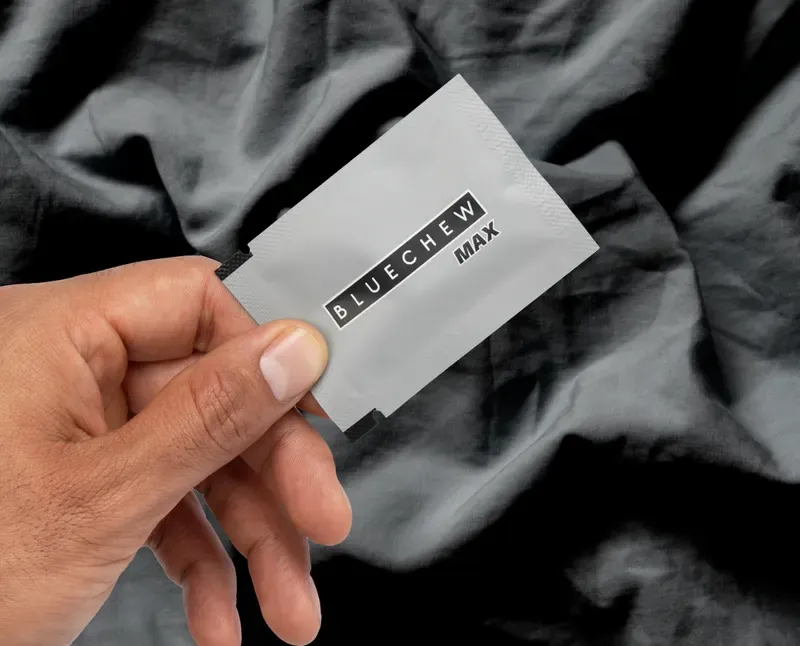
MAX: 45 mg sildenafil + 18 mg tadalafil. Lasts up to 36 hours.
VMAX: 14 mg vardenafil + 18 mg tadalafil. Lasts up to 36 hours.
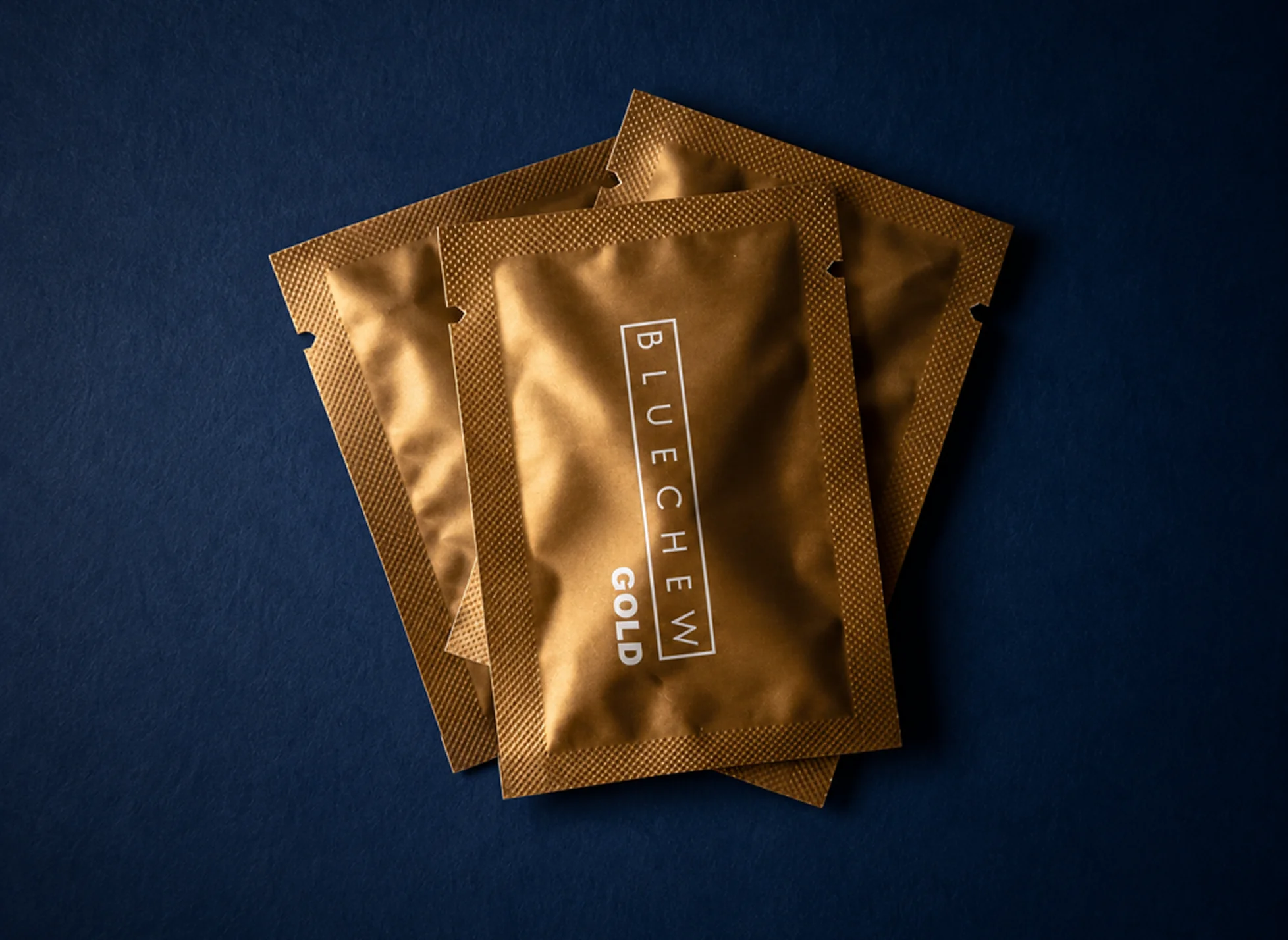
GOLD: sildenafil, tadalafil, apomorphine, and oxytocin. Lasts up to 36 hours.
Final Thoughts
Peyronie's disease is common, treatable, and — despite how isolating it can feel — nothing to be embarrassed about.
The most important step is simply getting it evaluated, ideally early in the acute phase, when intervention has the best chance of limiting how far the curvature progresses.
PDE5 inhibitors have a real, evidence-backed role to play in supporting erectile function along the way, and possibly more than that for some men — but they work best as one part of a broader plan built with a doctor, not a substitute for one.
Frequently Asked Questions
Can BlueChew cure Peyronie's disease?
No. BlueChew can help with the erectile dysfunction that often accompanies Peyronie's disease, but they don't treat the underlying plaque or curvature. Treatments aimed at the structural cause, like collagenase injections or traction therapy, need to come from a urologist.
Is Peyronie's disease permanent?
Not always. About 12% of cases resolve on their own without treatment, and many others stabilize during the chronic phase without worsening further. Severity and outcomes vary from person to person.
How do I know if I'm in the acute or chronic phase?
The acute phase usually involves ongoing changes in curvature and painful erections. Once the curvature stops changing and pain resolves, you've likely entered the chronic phase. A urologist can confirm this with an exam and imaging.
Should I see a doctor if I notice a new curve or lump?
Yes, and sooner rather than later. Early evaluation, ideally during the acute phase, gives you the most treatment options and the best chance of limiting progression.
Can I still have sex if I have Peyronie's disease?
In many cases, yes, though it may require some adjustment, and pain or difficulty with penetration is common, especially during the acute phase. Avoid forcing penetration or movements that bend the penis, and discuss pain or difficulty with your clinician.
What's the difference between sildenafil and tadalafil for someone with Peyronie's disease?
Both are PDE5 inhibitors and work similarly, but tadalafil has a longer half-life (allowing for daily low-dose use, which is how it's been studied for Peyronie's disease) while sildenafil is more commonly used on-demand. A medical provider can help determine which fits your situation.
BLUECHEW EDITORIAL STANDARDS
This article is provided for informational purposes only and does not constitute medical advice. The information presented is not a substitute for professional medical advice, diagnosis, or treatment. Always consult your healthcare provider to discuss the risks, benefits, and appropriateness of any treatment.
BlueChew offers access to healthcare providers who may prescribe compounded medications for the treatment of erectile dysfunction.
The featured products include compounded medications that have not been approved by the FDA. Compounded medications may be prescribed under federal law but are not the same as, nor are they generic versions of, any FDA-approved medication. The FDA does not review compounded medications for safety, effectiveness, or manufacturing quality of compounded products. A prescription will only be written if deemed appropriate after the digital consultation by the licensed medical provider. Individual results may vary.
BlueChew is not a compounding pharmacy but a telemedicine service that links patients to licensed medical providers.
RELATED ARTICLES


Have Better Sex
- 100% online process
- No office visit required
- Discreet shipping, if prescribed
*Prescription products require an online review by a licensed provider. Restrictions apply.

 Medically reviewedEvery article is reviewed by a licensed provider on the BlueChew medical team.