What Is Erectile Dysfunction and How Do I Treat It?

Having trouble getting or keeping an erection can be frustrating, especially when you start worrying it will happen again next time. But one off night doesn't necessarily mean you have erectile dysfunction.
Erectile dysfunction (ED) means you regularly have trouble getting an erection, or keeping one long enough, for sex that feels satisfying to you. The good news is that there are plenty of ways to treat it, from healthier habits and talk therapy to prescription medication, devices, or managing an underlying health issue. What works best for you will depend on what's behind your symptoms and your overall health.
ED is common, treatable, and nothing to be embarrassed about. It's also worth paying attention to, because erection problems can sometimes be an early clue that something's going on with your heart or blood vessels.
Key Takeaways
- ED is very common. In the landmark Massachusetts Male Aging Study, 52% of men ages 40 to 70 reported some degree of erectile difficulty.
- One difficult night doesn’t mean you have ED. Occasional trouble is normal. A persistent pattern that bothers you is worth a conversation with a provider.
- Physical and emotional factors can contribute. Blood flow, nerves, hormones, medications, stress, and anxiety can all affect erections—and more than one factor may be involved.
- ED can be an early warning sign. Erection problems may appear years before heart disease symptoms, so it's worth getting checked.
- Treatment options are available. Lifestyle changes, counseling, medications such as PDE5 inhibitors, and other medical or device-based treatments may help.

Causes
What Causes Erectile Dysfunction?
Usually, it's more than one thing. ED can have physical causes, emotional causes, or a combination of both, and they tend to build on each other.
Here's how that can play out: a health issue like high blood pressure makes it harder to get an erection. That experience leaves you worried it'll happen again. Then the next time, that worry makes it even harder to get or stay hard. Understanding what's behind your ED is the first step to breaking that cycle.
Risk Factors
Physical and Health Factors
- Heart and blood vessel conditions, including high blood pressure, high cholesterol, and atherosclerosis, which can limit blood flow to the penis
- Diabetes, which can damage both blood vessels and nerves over time
- Obesity, which is linked to about a 50% higher risk of ED compared with men at a healthy weight. One review found the risk climbs as weight goes up: a BMI of 25 to 30 was tied to about 1.5 times the risk of sexual dysfunction, and a BMI over 30 to about 3 times the risk
- Hormone imbalances, such as low testosterone or thyroid problems
- Nerve conditions, including multiple sclerosis, spinal cord injury, stroke, and nerve damage from surgery
- Other conditions, such as chronic kidney disease, an enlarged prostate, and Peyronie's disease
Medications
Sometimes the culprit is sitting in your medicine cabinet. Several common medications can list ED as a possible side effect. These include:
- Antidepressants
- Antihistamines
- Blood pressure medications and diuretics
- Certain pain relievers
- Sedatives or mood stabilizers
- Heartburn and ulcer medications
If you think a medication might be affecting your erections, don't stop taking it on your own. Instead, bring it up with your provider. They may be able to adjust your dose or switch you to something that works better for you.
Psychological and Emotional Factors
- Performance anxiety, especially with a new partner or after a long dry spell
- Stress from work, money, or life in general
- Depression, which is associated with about a 40% higher risk of ED
- Anxiety, relationship conflict, loneliness, or low self-esteem
To be clear: ED with a psychological cause is real ED. Your brain is a key part of the erection process, and stress hormones can interfere with the signals that get blood flowing.
Lifestyle Factors
Several habits that can raise your risk include:
- Smoking
- Drinking too much alcohol
- Not getting enough physical activity
- Using recreational or illicit drugs
The upside is that many of these are within your control, and changing them may help (more on that below).
Why ED Can Be an Early Warning Sign
Think of your erections as an early heads-up system for your heart. The arteries that supply the penis are tiny, about 1 to 2 mm wide, compared with 3 to 4 mm for the arteries around your heart. So when blood vessel damage starts to build up, the smaller vessels in the penis often feel it first.
Here's what the research shows:
- ED shows up before coronary artery disease in about two-thirds of cases, often by two to three years.
- A 2019 meta-analysis of 25 studies and more than 154,000 men found that ED was linked to a 43% higher risk of cardiovascular disease, a 59% higher risk of coronary heart disease, and a 34% higher risk of stroke in men with ED.
Having ED doesn't mean you're headed for heart trouble. But it's a good reason to get a full checkup, including your blood pressure, cholesterol, and blood sugar, instead of just treating the erection problem on its own.
Symptoms
What Is Erectile Dysfunction, Exactly?
In simple terms, ED means your erections aren't cooperating on a regular basis. You might have trouble getting hard, staying hard, or getting firm enough for the sex you want.
It doesn't look the same for everyone. ED can show up as:
- Getting erections sometimes, but not every time you want to have sex
- Getting an erection that fades before you're finished
- Not being able to get an erection at all
There's no single test or cutoff that defines ED. Clinically, ED is defined as the failure to get or keep an erection firm enough for satisfactory sex, and some experts suggest the problem should persist for about six months before it's formally diagnosed. What matters most is the pattern, and how much it's affecting you.
How Erections Work (and Where Things Can Go Wrong)
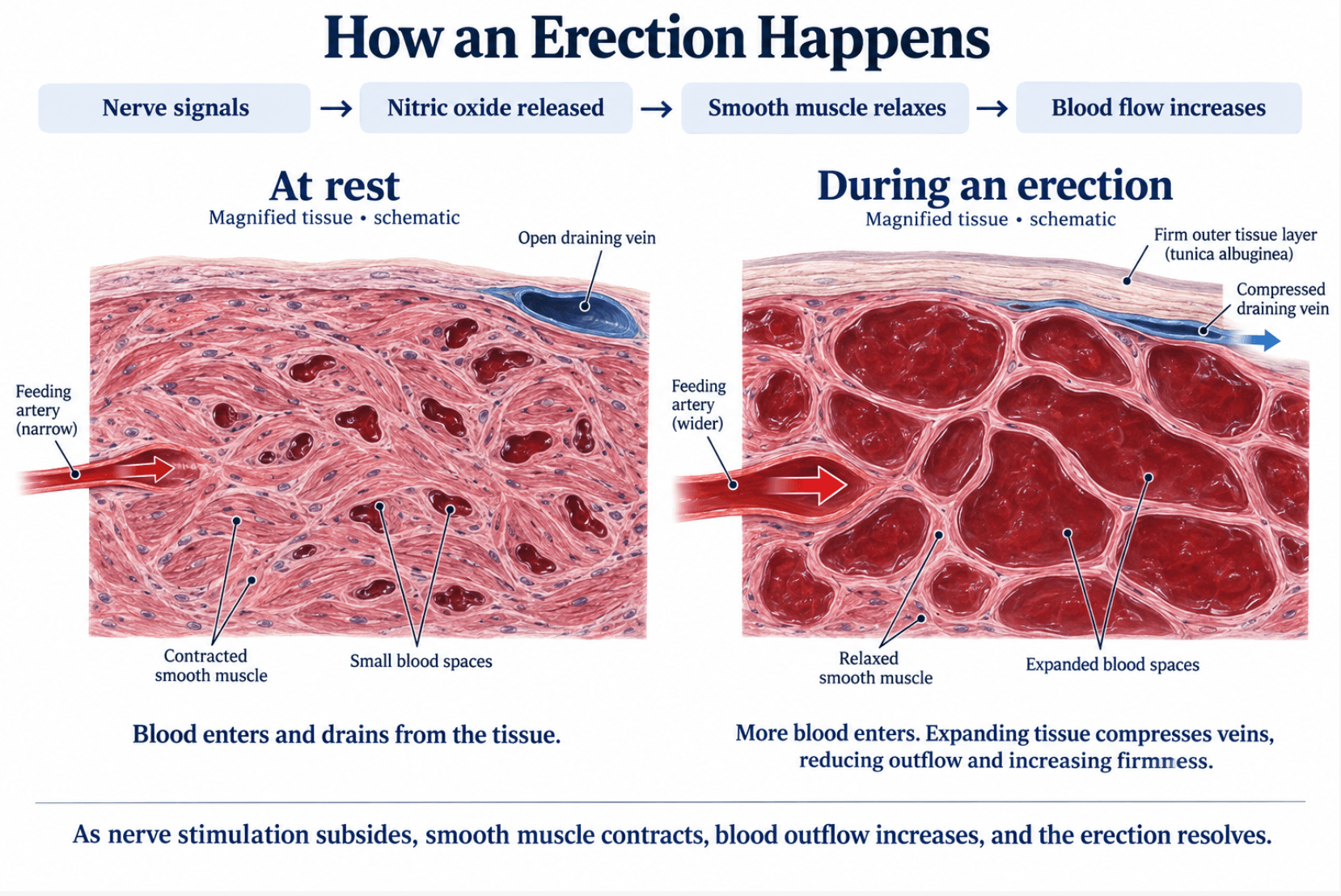
An erection is a team effort between your brain, nerves, hormones, and blood vessels. When you're aroused, nerve signals trigger increased blood flow into two spongy chambers in the penis. That blood gets trapped, which creates firmness. After orgasm, the blood drains back out.
If anything in that chain isn't working smoothly, like reduced blood flow, nerve damage, low hormone levels, or stress that interrupts arousal signals, erections can become harder to get or keep.
How Common Is ED?
More common than you might think. It is estimated that between 30 million and 50 million men in the US have ED.
Your chances of dealing with it do go up as you get older:
- In one study, about half of men ages 40 to 70 had at least some trouble with erections.
- In that same study, complete ED (not being able to get an erection at all) rose from 5% of men at age 40 to 15% by age 70.
ED isn't just an "older guy" problem. In another study, approximately one in four men who sought help for new ED was 40 or younger. Nearly half of those younger men had severe symptoms.
So if this is something you're dealing with, you're not broken, and you're definitely not alone.
Does Losing an Erection Sometimes Mean I Have ED?
Not necessarily. Every guy has an off night now and then. Plenty of everyday things can get in the way of an erection, like:
- Being tired or run down
- Stress from work, money, or life in general
- Feeling distracted or not fully in the mood
- Having a few too many drinks
According to the Urology Care Foundation, occasional erection problems are normal. If it's starting to happen regularly, though, or it's affecting your confidence or your relationship, it's worth talking to a provider.
Diagnosis
When Should You See a Medical Provider?
Make an appointment if erection problems happen regularly, affect your confidence or relationship, or represent a noticeable change from what's normal for you.
It's also worth getting checked sooner if you have ED along with other health concerns, like diabetes, high blood pressure, high cholesterol, or a family history of heart disease. Since ED can signal blood vessel problems, it's a good opportunity to look at your overall health.
Useful details to share include:
- When the problem started and whether it came on suddenly or gradually
- Whether you still get erections in the morning or during masturbation
- Whether it happens every time or only in certain situations
- Any medications or supplements you take
- Any changes in your sex drive, ejaculation, or relationship
- What you've tried and how it worked
These details help a provider figure out whether the cause is more likely physical, psychological, or both. For example, a sudden onset can point toward a psychological cause, while normal morning erections suggest the physical "plumbing" is working.
How Is Erectile Dysfunction Diagnosed?
For most men, ED is diagnosed through a conversation, not a complicated workup. A provider will typically:
- Take your medical and sexual history, including questions about erections, desire, ejaculation, and orgasm
- Ask about your mental health, stress, and relationship
- Do a physical exam to look for blood vessel, nerve, or hormonal issues, and check for physical changes to the penis
- Order blood tests when needed
Providers may also use a short questionnaire like the International Index of Erectile Function (IIEF) to measure how severe your symptoms are and track progress over time.
Common lab tests can include morning testosterone, blood sugar (HbA1c), cholesterol, and thyroid levels, which help spot conditions that might be contributing.
Occasionally, a provider might recommend additional testing, such as a nighttime erection test or a penile ultrasound, to get a closer look at blood flow or rule out a physical cause.
Treatments
Here's the encouraging part: ED is very treatable, and you have more options than you might think. There's no one-size-fits-all fix, and many men get the best results by combining approaches, such as:
- Medication plus healthier habits like exercise and cutting back on alcohol
- Medication plus counseling, especially when stress or performance anxiety is part of the picture
- Treating an underlying condition, like high blood pressure or diabetes, alongside ED-specific treatment
Below, we'll walk through the most common options so you know what to expect.
Lifestyle Changes
The same habits that help prevent ED (more on that in the Prevention section below) can also be part of your treatment plan. They're a great starting point for everyone, because they support your erections and your overall health at the same time.
The research is encouraging:
- Exercise: A 2023 meta-analysis of 11 randomized trials found aerobic exercise meaningfully improved erectile function scores, with the biggest gains in men with more severe ED.
- Weight loss: In a randomized trial of 110 obese men with ED, about one-third of those who followed a two-year diet and exercise program regained normal erectile function, compared with about 5% of the control group.
- Quitting smoking: A 2023 review reported that about 54% of men who successfully quit smoking saw improvements in erectile function, compared with 28% of those who kept smoking.
- Cutting out alcohol: In a study of men with alcohol use disorder, 88.5% showed improvement in ED after three months without drinking.
Lifestyle changes take time, so don't expect overnight results. But they can make other treatments work better, too.
Counseling or Sex Therapy
If stress, anxiety, depression, or relationship issues are playing a role, counseling can help. A therapist experienced in sexual health can help you break the cycle of performance anxiety, improve communication with your partner, and take the pressure off sex.
Counseling can also be helpful alongside medication, since even a physical cause of ED can create anxiety that sticks around.
Reviewing Your Medications
As we covered earlier, some medications can make erections harder to get or keep. If you suspect one of yours is playing a role, your provider may be able to:
- Adjust your dose
- Switch you to a similar medication that's less likely to affect your erections
- Add an ED treatment that's safe to take alongside your current prescriptions
One important reminder: don't stop or change any prescription on your own. Some medications, like those for blood pressure or depression, can cause problems if you quit suddenly. Your provider can help you find a plan that works for both your health and your sex life.
PDE5 Inhibitors (Oral ED Medications)
PDE5 inhibitors are the most common first-line medical treatment for ED. FDA-approved options include sildenafil (Viagra), tadalafil (Cialis), vardenafil (Levitra), and avanafil (Stendra).
They work by improving blood flow to the penis in response to sexual stimulation. In other words, they don't create an erection on their own. You still need to be aroused.
A few things worth knowing:
- Effectiveness: Overall success rate of about 70-80%. If one PDE5 inhibitor doesn't work well for you, a provider may suggest trying another.
- Timing: Sildenafil generally works for 4 to 6 hours. Tadalafil can last up to 36 hours, which gives you a much wider window.
- Side effects: Common side effects include headache, flushing, indigestion, nasal congestion, back or muscle aches, dizziness, and vision changes.
- Safety: PDE5 inhibitors should never be combined with nitrates (often prescribed for chest pain), because the combination can cause a dangerous drop in blood pressure. Extra caution is needed with alpha-blockers. Seek medical care for any erection lasting longer than four hours.
Testosterone Therapy
If blood tests confirm low testosterone, a provider may recommend testosterone treatment, sometimes alongside a PDE5 inhibitor. Testosterone isn't a treatment for ED in men with normal levels.
Other Medical Treatments
If oral medications don't work or aren't safe for you, other options are available.
- Vacuum erection devices: A pump draws blood into the penis, and a ring at the base helps keep it there. Effective in about 70% to 80% of men, though many find them less convenient.
- Penile injections: A medication like alprostadil is injected directly into the side of the penis. Effective in about 94% of men.
- Urethral suppositories: A small medicated pellet is inserted into the tip of the penis. Effective in about 50% to 65% of men.
- Penile implants: A surgical option for men who haven't had success with other treatments, with about 90% patient satisfaction.
A Word of Caution About "Natural" Supplements
Be careful with over-the-counter "male enhancement" products. The FDA has flagged hundreds of sexual enhancement products sold as supplements or "all-natural" treatments that contained hidden drug ingredients. The NIH also advises against buying ED medicines online without a provider involved and recommends telling your provider about every supplement you take.
Prevention
Can You Prevent Erectile Dysfunction?
Not every case can be prevented, especially when ED is tied to aging, surgery, or nerve damage. But many risk factors are within your control, and the habits that protect your heart tend to protect your erections, too.
Steps that may help lower your risk include:
- Quitting smoking
- Limiting or stopping alcohol
- Getting more physical activity
- Maintaining a healthy weight and eating well
- Keeping conditions like diabetes, high blood pressure, and high cholesterol under control
- Managing stress and getting support for anxiety or depression
- Avoiding recreational drugs
- Keeping up with regular checkups, so potential problems get caught early
It's never too late to start. As we covered in the Treatment section, lifestyle changes can help even if you're already dealing with ED.
Where BlueChew Fits In
Making Treatment Easier to Start
For a lot of men, the hardest part of treating ED isn't the treatment. It's working up the nerve to bring it up. That hesitation can lead some guys to put off getting help, or to reach for risky unregulated supplements instead.
BlueChew is designed to make that first step easier. It's a telehealth service that connects eligible patients with licensed medical providers who can decide whether prescription PDE5 inhibitor treatment is right for them.
Here's how it works:
- You complete an online intake about your symptoms, health history, and current medications.
- A licensed provider reviews your information.
- If treatment is appropriate, the provider writes a prescription.
Not everyone will qualify, and that's a good thing. The screening process is there to keep you safe, especially if you take nitrates or have a heart condition.
BlueChew Treatments
BlueChew provides prescription medications containing sildenafil, tadalafil, and vardenafil, the same active ingredients found in brand name Viagra, Cialis, and Levitra. Its complete lineup includes:
- SIL: 45 mg sildenafil. Can take effect in as little as 15 minutes and lasts up to 6 hours.
- TAD: 9 mg tadalafil. Can take effect in as little as 15 minutes and lasts up to 36 hours.
- VAR: 8 mg vardenafil. Can take effect in as little as 15 minutes and lasts up to 6 hours.
- DailyTAD: 9 mg tadalafil plus 7 essential vitamins, lasting up to 36 hours
- MAX: 45 mg sildenafil + 18 mg tadalafil combo, lasting up to 36 hours
- VMAX: 14 mg vardenafil + 18 mg tadalafil combo, lasting up to 36 hours
- GOLD: sildenafil, tadalafil, oxytocin, and apomorphine. Lasts up to 36 hours.
DailyTAD comes in a chewable tablet, while SIL, TAD, VAR, MAX, VMAX, and GOLD are available as a sublingual tablet.
Not sure which product is right for you and your partner? Take this quick quiz to find out.
Everything ships in unmarked packaging, and subscriptions can be paused, adjusted, or canceled anytime.
BlueChew medications are compounded, which means they are not FDA-approved. A provider will only write a prescription if it's appropriate after your consultation, and the right option depends on your health, your goals, and how often you plan to have sex.
Medication can be a big help, but it works best as part of the bigger picture. Since ED can be an early warning sign of heart and blood vessel problems, it's important to make healthy lifestyle changes and keep an eye on your blood pressure, blood sugar, and cholesterol. Those steps are worth taking seriously, for your erections and your overall health.
Final Thoughts
Erectile dysfunction is common, treatable, and nothing to be embarrassed about. Start with an honest look at your symptoms, pay attention to your overall health, and involve a medical provider when the problem keeps coming back or starts to bother you.
The goal isn't perfection. It's more confident, satisfying sex, with less worry and a plan that works for you.
FAQs
Can erectile dysfunction be cured?
It depends on the cause. If ED is linked to something you can change, like smoking, excess weight, medication, or stress, addressing it may improve or even resolve your symptoms. In one randomized trial, about a third of obese men who lost weight and exercised regained normal erectile function. For other men, ED is a condition that's managed over time. Medications like PDE5 inhibitors help while you're using them, but they don't fix the underlying cause.
Is ED just a normal part of getting older?
ED does become more common with age, but it isn't something you just have to accept. And it can happen at any age. In one clinic-based study, about one in four men seeking help for new ED was 40 or younger. Whatever your age, it's treatable and worth discussing with a provider.
Can ED be caused by stress or anxiety?
Yes. Stress, anxiety, and depression can trigger ED or make it worse. That doesn't make it any less real. Counseling, stress management, and in some cases medication can all help break the cycle.
Is ED a sign of heart disease?
It can be. Because the arteries in the penis are smaller than those around the heart, blood vessel problems may show up as ED before causing heart symptoms. ED doesn't mean you definitely have heart disease, but it's a good reason to get your blood pressure, cholesterol, and blood sugar checked.
Do ED medications work automatically?
No. PDE5 inhibitors improve blood flow in response to sexual stimulation, so you still need to be aroused for them to work. They also don't increase your sex drive.
Is it safe to take ED medication?
PDE5 inhibitors are widely used and generally well tolerated, but they aren't right for everyone. They should never be taken with nitrates, and they need extra caution with certain blood pressure medications. That's why a provider should review your health history and medications before prescribing.
What if the first treatment doesn't work?
Don't give up. A provider may adjust your dose, change the timing, or suggest a different PDE5 inhibitor. If oral medications still don't help, options like vacuum devices, injections, and implants are available.
BLUECHEW EDITORIAL STANDARDS
This article is provided for informational purposes only and does not constitute medical advice. The information presented is not a substitute for professional medical advice, diagnosis, or treatment. Always consult your healthcare provider to discuss the risks, benefits, and appropriateness of any treatment.
BlueChew offers access to healthcare providers who may prescribe compounded medications for the treatment of erectile dysfunction.
The featured products include compounded medications that have not been approved by the FDA. Compounded medications may be prescribed under federal law but are not the same as, nor are they generic versions of, any FDA-approved medication. The FDA does not review compounded medications for safety, effectiveness, or manufacturing quality of compounded products. A prescription will only be written if deemed appropriate after the digital consultation by the licensed medical provider. Individual results may vary.
BlueChew is not a compounding pharmacy but a telemedicine service that links patients to licensed medical providers.
RELATED ARTICLES



Have Better Sex
- 100% online process
- No office visit required
- Discreet shipping, if prescribed
*Prescription products require an online review by a licensed provider. Restrictions apply.

 Medically reviewedEvery article is reviewed by a licensed provider on the BlueChew medical team.