Can Stress Cause Erectile Dysfunction?

Stress affects nearly every part of your body—including your sex life.
If you've ever noticed that erections are harder to achieve after a difficult week at work, during financial hardship, or while dealing with relationship problems, you're not imagining it.
While erectile dysfunction (ED) is often associated with blood flow or aging, psychological stress can also play a major role. In fact, stress doesn't just affect your mood—it changes how your brain, nervous system, hormones, and blood vessels work together during sexual arousal.
Stress-related erectile dysfunction is common, and for many men, it improves once both the physical and psychological contributors are addressed. Lifestyle changes, stress management, therapy, and appropriate ED treatments like BlueChew GOLD can all play a role in restoring confidence and sexual performance.
Key Takeaways
- Both acute and chronic stress can contribute to erectile dysfunction.
- Stress activates the body's "fight-or-flight" response, which interferes with the relaxation needed for an erection.
- Chronic stress may contribute to fatigue, poor sleep, hormonal changes, and reduced sexual desire.
- Psychological and physical causes of ED often occur together.
- Managing stress and choosing an appropriate treatment plan can help improve erectile function.
Can Stress Really Cause Erectile Dysfunction?
Yes.
Stress is recognized as an important psychological contributor to erectile dysfunction. Sexual arousal depends on coordinated communication between the brain, nerves, hormones, blood vessels, and smooth muscle. When you're under stress, those systems don't always work together as effectively.
Rather than entering a relaxed, sexually receptive state, your body shifts into survival mode—prioritizing alertness over reproduction. This makes it more difficult to initiate and maintain the physiological changes required for an erection.
How Stress Affects Erections
An erection isn't simply about blood flow. It begins in the brain.
Sexual thoughts, touch, and emotional intimacy activate neural pathways that signal blood vessels in the penis to relax and fill with blood. Stress interrupts this process in several ways.
1. Your Body Activates the Fight-or-Flight Response
When you're stressed, your sympathetic nervous system becomes more active.
This "fight-or-flight" response releases stress hormones like adrenaline and cortisol that prepare your body to respond to threats—not sexual intimacy.
Higher sympathetic activity increases smooth muscle contraction and makes it more difficult for penile blood vessels to relax, reducing the likelihood of achieving or maintaining an erection.
2. Stress Can Increase Fatigue
Stress doesn't only affect your mind—it drains your energy.
A recent study of men with psychogenic erectile dysfunction found that higher levels of perceived stress were associated with worse erectile function, and that fatigue explained approximately one-quarter of that relationship. In other words, stress may impair erections partly because it leaves you mentally and physically exhausted.
3. Chronic Stress May Reduce Sexual Desire
Long-term stress is associated with changes in hormone regulation, sleep quality, mood, and overall well-being.
Over time, these changes may reduce libido, increase anxiety, and make sexual activity feel less rewarding or enjoyable.

Where Does BlueChew GOLD Fit In?
When stress affects your erections, blood flow isn't always the only issue.
Stress can make it harder to feel mentally engaged, sexually motivated, or confident—even before blood flow becomes part of the equation.
That's why treatments designed to support multiple aspects of sexual function may be beneficial for some men.
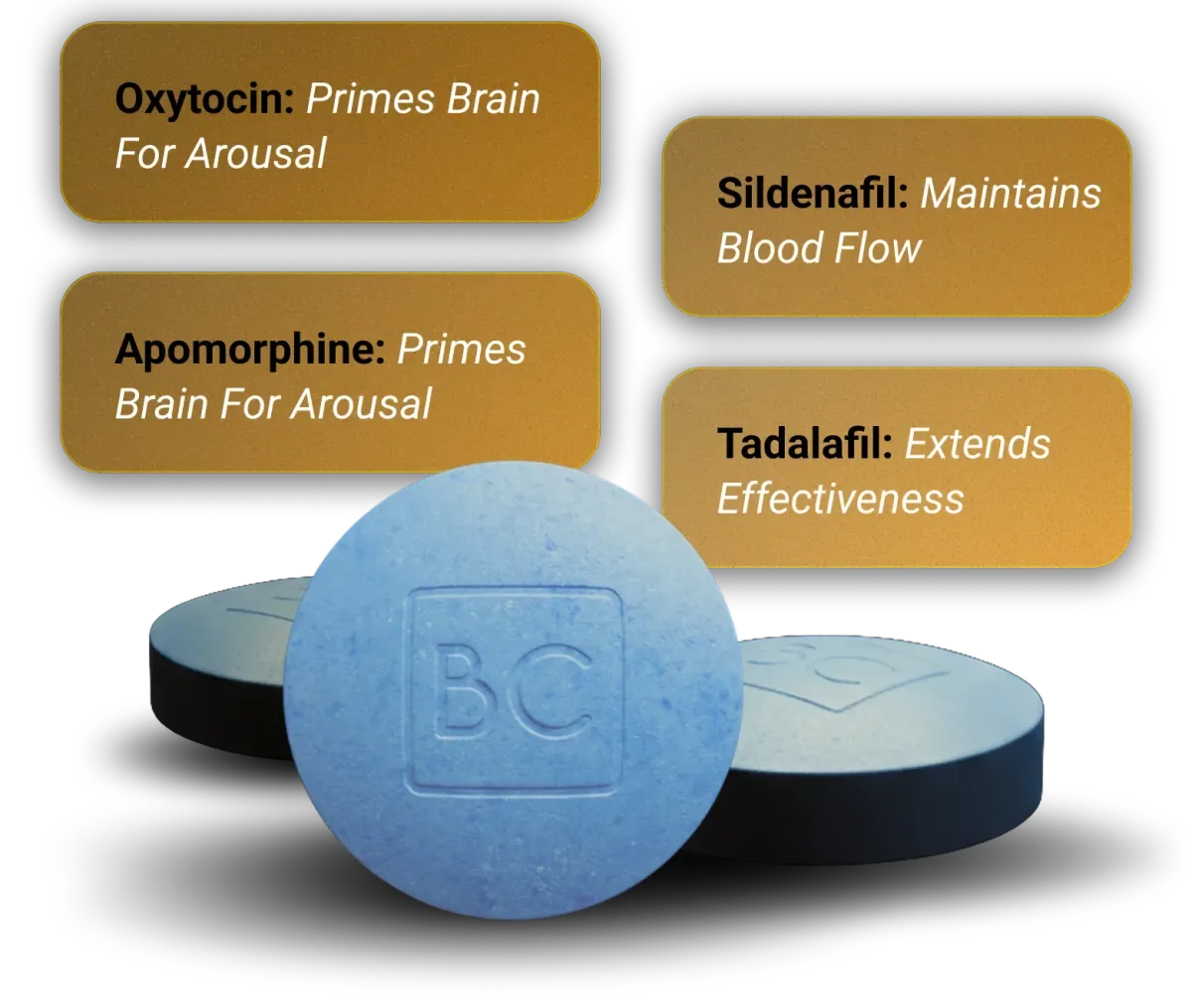
Unlike traditional ED medications that primarily improve blood flow, BlueChew GOLD contains four active ingredients designed to support multiple aspects of sexual function:
- Sildenafil
- Tadalafil
- Apomorphine
- Oxytocin
Sildenafil and tadalafil help increase blood flow to support stronger erections. Apomorphine works on dopamine pathways involved in sexual motivation and arousal, while oxytocin plays a role in intimacy, bonding, and emotional connection.
Together, these ingredients are designed to support both the physical and psychological aspects of sexual performance. While GOLD isn't a treatment for stress itself, improving erection reliability and supporting arousal may help reduce the confidence loss that often accompanies stress-related erectile dysfunction.
Acute Stress vs. Chronic Stress
Not all stress affects sexual function the same way.
Acute Stress
Short-term stress might include:
- A work presentation
- An argument with your partner
- Financial worries
- Family responsibilities
You may notice temporary erection difficulties that improve once the stressful situation resolves.
Chronic Stress
Ongoing stress is more likely to have lasting effects.
Examples include:
- High-pressure jobs
- Caregiving responsibilities
- Chronic illness
- Relationship conflict
- Anxiety or depression
Persistent activation of the body's stress response can contribute to long-term sexual dysfunction and reduced quality of life.
Stress and Performance Anxiety Often Occur Together
Stress and performance anxiety frequently reinforce one another.
Someone experiencing stress from work or life may have difficulty getting an erection one night.
That experience can then create worry about future sexual encounters.
Instead of focusing on pleasure, attention shifts toward monitoring erection quality.
As this cycle continues, many men become increasingly focused on whether they'll get or maintain an erection instead of enjoying intimacy. Medications that improve erection reliability may help interrupt this cycle by increasing confidence during sexual activity. For men whose concerns extend beyond blood flow alone, BlueChew GOLD was formulated to support erection quality while also targeting pathways involved in arousal and sexual responsiveness.
Researchers increasingly recognize that psychological factors often interact rather than occur in isolation.
Is Stress the Only Cause of Erectile Dysfunction?
No.
Although stress can contribute to ED, many men have multiple contributing factors, including diabetes, cardiovascular disease, obesity, smoking, medication side effects, and low testosterone.
In many cases, mild physical ED increases stress, while stress further worsens erectile function—creating a cycle that's difficult to break without addressing both issues.
Final Thoughts
Stress doesn't only affect your mind—it can influence nearly every step involved in achieving an erection.
For many men, stress, fatigue, performance anxiety, and erectile dysfunction become part of the same cycle.
Successfully treating stress-related ED often means addressing both the psychological and physical contributors. Stress management, healthy lifestyle habits, therapy, and appropriate medications can all play a role.
For men looking for pharmacologic support, BlueChew GOLD offers a unique combination of ingredients designed to support blood flow, arousal, and sexual responsiveness—recognizing that satisfying sexual experiences involve more than circulation alone.
How To Get BlueChew GOLD
Interested in getting your hands on a prescription for BlueChew GOLD? We’ve got you covered.
Select a plan, complete an online intake, and you’re done. A medical provider will review your information and, if appropriate, prescribe your plan, which will be shipped directly to your door.
No doctor appointments or patient support charges make it a stress-free experience.
Plus, there’s no commitment—you can easily cancel or switch plans anytime. Click here to explore all treatment plan options at BlueChew.

FAQs
Can stress alone cause erectile dysfunction?
Yes. Stress can interfere with the brain, nervous system, hormones, and blood vessels that work together to produce an erection. While occasional stress-related ED is common, persistent symptoms should be evaluated by a healthcare provider to rule out other contributing factors.
Is stress-related erectile dysfunction temporary?
Often, yes. Many men notice that erections return once a stressful situation improves. However, chronic stress can contribute to ongoing fatigue, poor sleep, reduced libido, and performance anxiety, making ED more persistent if left unaddressed.
What's the difference between stress-related ED and performance anxiety?
Stress-related ED is triggered by everyday life stressors such as work, finances, or relationship challenges. Performance anxiety is the fear of not being able to achieve or maintain an erection during sex. The two often occur together, with one reinforcing the other.
Can anxiety and stress make ED medications seem less effective?
They can. While medications like sildenafil and tadalafil improve blood flow, severe anxiety or ongoing stress may still make it difficult to feel mentally relaxed or sexually engaged. That's why treating both the physical and psychological contributors often leads to the best results.
How can I reduce stress-related erectile dysfunction naturally?
Healthy habits can make a meaningful difference. Regular exercise, quality sleep, stress-management techniques, limiting alcohol, quitting smoking, and talking openly with your partner may all help improve erectile function over time.
Can BlueChew GOLD help with stress-related erectile dysfunction?
For some men, yes. BlueChew GOLD contains sildenafil and tadalafil to support blood flow, along with apomorphine and oxytocin, which are included to support arousal and intimacy. While it is not a treatment for stress or anxiety itself, improving erection reliability may help restore confidence during sexual activity.
When should I see a healthcare provider about stress-related ED?
If erectile dysfunction is persistent, worsening, or occurs frequently despite managing stress, it's important to speak with a healthcare provider. ED can sometimes be an early sign of an underlying medical condition such as diabetes or cardiovascular disease, so an evaluation can help determine the most appropriate treatment.
References
- Cao Z, Zhu T, Yang P, et al. The relationship between perceived stress and erectile function in patients with psychogenic erectile dysfunction: the mediating role of fatigue. J Sex Med. 2025;22(5):719-725. doi:10.1093/jsxmed/qdaf045.
- Kalaitzidou I, Venetikou MS, Konstadinidis K, et al. Stress management and erectile dysfunction: a pilot comparative study. Andrologia. 2014;46(6):698-702. doi:10.1111/and.12129.
- Öztürk MI, Kiremit MC. Psychological factors and sexual dysfunction. In: Psychiatry and Sexual Medicine. Springer; 2024. Available at: https://pmc.ncbi.nlm.nih.gov/articles/PMC11353036/
- Brotto LA, Chankasingh K. Stress and sexual function. In: Psychosexual Health. Springer Nature; 2025. doi:10.1007/978-3-031-98580-5_4.
- Althof SE, McCabe MP. Psychological and lifestyle influences on male sexual function. Sex Med Rev. 2025. Available at: https://pmc.ncbi.nlm.nih.gov/articles/PMC11845324/
BLUECHEW EDITORIAL STANDARDS
This article is provided for informational purposes only and does not constitute medical advice. The information presented is not a substitute for professional medical advice, diagnosis, or treatment. Always consult your healthcare provider to discuss the risks, benefits, and appropriateness of any treatment.
BlueChew offers access to healthcare providers who may prescribe compounded medications for the treatment of erectile dysfunction.
The featured products include compounded medications that have not been approved by the FDA. Compounded medications may be prescribed under federal law but are not the same as, nor are they generic versions of, any FDA-approved medication. The FDA does not review compounded medications for safety, effectiveness, or manufacturing quality of compounded products. A prescription will only be written if deemed appropriate after the digital consultation by the licensed medical provider. Individual results may vary.
BlueChew is not a compounding pharmacy but a telemedicine service that links patients to licensed medical providers.
RELATED ARTICLES


Have Better Sex
- 100% online process
- No office visit required
- Discreet shipping, if prescribed
*Prescription products require an online review by a licensed provider. Restrictions apply.

 Medically reviewedEvery article is reviewed by a licensed provider on the BlueChew medical team.