PT-141 (Bremelanotide) for ED: What the Evidence Shows
PT-141, now known as bremelanotide, is a melanocortin receptor agonist that has been investigated for sexual dysfunction. It works through central melanocortin pathways rather than by inhibiting the PDE5 enzyme targeted by medications such as sildenafil, tadalafil, and vardenafil.
A study of subcutaneously administered PT-141 evaluated the compound in healthy men and in men with erectile dysfunction who reported an inadequate response to sildenafil. PT-141 produced statistically significant erectile responses during laboratory monitoring at the doses evaluated. However, this was an early clinical investigation and did not establish bremelanotide as an approved or standard ED treatment for men.
Key Takeaways
- PT-141 was the development name for bremelanotide
- Bremelanotide acts through central melanocortin pathways rather than PDE5 inhibition
- Early male studies reported erectile responses after intranasal and subcutaneous administration
- Those studies did not establish a standard male dose, treatment schedule, or long-term benefit
- Current evidence does not establish PT-141 as a treatment for psychological ED or low desire in men

What PT-141 and Bremelanotide Are
PT-141 was the development name used during early clinical testing of bremelanotide.
Bremelanotide belongs to a group of compounds known as melanocortin receptor agonists. These compounds interact with melanocortin receptors involved in several physiological processes.
A review of melanocortin receptors and erectile function found that melanocortin receptor activation can influence erectile activity. The melanocortin-4 receptor appears to contribute to these effects, although the exact receptor subtypes, neural pathways, and mechanisms involved were not fully established.
This supports a limited conclusion: bremelanotide can influence central pathways associated with erectile response.
It does not establish that bremelanotide:
- Corrects every neurological cause of ED
- Treats performance anxiety
- Resolves depression-related sexual dysfunction
- Restores sexual desire in every patient
- Replaces counseling or relationship-focused care
- Produces the same response across all formulations
- Works independently of individual health factors
Describing bremelanotide as “brain-based” may help distinguish its mechanism from PDE5 inhibitors, but the phrase should not imply that it treats every psychological or neurological contributor to sexual dysfunction.
How Bremelanotide Differs From PDE5 Inhibitors
PDE5 inhibitors and bremelanotide act through different pharmacological pathways.
Sildenafil, tadalafil, and vardenafil inhibit the PDE5 enzyme. Their effects support the vascular processes involved in an erection when sexual stimulation occurs.
Bremelanotide does not inhibit PDE5. Its investigated effects involve melanocortin receptors in the central nervous system.
This distinction does not mean that:
- Bremelanotide treats only psychological ED
- PDE5 inhibitors treat only physical ED
- One approach is inherently superior
- Bremelanotide works whenever a PDE5 inhibitor does not
- The two treatments can be combined without clinical review
Erectile dysfunction may involve vascular, neurological, hormonal, medication-related, psychological, and relational factors. These contributors can overlap. A medication’s site of action does not determine the cause of an individual patient’s symptoms.
What the Intranasal Male Study Found
A double-blind study examining the effects of intranasal PT-141 included healthy men and men with mild to moderate ED who responded to sildenafil.
Erectile activity was assessed with RigiScan monitoring. Intranasal PT-141 produced statistically significant erectile responses compared with placebo at doses above 7 mg. The first recorded erection began at approximately 30 minutes in the study setting.
Flushing and nausea were the most commonly reported adverse events. The trial did not identify a maximum tolerated dose within the range evaluated.
These findings should remain within the limits of the study:
- The medication was administered intranasally
- The participants with ED were sildenafil responders
- Erectile activity was measured under laboratory conditions
- The study did not evaluate long-term treatment
- It did not compare PT-141 directly with a standard ED medication
- It did not establish an approved male dose or routine treatment schedule
- It did not evaluate a commercially available injectable formulation
An erectile response recorded during laboratory monitoring is not the same as demonstrating consistent, satisfactory sexual function during routine treatment.
What the Subcutaneous Male Study Found
The study of subcutaneously administered PT-141 included healthy men and men who reported an inadequate response to sildenafil.
Healthy participants received several PT-141 doses. The men with ED received placebo, 4 mg PT-141, or 6 mg PT-141 in a crossover design with visual sexual stimulation. Erectile responses were measured with RigiScan.
The study reported statistically significant erectile responses at the doses evaluated. PT-141 was described as well tolerated within the short study period.
The findings do not establish that subcutaneous PT-141:
- Works for every sildenafil nonresponder
- Produces reliable intercourse outcomes
- Is suitable for unsupervised use
- Has a standardized male dosing schedule
- Is safe for long-term treatment
- Is equivalent to another compounded injection
- Has the same profile as the later female HSDD formulation
What the Male Studies Establish
Taken together, the qualifying male studies show that PT-141 produced measurable erectile responses in controlled research settings.
They support continued investigation of melanocortin agonists for ED.
They do not establish that PT-141:
- Is a first-line ED treatment
- Is approved for male ED
- Permanently restores erectile function
- Treats every type of PDE5 inhibitor nonresponse
- Corrects low libido in men
- Resolves performance anxiety
- Treats depression-related sexual symptoms
- Replaces evaluation of underlying conditions
- Has a proven long-term safety profile
- Can be sourced or injected without provider supervision

What the Female HSDD Trials Found
The largest bremelanotide trials did not evaluate men with erectile dysfunction.
Two randomized phase 3 trials of bremelanotide for the treatment of hypoactive sexual desire disorder evaluated an as-needed 1.75 mg subcutaneous dose in premenopausal women.
Bremelanotide produced statistically significant improvements in sexual-desire scores and reductions in distress related to low desire compared with placebo. Nausea, flushing, and headache were reported more frequently with bremelanotide.
These results apply to:
- Premenopausal women
- Acquired, generalized hypoactive sexual desire disorder
- A 1.75 mg subcutaneous formulation
- The dosing schedule evaluated
- The desire and distress outcomes measured
They should not be presented as direct evidence that subcutaneous bremelanotide treats ED or low sexual desire in men.
A review of pharmacotherapy for hypoactive sexual desire disorder identifies bremelanotide as one of the FDA-approved medication options for acquired, generalized HSDD in premenopausal women. The review also notes its limited efficacy and potential adverse effects.
That indication is separate from erectile dysfunction in men.
Why Route and Formulation Matter
PT-141 has been evaluated through both intranasal and subcutaneous administration.
The route of administration can affect:
- Absorption
- Drug exposure
- Time to peak concentration
- Dose selection
- Tolerability
- Adverse effects
- Clinical response
A finding from an intranasal trial cannot be converted into a dosing or effectiveness claim for a subcutaneous product. Likewise, findings from one subcutaneous formulation should not be applied automatically to a different compounded preparation.
The early male studies and later female trials also used different doses, populations, outcomes, and treatment goals. They should not be described as one continuous body of evidence proving the same clinical use.
PT-141 and Low Sexual Desire in Men
Sexual desire and erectile function are related but distinct.
A person may experience:
- Sexual desire with difficulty achieving an erection
- An erection with reduced desire
- Both concerns at the same time
- Arousal or orgasm difficulties without ED
The male PT-141 studies evaluated erectile responses. They did not establish treatment for a defined male desire disorder.
The female HSDD trials cannot be used to claim that PT-141:
- Increases libido in men
- Treats desire changes caused by depression
- Reverses antidepressant-related sexual symptoms
- Improves relationship satisfaction
- Corrects emotional disconnection
- Restores sexual motivation in every patient
Low desire may require a broader review of medications, mental health, hormonal factors, sleep, pain, relationship concerns, and general health.
PT-141 and Psychological Factors in ED
Psychological factors such as anxiety, depression, stress, and relationship concerns can contribute to erectile difficulties. However, PT-141’s activity in the central nervous system does not establish it as a treatment for these underlying concerns.
The available male studies measured erectile responses after PT-141 administration. They did not demonstrate that the medication treats:
- Performance anxiety
- Depression-related sexual symptoms
- Trauma-related sexual difficulties
- Relationship conflict
- Fear of sexual failure
- Reduced sexual confidence
- Other mental health conditions
PT-141 may influence central pathways involved in erectile response, but that is different from treating the psychological or emotional factors contributing to ED. When those factors are significant, a healthcare provider may recommend psychological assessment, counseling, sex therapy, or a combination of medical and behavioral care.
Describing PT-141 as centrally acting should therefore refer only to its pharmacological mechanism, not imply that it resolves the mental health or relationship-related causes of erectile dysfunction.
Limits of the Current Evidence
PT-141 and bremelanotide have shown measurable effects in early clinical studies, but the available evidence remains too limited to support broad treatment claims.
Current research does not establish PT-141 as:
- A cure for erectile dysfunction
- A first-line treatment for men
- A proven treatment for psychological causes of ED
- An established therapy for low sexual desire in men
- A consistently effective option after PDE5 inhibitor failure
- A permanent way to restore natural erectile function
- Safe to combine with every ED medication
- Equally effective across intranasal, injectable, or compounded formulations
- Free from clinically relevant adverse effects
- Appropriate for use without medical supervision
The published male studies evaluated specific doses, formulations, and administration routes in relatively limited patient groups. They do not establish a standardized male dose, recommended frequency, long-term treatment schedule, or predictable response across different causes of ED.
Any use of bremelanotide for male sexual dysfunction should therefore be discussed with a licensed healthcare provider and interpreted within the limits of the exact formulation and evidence being considered.
Questions to Review With a Healthcare Provider
Before considering PT-141, bremelanotide, or another ED treatment, it is important to clarify which aspect of sexual function is being affected and whether another health or medication-related factor may be contributing.
Helpful questions to discuss with a healthcare provider include:
- Is the main concern erection quality, sexual desire, arousal, orgasm, or another symptom?
- Could a current prescription or supplement be contributing?
- Has the current ED treatment been used according to its instructions?
- Does the medical history suggest that an in-person examination or additional testing is needed?
- Which bremelanotide formulation and administration route are being considered?
- Has that specific formulation been evaluated in men with similar symptoms?
- What evidence supports the proposed dose and treatment schedule?
- Which adverse effects and medication interactions should be reviewed?
- Is the product compounded, and how does it differ from the formulations used in published studies?
- Should an established ED treatment be evaluated before an experimental or off-label option?
These questions can help distinguish erectile dysfunction from concerns involving desire, arousal, ejaculation, or orgasm. Treatment decisions should be based on the patient’s medical history, current medications, symptoms, and previous treatment response rather than broad claims about centrally acting or “brain-based” therapies.
Where BlueChew Fits Into the Treatment Discussion
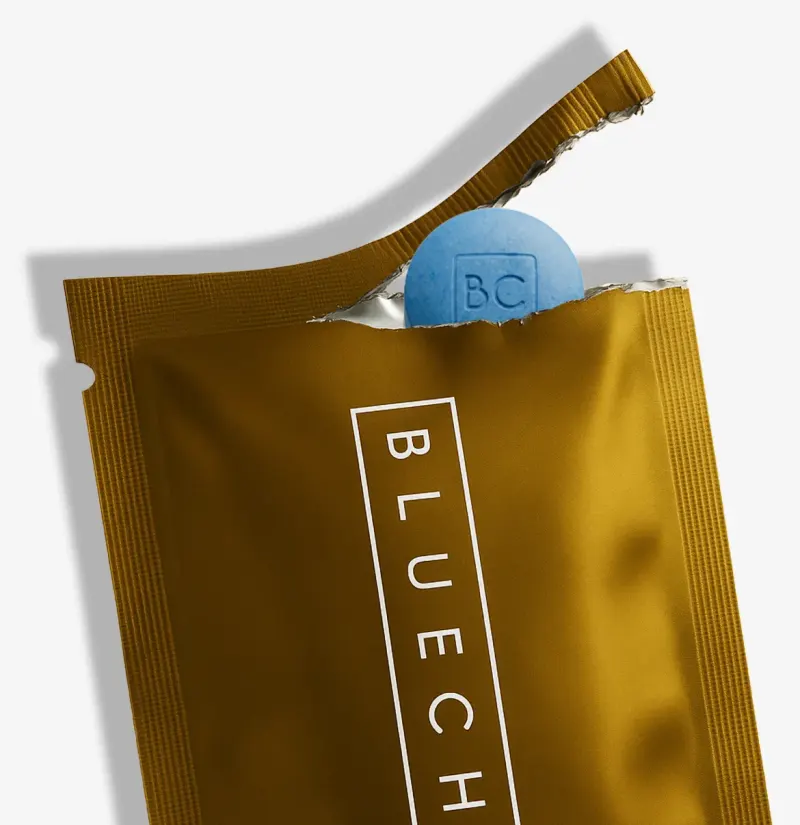
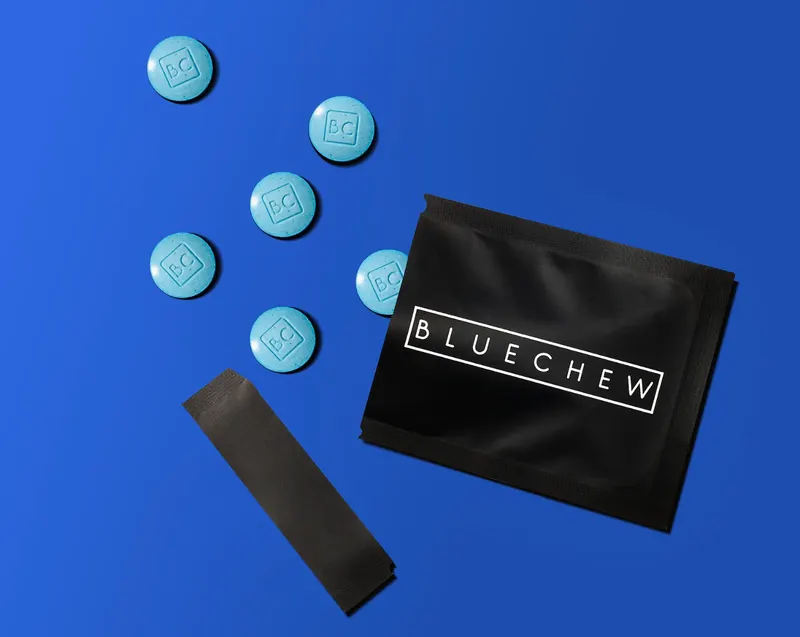
BlueChew is a telemedicine service that connects patients with licensed healthcare providers who may prescribe compounded medications for erectile dysfunction when medically appropriate.
PT-141 and bremelanotide are not included in BlueChew’s current product lineup. BlueChew should therefore not be presented as a source of PT-141 treatment or as offering medications that reproduce bremelanotide’s effects.
BlueChew does not:
- Provide PT-141 or bremelanotide injections
- Treat hypoactive sexual desire disorder
- Diagnose the cause of low sexual desire
- Claim that its medications work through the same mechanism as bremelanotide
- Replace in-person care when an examination, laboratory testing, or further assessment is necessary
- Guarantee improvement in psychological, emotional, or relationship-related contributors to ED
Someone seeking ED treatment through BlueChew completes a digital medical intake. A licensed healthcare provider reviews the submitted information and determines whether a prescription is appropriate.
The intake should include complete and accurate information about:
- Current and previous ED treatments
- Prescription medications and supplements
- Relevant medical conditions
- Cardiovascular and blood-pressure concerns
- Previous adverse reactions
- Current or previous use of PT-141, bremelanotide, or another peptide product
- Changes in sexual desire, arousal, orgasm, or ejaculation
- Medications or substances obtained outside a licensed healthcare setting
This information helps the provider assess whether one of BlueChew’s available ED treatments may be appropriate. Concerns involving low desire, mental health, hormonal factors, or symptoms requiring physical examination may need separate evaluation.
BlueChew Product Options
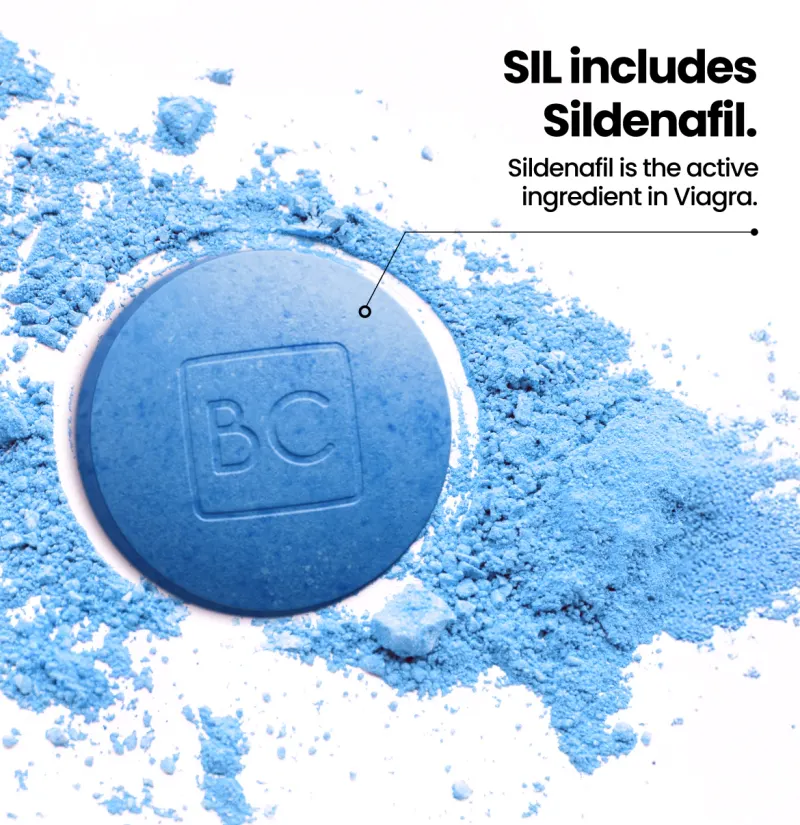
- SIL: 45 mg sildenafil, from $3.53/tablet, works in 15 minutes, lasting up to 6 hours
- TAD: 9 mg tadalafil, from $4.47/tablet, effective within 15 minutes, lasting up to 36 hours
- VAR: 8 mg vardenafil, from $4.34/tablet, takes effect in 15 minutes, lasting up to 6 hours
- DailyTAD: 9 mg tadalafil plus 7 essential vitamins, $2.23/tablet, lasting up to 36 hours
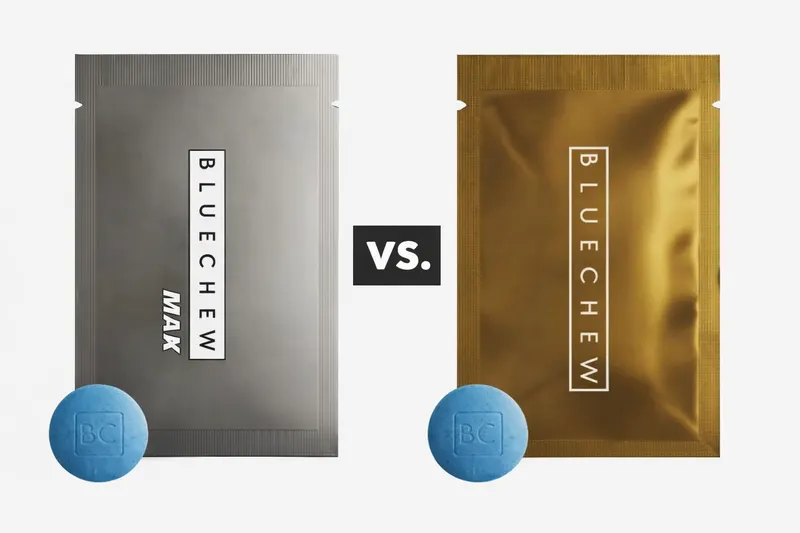
- MAX: 45 mg sildenafil + 18 mg tadalafil combo, $5.63/tablet, lasting up to 36 hours
- VMAX: 14 mg vardenafil + 18 mg tadalafil combo, $5.63/tablet, lasting up to 36 hours
- GOLD: sildenafil, tadalafil, oxytocin, and apomorphine sublingual tablet, from $7.30/tablet, lasting up to 36 hours
The appropriate product, formulation, and dose depend on the licensed provider’s assessment. BlueChew’s official GOLD page confirms that GOLD contains sildenafil, tadalafil, apomorphine, and oxytocin.
How To Get Medication Through BlueChew
Interested in getting your hands on a prescription for BlueChew GOLD? BlueChew has got you covered.
Select a plan, complete an online intake, and you’re done. A medical provider will review your information and, if appropriate, prescribe your plan, which will be shipped directly to your door.
No doctor appointments or patient support charges make it a stress-free experience.
Plus, there’s no commitment—you can easily cancel or switch plans anytime.Click here to explore all plan options for treatments at BlueChew.

Frequently Asked Questions
Is PT-141 the same as bremelanotide?
Yes. PT-141 was the development name used during the early clinical development of bremelanotide. However, the published studies have evaluated different doses, formulations, administration routes, and patient populations. Those differences matter because a result from an intranasal study cannot automatically be applied to an injectable or compounded product.
Is bremelanotide an established ED treatment for men?
Bremelanotide is not an established first-line treatment for erectile dysfunction in men. Early clinical studies recorded erectile responses in selected participants, but they were limited in size, duration, and scope. The available evidence does not define a standard male dose, routine treatment schedule, or predictable long-term outcome. Anyone considering bremelanotide should discuss the specific formulation and supporting evidence with a licensed healthcare provider.
Can PT-141 treat psychological ED or low sexual desire in men?
Current male studies do not establish PT-141 as a treatment for psychological ED or low sexual desire. Its activity in the central nervous system does not mean it treats anxiety, depression, relationship concerns, or other emotional contributors to erectile difficulties. Erectile function, sexual desire, and arousal are related but distinct concerns and may require different forms of evaluation. When low desire or psychological factors are prominent, a broader medical or mental health assessment may be appropriate.
Can PT-141 be combined with sildenafil or tadalafil?
There is no standardized combination regimen for PT-141 with sildenafil, tadalafil, vardenafil, or multi-ingredient ED products. Combining prescription treatments may change their effects, adverse reactions, and overall suitability. PT-141 should therefore not be added to an existing ED treatment without a provider reviewing the patient’s health history, current medications, and treatment goals. The appropriate combination, if any, must be determined individually.
Does BlueChew GOLD contain PT-141?
No. BlueChew GOLD contains sildenafil, tadalafil, oxytocin, and apomorphine. Apomorphine and bremelanotide are different active ingredients that act through different receptor systems. Research findings involving PT-141 should not be used to predict how GOLD will perform. A licensed provider reviews the patient’s information and determines what BlueChew prescription is appropriate.
This article is provided for informational purposes only and does not constitute medical advice. The information presented is not a substitute for professional medical advice, diagnosis, or treatment. Always consult your healthcare provider to discuss the risks, benefits, and appropriateness of any treatment.
BlueChew offers access to healthcare providers who may prescribe compounded medications for the treatment of erectile dysfunction.
The featured products include compounded medications that have not been approved by the FDA. Compounded medications may be prescribed under federal law but are not the same as, nor are they generic versions of, any FDA-approved medication. The FDA does not review compounded medications for safety, effectiveness, or manufacturing quality of compounded products. A prescription will only be written if deemed appropriate after the digital consultation by the licensed medical provider. Individual results may vary.
BlueChew is not a compounding pharmacy but a telemedicine service that links patients to licensed medical providers.
Other Helpful Articles