Why Isn't My ED Medication Working Anymore? What to Do Next

Medically reviewed by: Dr. Nicolette Natale, D.O.
When erectile dysfunction medication seems less effective than it once was, the next step is not automatically to take more medication or combine products. A review outlining a treatment strategy for non-responders explains that an apparent treatment failure may involve incorrect administration, expectations, psychological or relationship factors, an underlying health condition, or a genuinely limited response to the medication.
This distinction matters because each potential cause calls for a different response. Better instructions may help one patient, while another may need a medication review, evaluation for an underlying condition, or discussion of a nonoral treatment.
Any change to an ED prescription should be made with a licensed healthcare provider. Patients should not increase a dose, combine medications, change the schedule, or stop another prescription based solely on general online guidance.
Key Takeaways
- An apparent medication failure does not always mean the active ingredient has stopped working
- Incorrect timing, food intake, insufficient stimulation, or unrealistic expectations may affect the response
- Sildenafil, tadalafil, and vardenafil have different pharmacological profiles, but one is not automatically appropriate for every patient
- Apomorphine has been studied independently for ED, but those studies do not establish the effectiveness of a specific multi-ingredient compounded product
- BlueChew can provide access to licensed provider review, but it does not guarantee that changing products will restore treatment response

What “Stopped Working” Can Mean
A patient may use the phrase “stopped working” to describe several different experiences:
- The medication never produced a satisfactory response
- It worked inconsistently
- It previously worked but now seems less reliable
- The erection begins but does not last as expected
- The timing no longer fits the patient’s needs
- Side effects make the treatment difficult to use
- Sexual desire or stimulation has changed
- Relationship or performance concerns interfere with the experience
These situations should not be treated as identical. A clinician may need to clarify whether the problem involves erection firmness, duration, timing, sexual desire, ejaculation, orgasm, side effects, or expectations.
The review presenting a treatment strategy for non-responders identifies improper medication use, underlying disease, unrealistic expectations, performance anxiety, psychological concerns, and relationship factors as possible contributors to an inadequate response.
First Check How the Medication Is Being Used
PDE5 inhibitors do not create an automatic erection. The review on nonresponders notes that sexual stimulation remains necessary and that inadequate instructions can contribute to apparent treatment failure.
It also describes several administration problems found among patients initially classified as nonresponders:
- Taking the medication too close to anticipated sexual activity
- Taking certain medications immediately after a substantial meal
- Using a dose that had not been properly reviewed or adjusted by the prescriber
- Trying the medication too few times to assess the response
- Expecting the medication to create sexual desire
- Receiving insufficient follow-up or education
These findings do not create one universal set of instructions. Sildenafil, tadalafil, and vardenafil differ in their pharmacological profiles, and the patient should follow the directions provided for the specific prescription.
Before changing treatment, useful questions for the prescriber include:
- Am I taking this medication at the correct time?
- Does food affect this particular prescription?
- Is sexual stimulation still necessary?
- Have I used it often enough to assess the response?
- Is the prescribed dose still appropriate?
- Could side effects be interfering with treatment?
- Could I be confusing a desire or ejaculation concern with ED?
- Should another possible cause be evaluated?
Patients should not independently move to a higher dose simply because the initial response was limited.

Review What Has Changed
A medication that previously seemed useful may appear less effective after a change in health, other prescriptions, emotional wellbeing, or sexual circumstances.
The review of PDE5 inhibitor nonresponders discusses several possible contributors, including:
- More severe underlying erectile dysfunction
- Metabolic or cardiovascular risk factors
- Hormonal concerns
- Psychological distress
- Performance anxiety
- Relationship difficulties
- Incorrect expectations about what medication can accomplish
This does not mean that every patient needs the same laboratory testing or medical workup. It means a provider may need to reconsider the broader clinical picture instead of treating the issue as a simple dosing problem.
Information worth sharing during a consultation includes:
- When the response changed
- Whether the medication ever worked consistently
- New prescriptions or supplements
- Changes in other health conditions
- Changes in sexual desire
- Morning or spontaneous erections
- Stress or performance concerns
- Relationship changes
- New side effects
- Previous ED treatments
A patient should not stop another medically necessary prescription merely because it may be associated with sexual symptoms. The clinician managing that medication should be involved.

Make Sure the Concern Is Actually Erectile Dysfunction
Difficulty with sexual activity is not always caused by an erection problem.
The nonresponder review notes that some patients may be misclassified when another concern is present. Examples can include hormonal disorders, penile pain or curvature, ejaculation problems, altered genital sensation, low sexual desire, or psychological distress.
A patient may be able to achieve an erection but experience:
- Reduced desire
- Delayed ejaculation
- Premature ejaculation
- Reduced sensation
- Orgasm difficulty
- Pain
- Anxiety about maintaining the erection
An ED medication is not automatically an established treatment for each of these concerns. Describing the specific symptom helps the provider determine whether changing a PDE5 inhibitor is relevant.
Could Another PDE5 Inhibitor Be Considered?
Sildenafil, tadalafil, and vardenafil belong to the same medication class, but they do not have identical pharmacological profiles.
The review on treatment strategy for non-responders discusses differences in duration and the effects of food. It also notes that tadalafil may be considered in some patients who have not responded satisfactorily to shorter-acting options.
That does not mean switching is guaranteed to work. It also does not establish that one ingredient is superior for every patient.
A provider may consider:
- How long the patient wants the treatment window to remain available
- Whether meals interfere with the current routine
- Previous responses to each ingredient
- Side effects
- Other prescriptions
- Cardiovascular and blood-pressure considerations
- Whether the medication was used correctly
- Whether a nonoral treatment should be discussed
Switching products should be a clinical decision rather than a process of unsupervised trial and error.

What the Evidence Says About Oral Combination Therapy
Combining oral ED medications may sound like an obvious next step when one medication is not sufficient. The evidence is more limited than that assumption suggests.
A systematic review of oral combination therapy examined pharmacological combinations used after PDE5 inhibitor monotherapy failed. It found that chronic tadalafil alone and chronic tadalafil combined with on-demand sildenafil produced similar improvements in the erectile-function measure evaluated. The review also found that several other combinations required additional research.
These findings do not establish that:
- Two PDE5 inhibitors always work better than one
- A combination is suitable for every nonresponder
- More active ingredients produce a stronger clinical result
- Combination treatment can be started without provider review
- Findings from one combination apply to every compounded formula
Combination products may still be prescribed when a provider determines that they are appropriate. Their suitability depends on the patient’s health history, current prescriptions, prior treatment response, and the specific formulation.
Testosterone Should Not Be Added Without Evaluation
Hormonal concerns are sometimes discussed when PDE5 inhibitors provide a limited response.
The nonresponder review describes testosterone-related treatment in patients with confirmed low testosterone. It does not support adding testosterone to an ED regimen without appropriate evaluation.
The systematic review of oral combination therapy found that randomized trials involving androgen treatment plus a PDE5 inhibitor did not demonstrate superior erectile-function scores over PDE5 inhibitor treatment alone in the reviewed nonresponder populations.
A patient should not assume that fatigue, reduced desire, or limited medication response proves testosterone deficiency. Hormone treatment requires medical assessment and should not be used as a general rescue strategy for ED medication failure.
When Oral Medication Remains Inadequate
The review on treatment strategy for non-responders describes several clinician-directed alternatives for patients who remain unresponsive after medication use has been reviewed and optimized.
These include:
- Vacuum erection devices
- Intracavernosal injections
- Intraurethral medication
- Penile prostheses
- Other specialist-directed interventions
The appropriate option depends on the possible cause of ED, previous treatment, patient preference, health history, and the clinician’s assessment.
These treatments should not be presented as interchangeable. Each has different instructions, risks, limitations, and practical considerations.

Questions to Ask Before Changing ED Treatment
A focused consultation may help identify whether the next step should involve better instructions, another medication, additional evaluation, or a nonoral option.
Questions may include:
- Was my current medication used correctly?
- Does food affect it?
- Could another health condition be contributing?
- Could another prescription be affecting sexual function?
- Does the problem involve erections, desire, ejaculation, or orgasm?
- Would another PDE5 inhibitor fit my needs differently?
- What evidence supports combining ingredients?
- Is a sublingual formulation appropriate?
- Do persistent symptoms require an in-person evaluation?
- What options are available if oral medication remains ineffective?
The answers should be individualized. A general article cannot determine which prescription, dose, combination, or alternative treatment is appropriate.
How BlueChew Can Support a Treatment Reassessment
BlueChew is a telemedicine service that connects patients with licensed healthcare providers who may prescribe compounded medications for erectile dysfunction when medically appropriate.
Someone whose current ED treatment is not providing the expected response can complete a digital medical intake and share information about:
- The medication currently being used
- The prescribed dose and schedule
- How it has been taken
- Previous ED treatments
- Changes in effectiveness
- Side effects
- Current prescriptions and supplements
- Relevant medical conditions
- Blood-pressure or cardiovascular concerns
- Changes in desire, ejaculation, or orgasm
The licensed medical provider determines whether a prescription is appropriate. BlueChew does not guarantee that changing products, ingredients, formulations, or doses will improve the response.
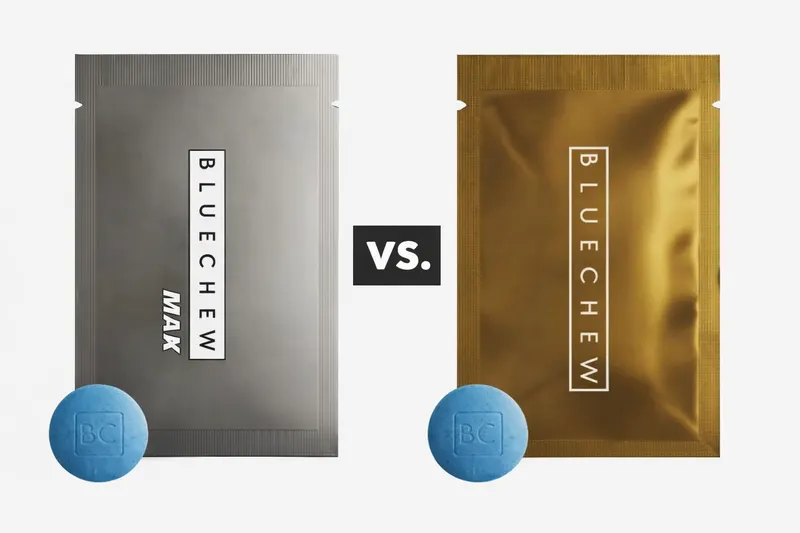
BlueChew’s complete product lineup includes:
- SIL: 45 mg sildenafil, from $2.95/tablet, works in 15 minutes, lasting up to 6 hours
- TAD: 9 mg tadalafil, from $3.58/tablet, effective within 15 minutes, lasting up to 36 hours
- VAR: 8 mg vardenafil, from $4.34/tablet, takes effect in 15 minutes, lasting up to 6 hours
- DailyTAD: 9 mg tadalafil plus 7 essential vitamins, $2.23/tablet, lasting up to 36 hours
- MAX: 45 mg sildenafil + 18 mg tadalafil combo, $5.63/tablet, lasting up to 36 hours
- VMAX: 14 mg vardenafil + 18 mg tadalafil combo, $5.63/tablet, lasting up to 36 hours
- GOLD: sildenafil, tadalafil, oxytocin, and apomorphine sublingual tablet, from $7.30/tablet, lasting up to 36 hours
SIL, TAD, VAR, and DailyTAD contain one PDE5 inhibitor. MAX and VMAX combine two PDE5 inhibitors. GOLD combines sildenafil and tadalafil with oxytocin and apomorphine.
How To Get Medication Through BlueChew
Interested in getting your hands on a prescription for BlueChew? We've got you covered.
Select a plan, complete an online intake, and you’re done. A medical provider will review your information and, if appropriate, prescribe your plan, which will be shipped directly to your door.
No doctor appointments or patient support charges make it a stress-free experience.
Plus, there’s no commitment—you can easily cancel or switch plans anytime. Click here to explore all plan options for treatments at BlueChew.

Frequently Asked Questions
Why might an ED medication seem less effective?
A review proposing a treatment strategy for non-responders identifies several possibilities, including improper use, inadequate instructions, underlying health conditions, performance anxiety, relationship concerns, and unrealistic expectations. A change in response does not identify one cause by itself. The provider may need to review how the medication is used and what else has changed. Patients should not increase the dose independently.
Does an ED pill work without sexual stimulation?
The review on PDE5 inhibitor nonresponders explains that insufficient sexual stimulation can contribute to an inadequate response. PDE5 inhibitors are not described as aphrodisiacs in that review. Patients should follow the directions for their prescribed medication and discuss expectations with the provider. A limited response should not automatically lead to unsupervised dose changes.
Should I switch from sildenafil to tadalafil or vardenafil?
A different PDE5 inhibitor may be considered because the available drugs have different pharmacological profiles. However, one ingredient is not automatically appropriate for every patient. The decision may depend on timing preferences, food effects, side effects, other prescriptions, and prior response. Switching should be reviewed by a licensed provider.
What happens if oral ED treatment remains ineffective?
A clinician may discuss vacuum erection devices, injectable treatment, intraurethral medication, penile implants, or another specialist-directed option. The appropriate next step depends on the possible cause of ED, medical history, previous treatment, and patient preferences. A provider should first confirm that the oral medication was used correctly. A general online article cannot select the appropriate alternative.
Can BlueChew determine why my medication stopped working?
BlueChew can connect a patient with a licensed healthcare provider who reviews the submitted information and determines whether an ED prescription is appropriate. The service does not guarantee that it can identify every underlying cause through telemedicine. Some symptoms or health concerns may require evaluation from an in-person clinician. Patients should provide complete and accurate medical and medication information.
This article is provided for informational purposes only and does not constitute medical advice. The information presented is not a substitute for professional medical advice, diagnosis, or treatment. Always consult your healthcare provider to discuss the risks, benefits, and appropriateness of any treatment.
BlueChew offers access to healthcare providers who may prescribe compounded medications for the treatment of erectile dysfunction.
The featured products include compounded medications that have not been approved by the FDA. Compounded medications may be prescribed under federal law but are not the same as, nor are they generic versions of, any FDA-approved medication. The FDA does not review compounded medications for safety, effectiveness, or manufacturing quality of compounded products. A prescription will only be written if deemed appropriate after the digital consultation by the licensed medical provider. Individual results may vary.
BlueChew is not a compounding pharmacy but a telemedicine service that links patients to licensed medical providers.
Other Helpful Articles